Recognize Ganoderma Conks Before a Palm Becomes Unsafe
Recognize the Conk at the Palm Base
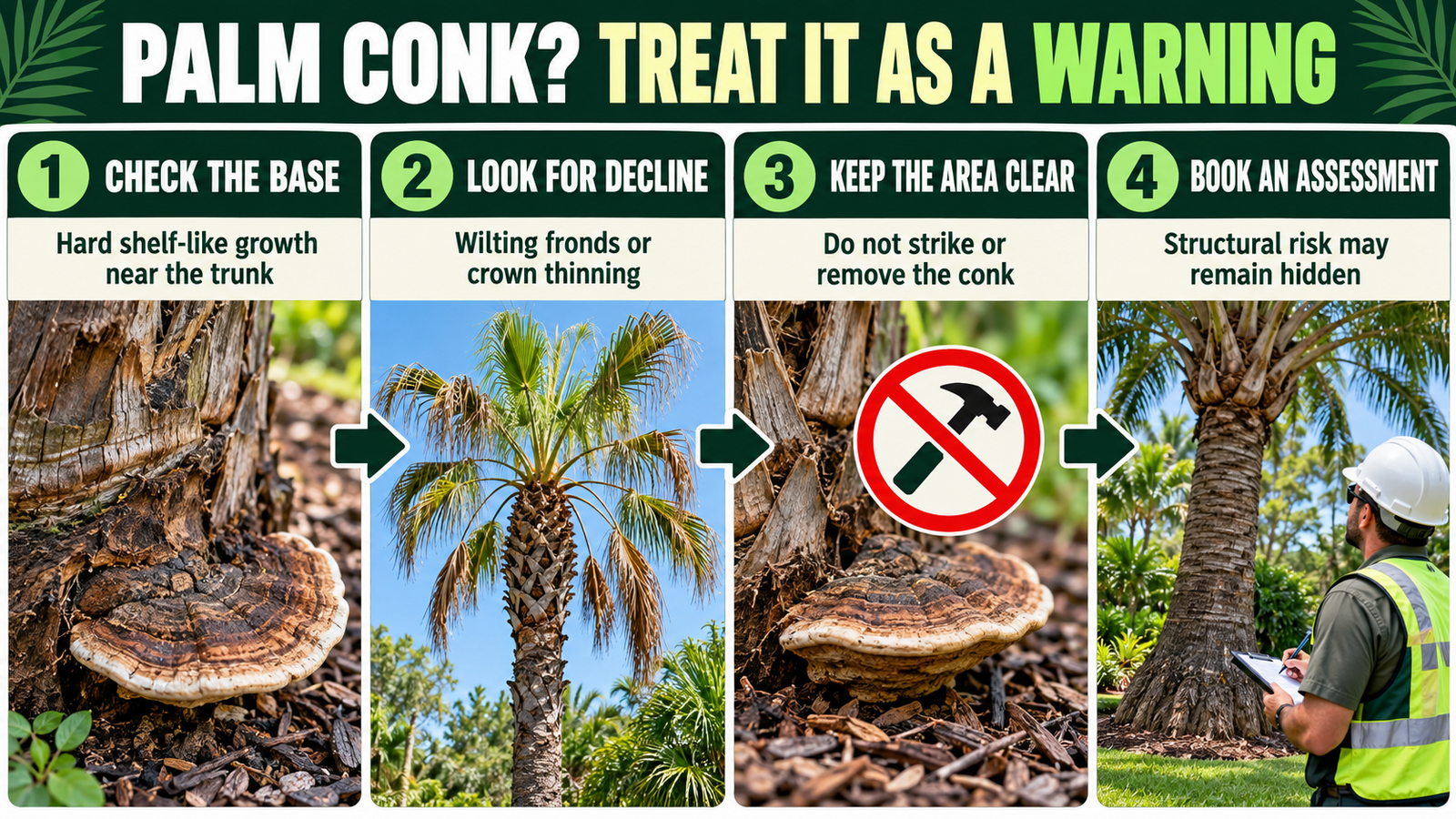
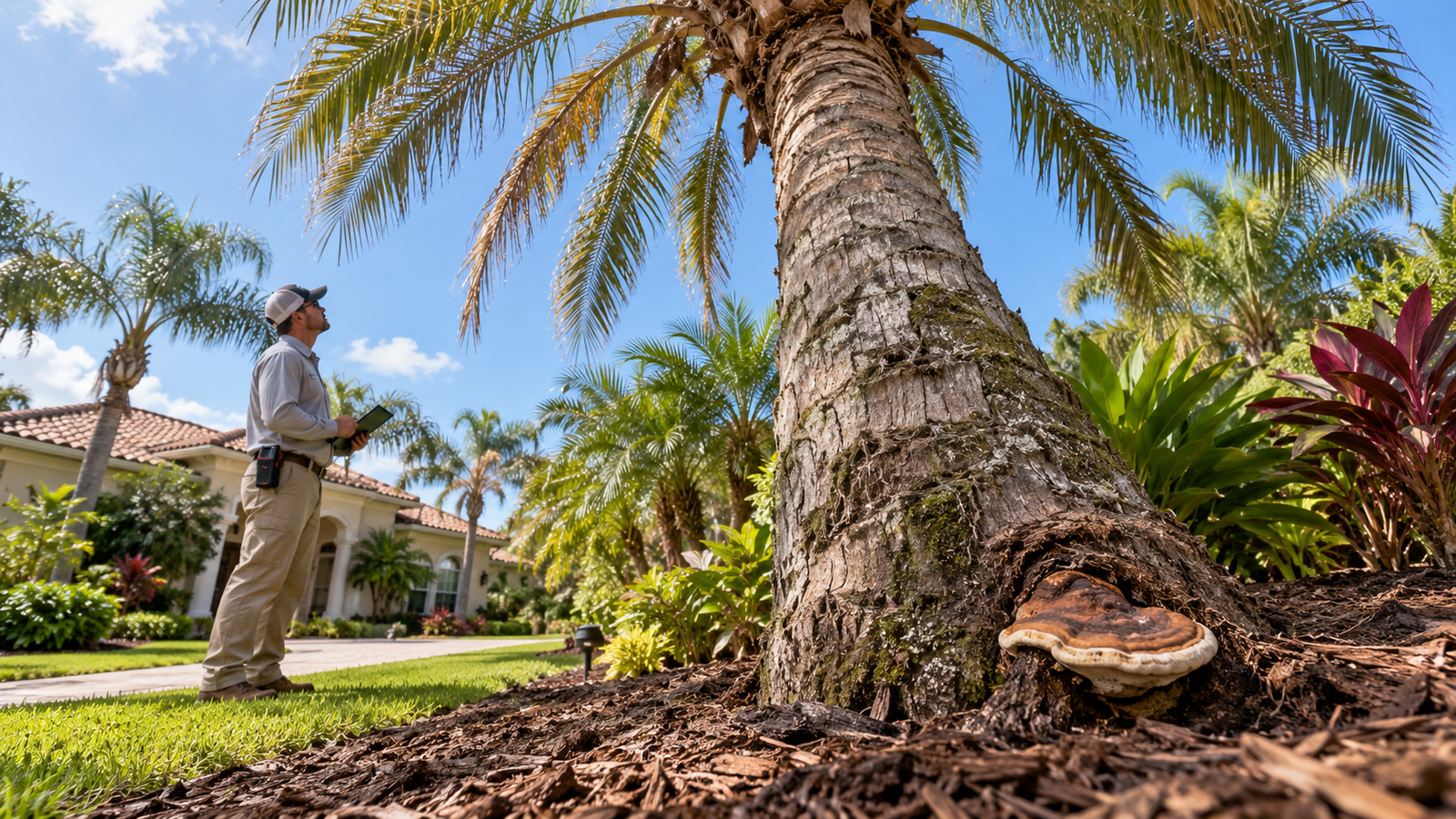
A Ganoderma conk is a hard, shelf-like fruiting body that usually develops on the lower portion of a palm trunk. It may begin as a pale, rounded mass and mature into a brown or reddish-brown shelf with a lighter edge and pale underside. It is not the same as a soft mushroom growing from mulch. Photograph the growth from a safe distance, including the trunk base and surrounding ground, without touching, breaking, or collecting it.
Understand What the Growth Can Mean
The conk is produced by a wood-decaying fungus associated with Ganoderma butt rot. By the time a conk is visible, decay may already extend through internal trunk tissue that cannot be judged from the outer surface. The palm may still carry green fronds and appear stable from across the yard. Removing the shelf does not remove the fungus or restore decayed wood, so the visible growth should be treated as a structural warning rather than a cosmetic blemish.
Look for Other Signs of Decline
From outside the possible fall zone, look for a thinning crown, wilting or drooping fronds, reduced new growth, an uneven lean, cavities, cracking, or changes near the trunk base. Do not stand beneath the canopy to inspect it. Florida palms can decline for many reasons, including root injury, drainage problems, nutrient stress, and other diseases, but a basal conk makes hidden decay the urgent concern. Wind and saturated soil can increase the consequences of weakened support tissue.
Keep People and Property Clear
Move routine foot traffic, play activities, parked vehicles, and movable furniture away from the area the palm could reach if it failed. Do not climb the palm, attach a ladder, strike the trunk, or attempt pruning. Avoid digging or trenching around the base, where root disturbance can further reduce stability. After heavy rain or strong wind, reassess from a distance and keep the area restricted if the lean, soil, crown, or trunk appearance has changed.
Avoid Actions That Hide the Evidence
Do not kick off the conk, grind it away, paint the trunk, or cover the base with fresh mulch. These actions can hide useful diagnostic clues without correcting internal decay. Fungicides, fertilizer, and extra irrigation cannot rebuild structurally damaged trunk tissue. Avoid moving contaminated trunk debris or mulch around the property until the site has been evaluated. If a conk is accidentally damaged, photograph what remains and leave the area undisturbed.
Document the Site for Follow-Up
Record the date the conk was first noticed and take wide photos showing the palm's height, lean, crown, nearby targets, and soil conditions. Note recent storms, flooding, trenching, construction, or irrigation changes. Do not use a weekly photo comparison as permission to delay action when a conk is present; internal decay may progress without an obvious exterior change. The documentation helps an on-site assessment focus on risk, access, and surrounding landscape conditions.
Book an On-Site Palm Safety Assessment
A conk at the palm base, sudden crown decline, cracking, movement, or a lean toward a house, walkway, street, or pool deserves prompt attention. Keep the likely fall area clear and avoid trying to test the trunk yourself. Book an Ecoscape Outdoor Services on-site palm safety assessment so the visible warning signs, surrounding targets, drainage, and access conditions can be evaluated together. Early action is especially important before stormy weather, when wind and waterlogged soil can add stress to an already compromised palm.