Recognize Girdling Roots Before a Tree Declines
Look at the Trunk Base
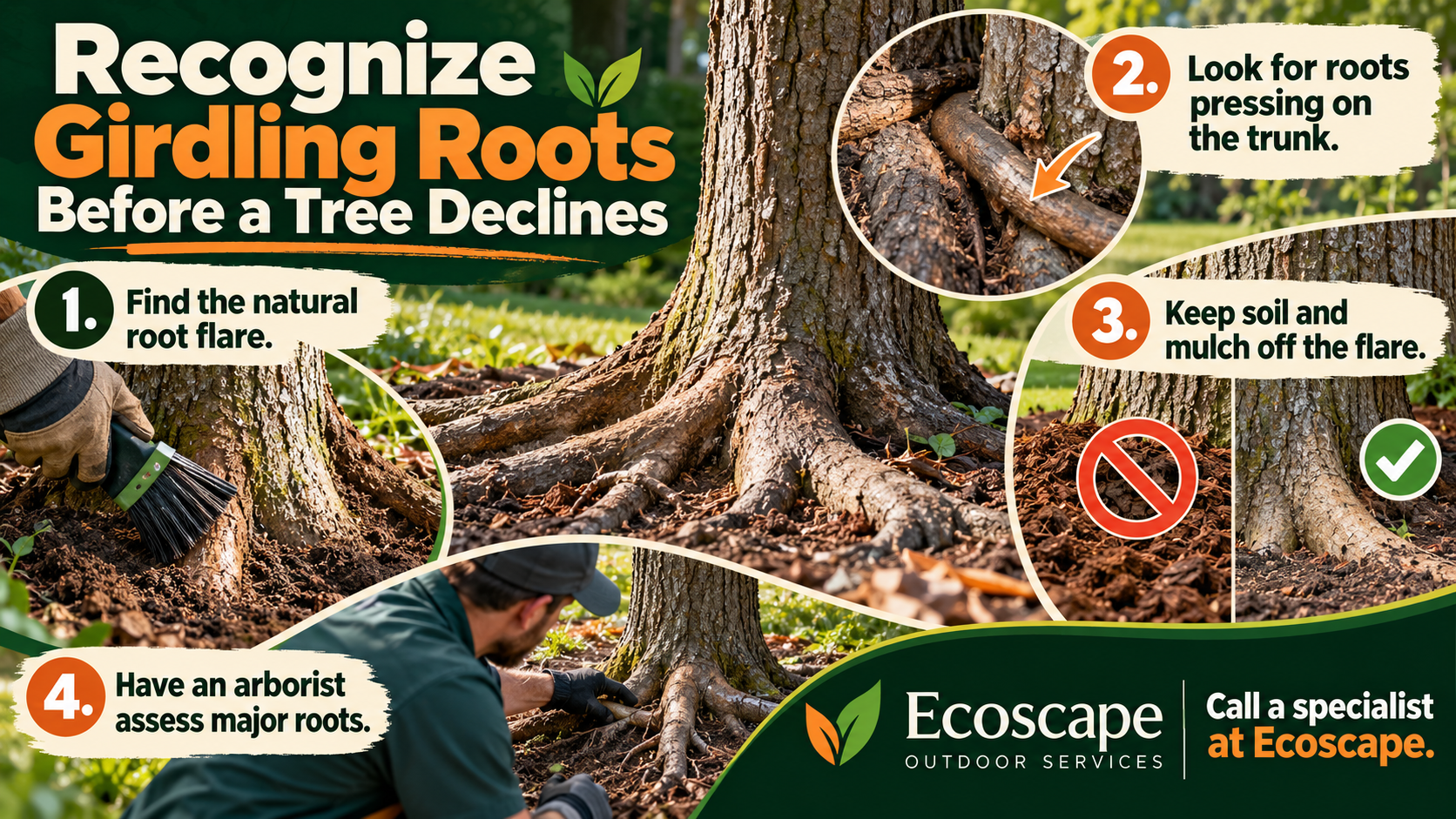
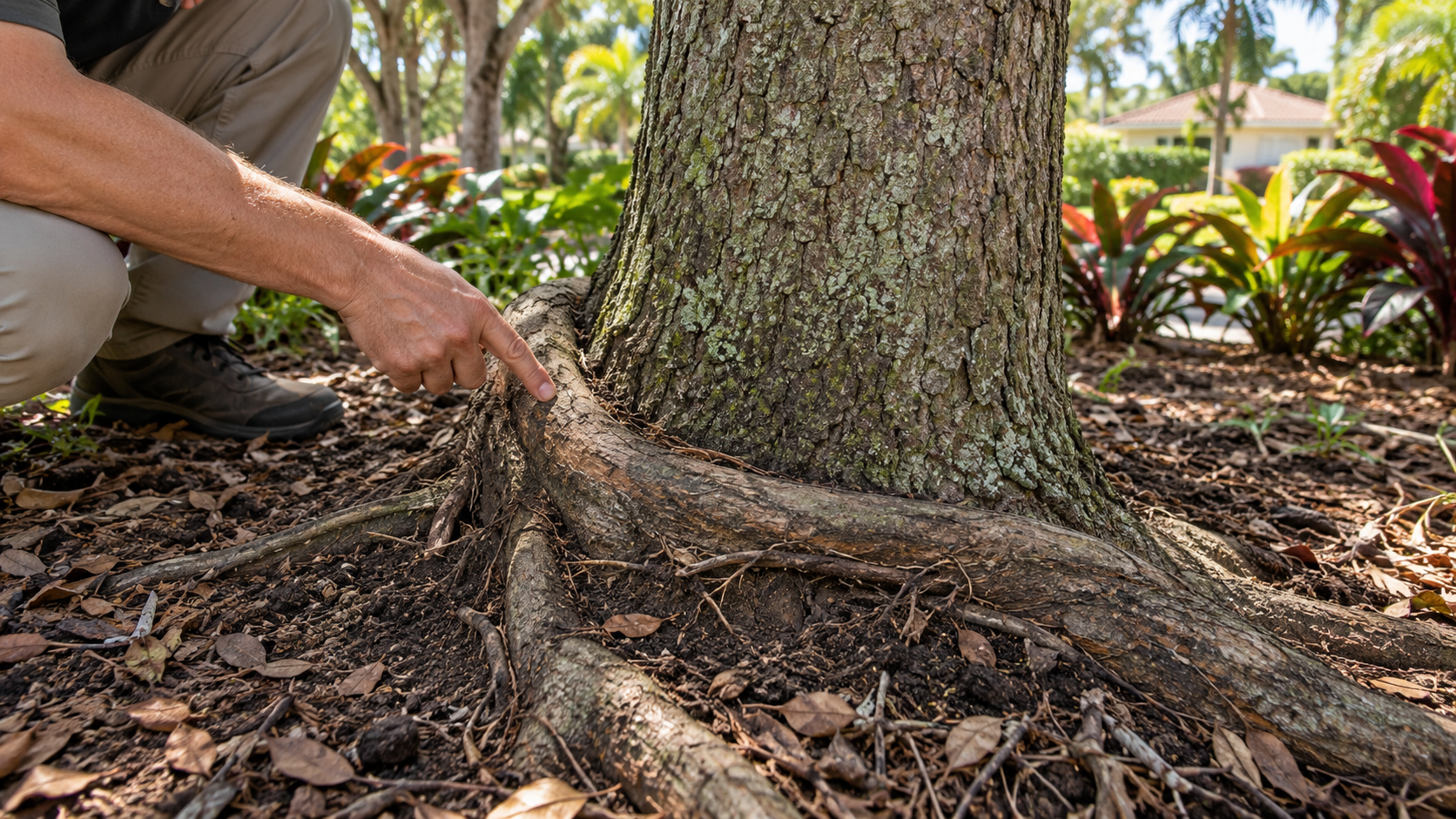
A tree should widen where its trunk meets the main roots. A straight trunk entering the ground without a visible flare deserves a closer look. Soil and mulch piled against the bark hide planting-depth problems and roots circling the trunk. Girdling roots press against the trunk or other important roots as they thicken. This contact interferes with normal growth and contributes to decline over time.
Recognize Signs Without Guessing
Visible circling roots, flattened trunk sections, and bark compressed at a root contact point are useful clues. A thinning canopy, weak growth, or early leaf drop has many possible causes. Photograph the root flare and canopy together. Compare conditions around the full circumference of the trunk. Avoid declaring every surface root a problem. Roots radiating outward from a healthy flare differ from roots wrapping tightly around and pressing against the trunk.
Understand How the Problem Starts
Circling roots develop in containers and persist after planting when root structure receives insufficient attention. Planting too deeply and repeatedly raising mulch or soil against the trunk also create poor conditions at the base. A tree sometimes grows for years before contact becomes severe. Watering and fertilizer do not reverse mechanical constriction. Prevention starts with suitable nursery stock, correct planting depth, and evaluation of roots during installation.
Expose the Flare Carefully
Move loose mulch away from the trunk by hand. Do not gouge bark, excavate blindly with powered equipment, or scrape roots to make them look cleaner. Soil removal around an established tree needs care, particularly where roots are embedded or the flare is deeply buried. Professional root-flare assessment uses methods suited to the tree and site. Preserve the existing grade beyond the immediate inspection area until the condition is understood.
Avoid Unplanned Root Cutting
A root pressing against a trunk is not an invitation to cut it immediately. Its size, position, attachment, and contribution to stability matter. Cutting major roots risks injury and loss of support. Have a qualified arborist assess significant girdling roots and structural concerns before removal. Declining trees beside homes, driveways, and walkways require attention to surrounding targets. Keep equipment and storage away from the root zone during evaluation.
Include Roots in Future Planting Decisions
When choosing a new tree, review its mature size and available root space. Inspect accessible nursery roots with the supplier rather than selecting by canopy appearance alone. Planting crews should identify the topmost main roots and position the tree appropriately. Keep records of the original flare and finished grade. Later bed renovations should preserve those conditions. A photo taken on installation day helps explain changes after mulch refreshes or drainage work and gives future maintenance crews a clear reference.
Protect the Tree After Assessment
Maintain a broad mulch area with the trunk flare exposed. Avoid repeated soil additions, trenching, and mower impacts around the base. Keep irrigation appropriate for the tree and drainage conditions. Record canopy changes and follow the arborist's recommendations for correction and monitoring. Ecoscape identifies landscape and planting conditions requiring attention and coordinates the next steps when specialist tree assessment is needed. Call a specialist at Ecoscape.
Helpful Resource