
Recognize Gray Leaf Spot on St. Augustine Grass
Know the Typical Symptoms
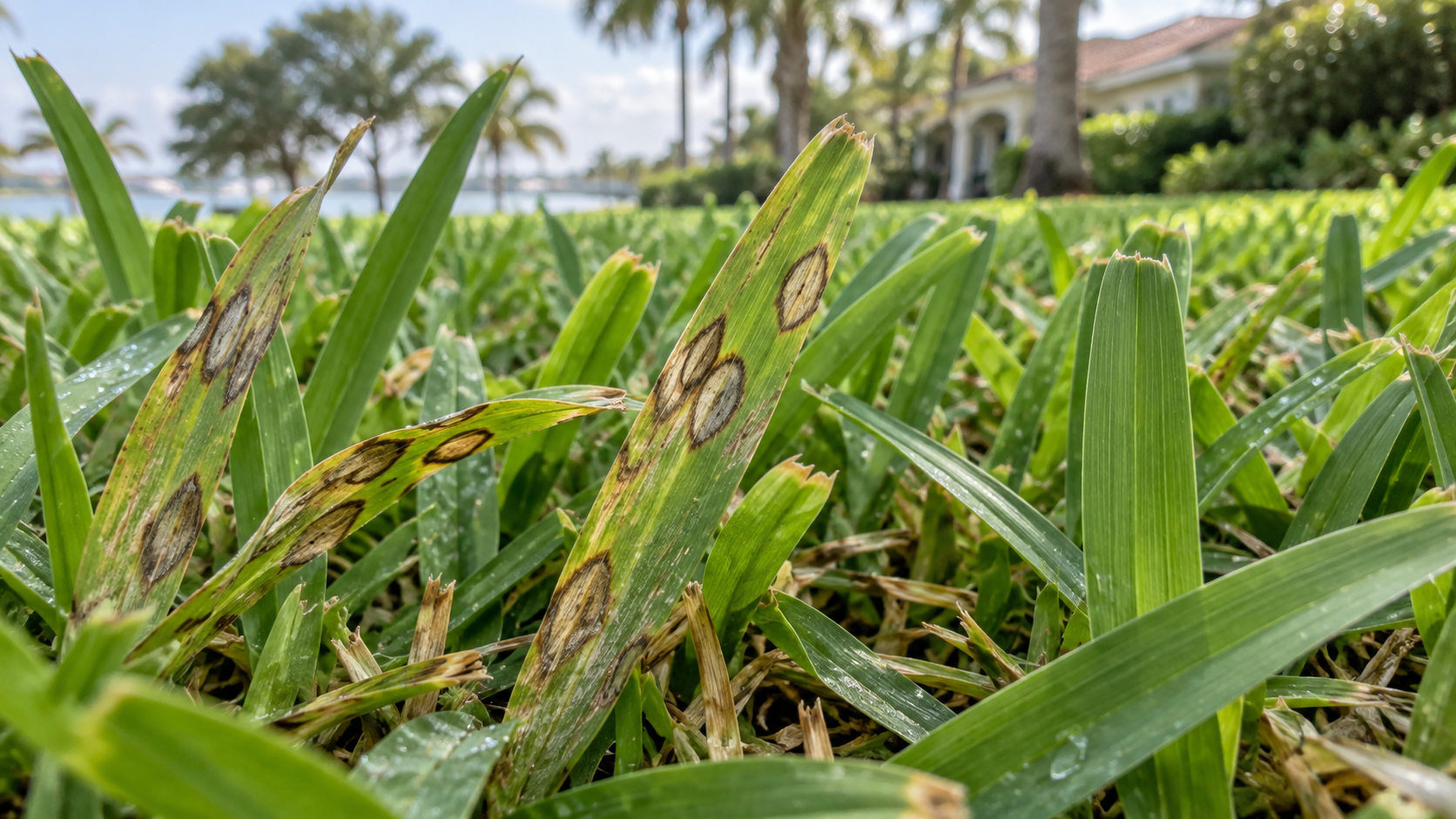
Gray leaf spot often appears as small oval or elongated lesions on St. Augustine grass blades. Spots develop tan or gray centers with darker brown or purple borders. Heavily affected leaves yellow, wither, and thin the lawn. Damage begins at leaf level, so close inspection matters. From a distance, the affected area might resemble drought stress, mower injury, or insect feeding.
Check the Conditions Around the Damage
Warm temperatures, high humidity, frequent rain, prolonged leaf wetness, and tender new growth favor disease activity. South Tampa summers provide these conditions for long periods. Review irrigation timing, shade, drainage, mowing, and recent nutrient applications. A lawn receiving late-evening water or repeated short cycles often stays wet longer than necessary, especially near walls and dense planting beds.
Inspect Before Assuming the Cause
Part the turf and study several blades from the edge of the affected area. Look for repeated leaf lesions rather than relying on the color of the lawn. Check soil moisture and search for chinch bugs, caterpillar feeding, root decline, or irrigation gaps. More than one problem sometimes occurs together. Accurate identification prevents a treatment aimed at the wrong cause.
Reduce Leaf Wetness and Stress
Run irrigation early in the morning and only when the lawn shows a real need. Repair heads which mist foliage, overlap excessively, or water shaded sections too long. Keep mower blades sharp and avoid cutting wet turf. Follow the proper mowing height for St. Augustine grass. Limit traffic and mechanical stress in declining areas while healthy growth begins replacing damaged leaves.
Avoid Common Treatment Mistakes
Do not lower the mower to remove spotted blades. Scalping weakens the grass and spreads contaminated clippings across more of the lawn. Avoid heavy nitrogen intended to force quick green growth. Excess tender growth often increases disease pressure. Do not apply random fungicides without a diagnosis, label review, and licensed professional where required. Product choice and timing influence the outcome.
Track Recovery After Corrections
Photograph the same locations every week and watch the newest leaves. Old lesions will remain until mowing removes the damaged tissue, so judge progress by fresh growth and whether the affected boundary stops expanding. Recheck irrigation coverage after repairs. If decline continues, arrange professional identification and treatment. Replace sod only after the moisture, disease, or maintenance cause has been addressed.
Use Ecoscape for Careful Property Monitoring
Ecoscape Outdoor Services trains maintenance crews to notice unusual turf changes, protect mowing height, avoid saturated areas, and report developing problems. We help South Tampa clients correct irrigation and maintenance conditions while coordinating with qualified lawn-treatment partners when disease control is needed. Early observation and accurate referral protect more healthy turf and reduce the expense of replacing large sections later.
