Recognize Iron Chlorosis in Ixora and Gardenia Before Fertilizing
Read the Yellowing Pattern
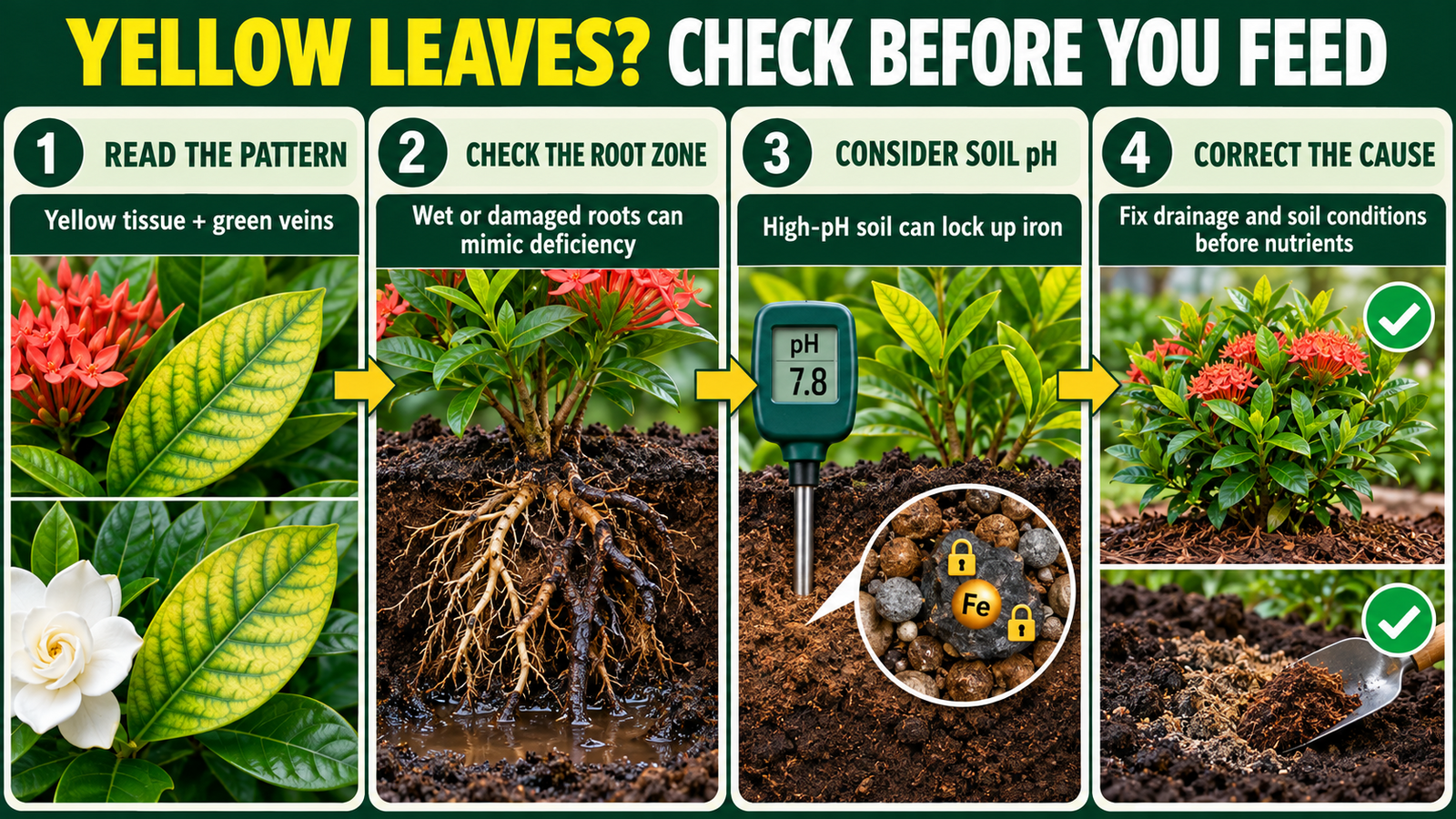
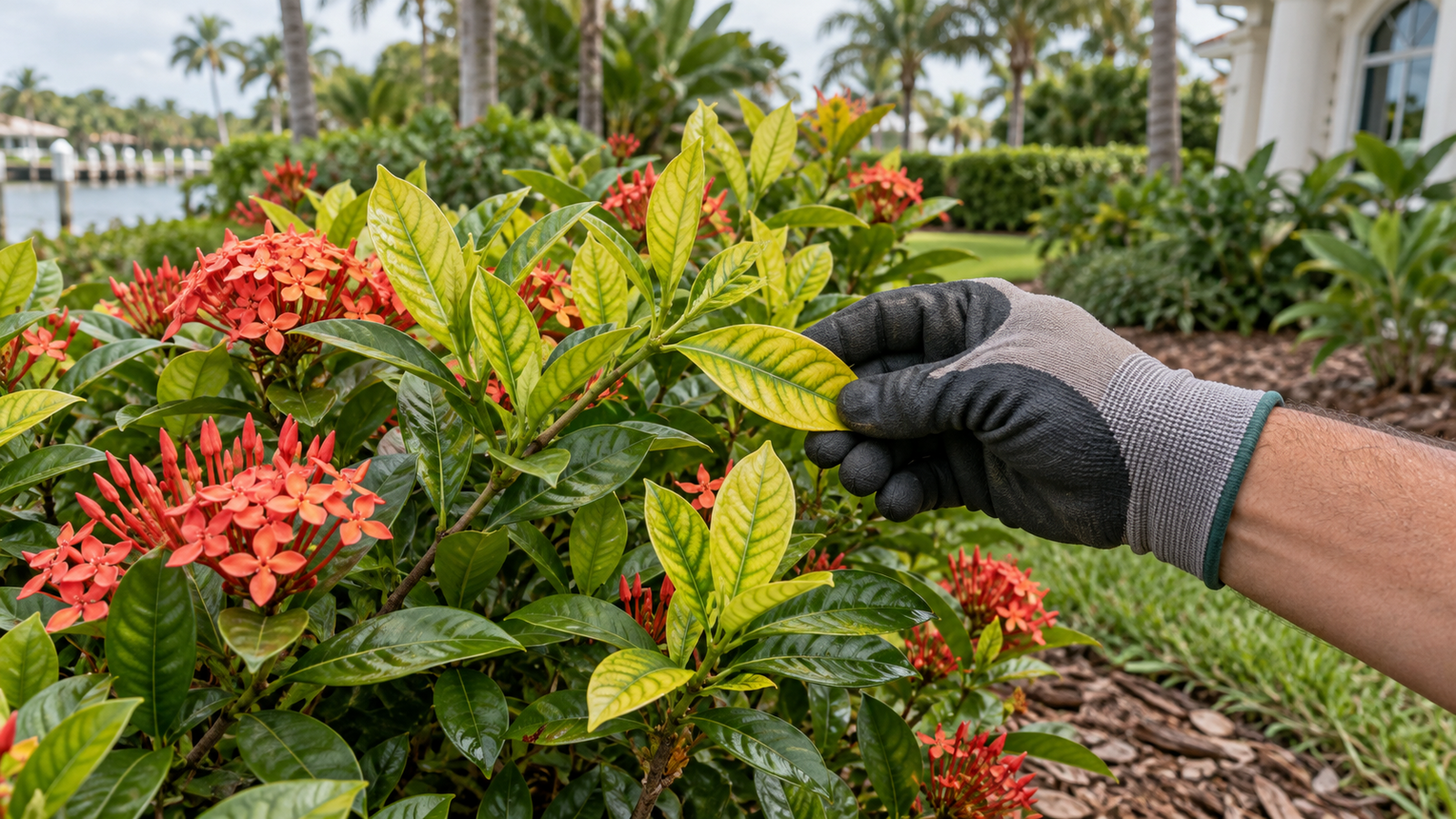
Iron chlorosis often appears as yellow tissue between veins that remain noticeably green. On ixora and gardenia, the newest leaves commonly show the pattern first because iron does not move readily from older tissue into new growth. Compare several shoots instead of judging one damaged leaf. Uniform yellowing, scorched margins, spots, insect residue, or older leaves fading first can point toward different problems. A clear pattern is a useful clue, but it is not proof that the soil lacks iron.
Why Florida Soil Can Trigger Chlorosis
Ixora and gardenia generally perform best in acidic conditions. In alkaline soil, iron may be present but chemically unavailable to the roots. South Tampa properties can contain shell, limestone, concrete residue, imported fill, or alkaline irrigation water that raises soil reaction around a bed. Adding ordinary fertilizer does not automatically correct that lockup. Repeated applications can increase salt around stressed roots while the new leaves remain yellow. The correct response begins with understanding the bed, not assuming that every pale shrub needs more fertilizer.
Check Moisture and Root Health
Overwatering, poor drainage, damaged roots, and planting too deeply can reduce nutrient uptake and imitate a deficiency. Feel the soil several inches below the surface before the next irrigation cycle. It should not remain saturated or smell sour. Look for buried stems, mulch piled against the base, recent trenching, or runoff that collects around the plant. Confirm that sprinkler spray is not soaking the bed every time the lawn runs. Correcting chronic wetness may improve nutrient uptake without adding another product.
Review Soil Conditions Before Treatment
A soil pH result gives better direction than leaf color alone. Samples should represent the active root zone and should not include mulch, fertilizer granules, or material from only one unusual spot. Also compare affected shrubs with healthy plants in the same bed. If every acid-preferring plant is chlorotic while other species look normal, the site conditions deserve attention. Ecoscape does not need to guess from a photograph alone. An on-site review can connect the leaf pattern with drainage, irrigation, planting depth, and surrounding materials.
Correct the Cause Carefully
Improve drainage, adjust irrigation, uncover a buried root flare, or move mulch away from stems before relying on nutrients. When iron is appropriate, use a landscape product labeled for the plant and follow its rate, placement, and safety instructions. The suitable iron form depends partly on soil conditions, so more product is not necessarily better. Foliar applications may green leaves temporarily without solving the root-zone problem. Avoid combining several fertilizers and amendments at once because that makes the plant's response difficult to interpret.
Avoid Common Chlorosis Mistakes
Do not fertilize a wilted, waterlogged, newly transplanted, or severely root-damaged shrub simply because it is yellow. Avoid lowering soil pH rapidly with unmeasured amendments. Do not spread fertilizer against trunks or apply it before heavy rain, where runoff can move the material away from the roots. Insects such as scale can also weaken foliage, so inspect stems and leaf undersides for bumps, sticky residue, or sooty mold. Treating the wrong cause wastes time and may intensify the stress.
Track Recovery and Ask Ecoscape for Help
Photograph the same shoots every two weeks and judge recovery by the condition of new growth. Existing yellow leaves may not become perfectly green even when the underlying problem is corrected. Continue checking soil moisture and avoid changing the care plan after every irrigation cycle. If several ixora or gardenia shrubs remain yellow, the bed stays wet, or the planting conditions are unclear, book an Ecoscape Outdoor Services assessment. We can evaluate the landscape, irrigation, and root-zone conditions and recommend a practical correction before unnecessary fertilizer causes more damage.