Recognize Lethal Bronzing Before a Florida Palm Becomes a Hazard
Why This Matters
Lethal bronzing is a serious palm disease found in Florida and caused by a phytoplasma carried by sap-feeding insects. It affects several palm species and can kill an infected palm. Early symptoms may resemble drought, nutrient deficiency, transplant stress, or root damage, so owners sometimes wait too long. A tall declining palm near a driveway, sidewalk, roof, or utility area can also become a property-safety concern as dead fronds and structural condition worsen.
How the Disease Progresses
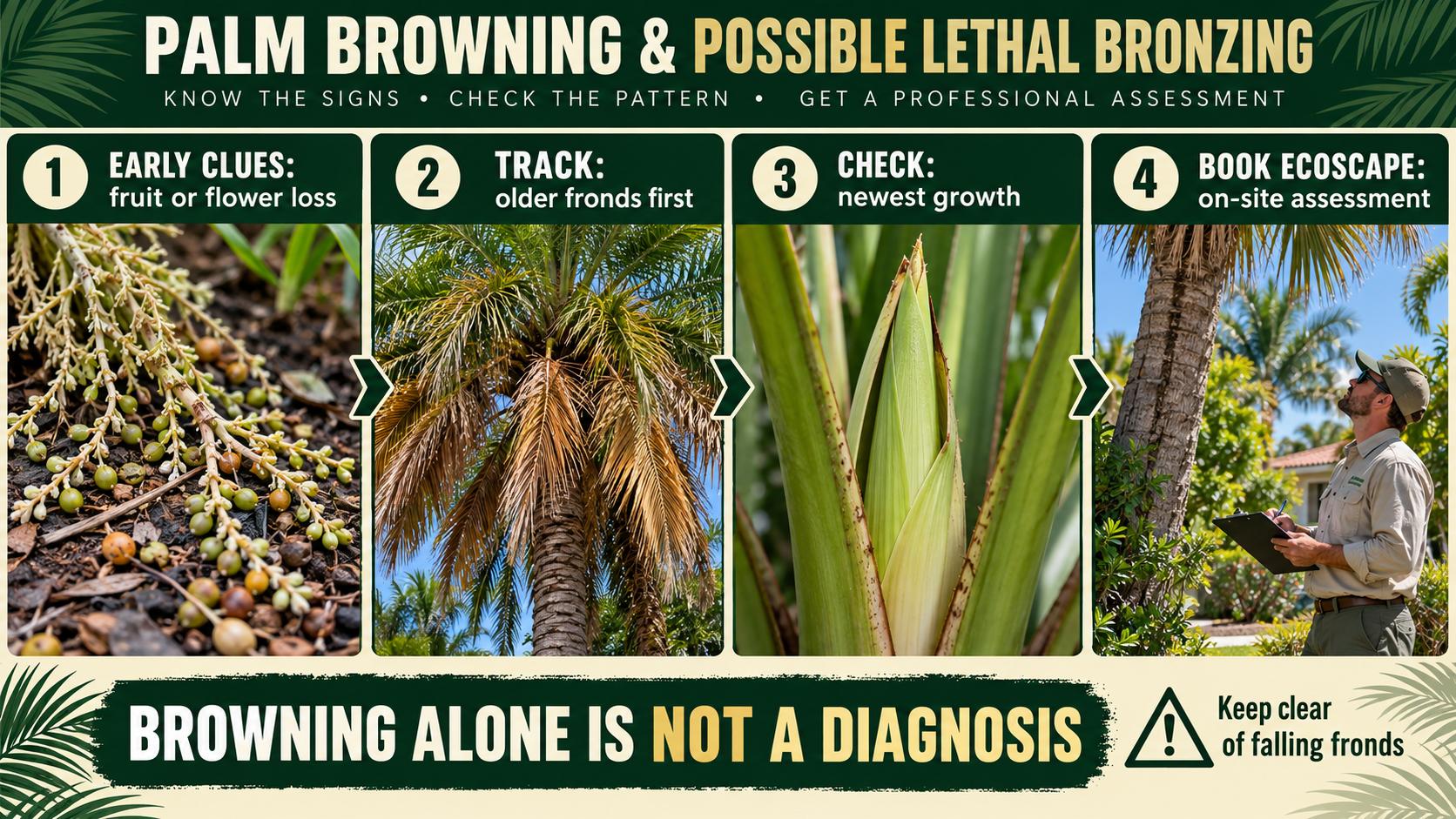
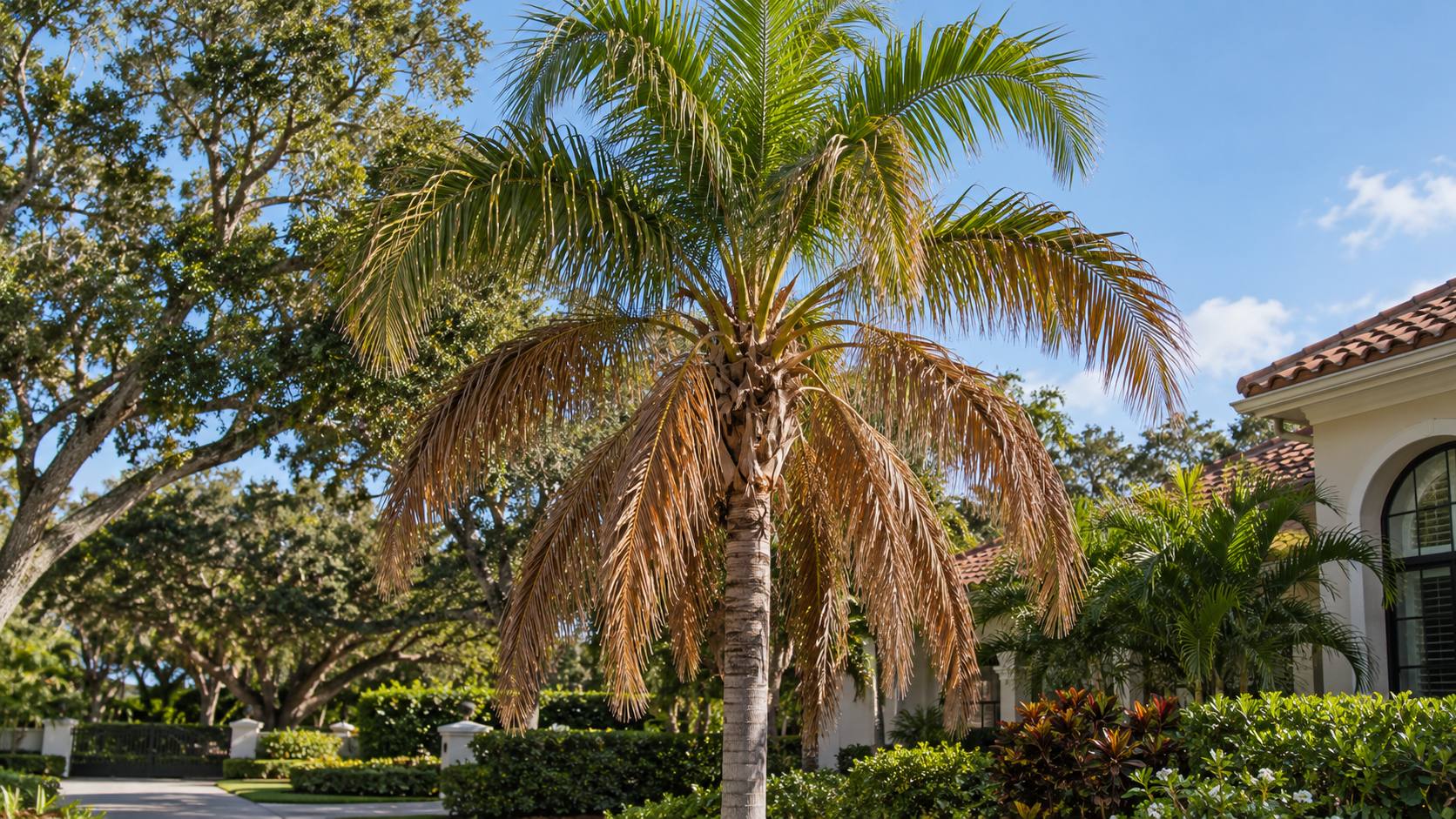
The symptom order matters. On fruit-producing palms, premature fruit drop is often an early warning. Flowers may die next. Older lower fronds then change from green to reddish brown or bronze, with discoloration moving upward through the canopy. Eventually the spear leaf and newest growth die. Once the spear leaf is affected, the palm cannot recover. Timing varies, so a single brown frond is not enough for a confident diagnosis.
What to Inspect
Stand back and photograph the entire canopy, then compare it with earlier photos if available. Note whether fruit dropped suddenly, whether flowers look dead, and whether bronzing begins in the oldest leaves. Check the trunk base and root zone for excavation, standing water, mower damage, or recent grade changes that could explain decline. Keep people away from loose fronds. Do not climb or cut into a questionable palm unless you have the proper training and equipment.
The Correct Response
Book an on-site palm assessment with Ecoscape Outdoor Services promptly. Ecoscape will inspect the visible symptoms, root zone, irrigation, and site conditions, then explain whether laboratory testing or a specialized treatment is appropriate. Laboratory testing can help distinguish lethal bronzing from other problems while the spear leaf is still alive. Confirmed palms that have lost the spear should be removed because they will not recover. Nearby susceptible palms may be candidates for a preventive antibiotic program under professional direction, but injections do not cure a palm after infection. Sanitize equipment and avoid unnecessary pruning during evaluation.
Common Mistakes
Do not assume every yellow or brown palm has lethal bronzing. Nutrient deficiencies usually produce recognizable patterns and require different treatment. Do not apply extra fertilizer, fungicide, or water without identifying the cause. These steps can waste money and may worsen root-zone conditions. Another mistake is removing only discolored fronds while ignoring the progression. Excessive pruning strips useful green tissue and does nothing to stop a systemic disease.
When Professional Help Makes Sense
Professional evaluation is especially important for large palms, palms near buildings or pedestrian areas, and properties with several susceptible species. Book an Ecoscape Outdoor Services appointment to document visible symptoms, assess irrigation and root-zone conditions, and plan safe next steps. Ecoscape can coordinate any appropriate laboratory testing or specialty treatment and plan landscape restoration after removal when needed. Follow-up inspections matter because nearby palms may develop symptoms later.
Helpful Resources
UF/IFAS provides a detailed overview of symptoms, susceptible palms, testing, and management in Lethal Bronzing Disease. Use that article for background information. Keep dated photos and maintenance notes, and inspect nearby palms monthly after a confirmed case. If you see changes, book an Ecoscape appointment for a site-specific assessment.