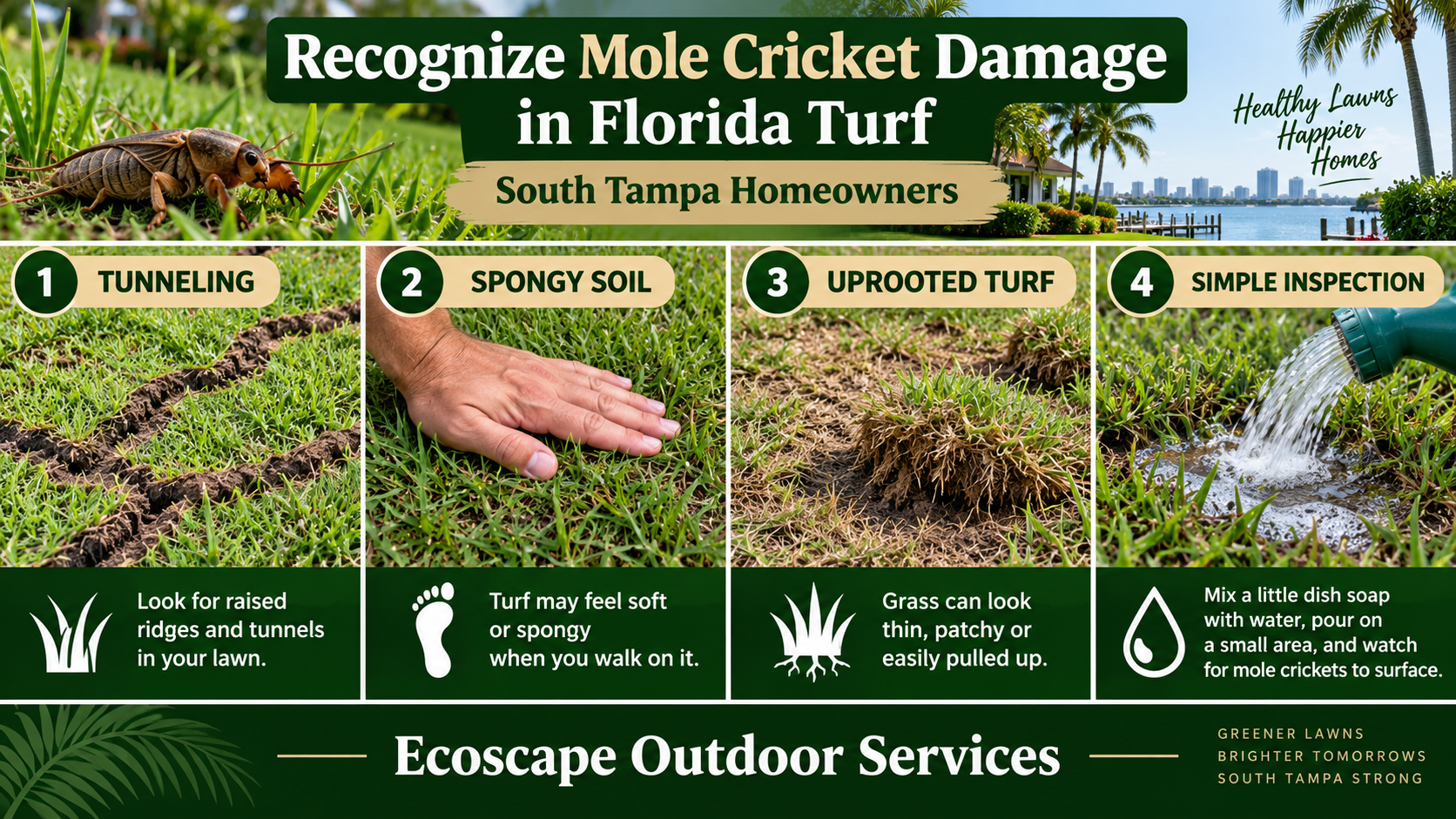
Recognize Mole Cricket Damage in Florida Turf
Mole Crickets Damage Roots and Soil
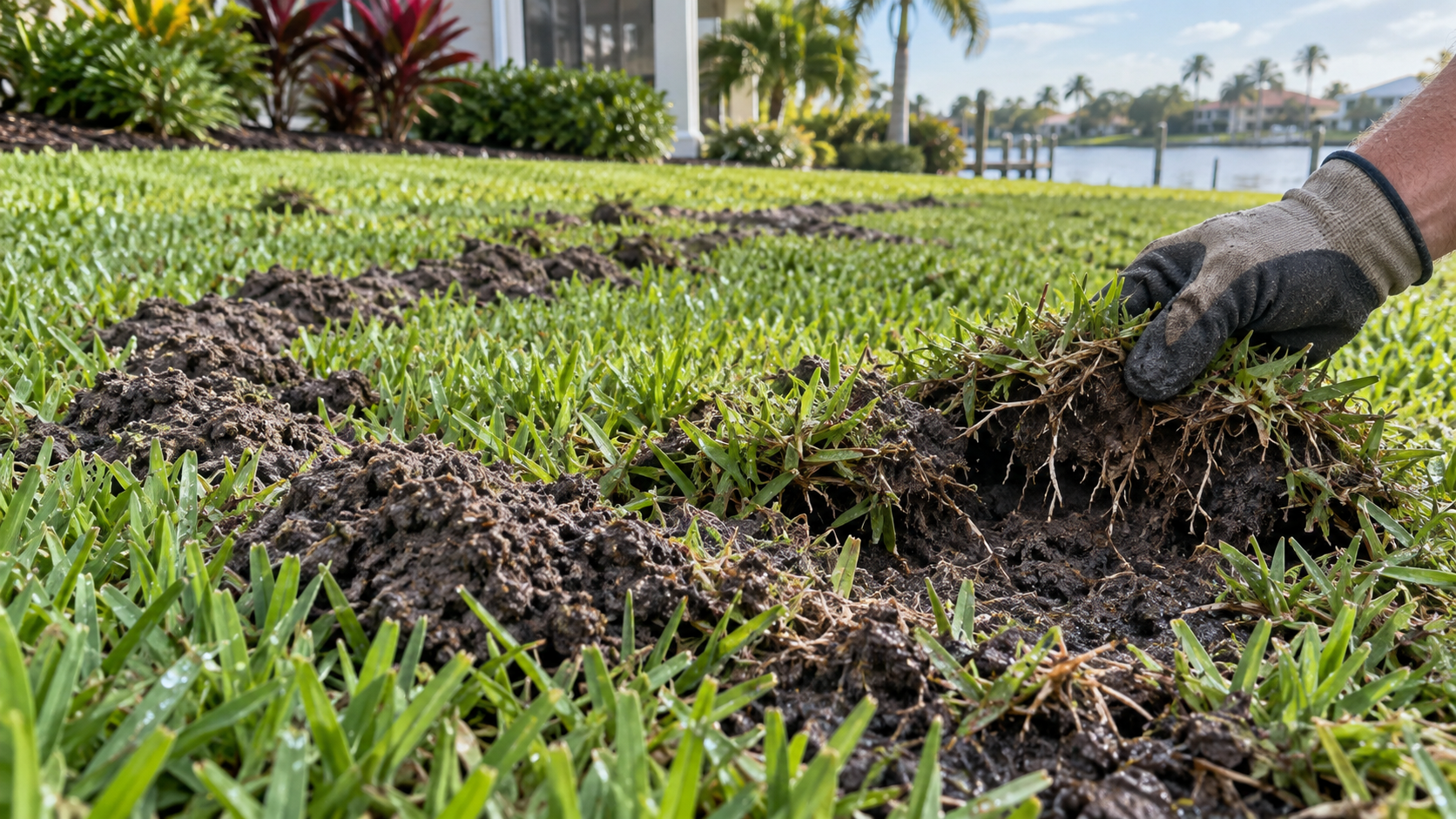
Mole crickets tunnel through the upper soil, loosen turf, disturb roots, and create raised or spongy areas. Some species also feed on roots and shoots. Damage often becomes visible as thinning grass, poor rooting, and winding surface ridges. Bahiagrass and bermudagrass often suffer heavily, but any suspicious tunneling in a South Tampa lawn deserves inspection.
Walk the Lawn Slowly
Feel for soft or spongy soil beneath your feet. Look for small mounds, cracked soil, loose turf, and narrow tunnels near the surface. Damage may appear worse after rain or irrigation makes disturbed soil more visible. Mark the affected area and compare it with firm, healthy turf. Armadillos or birds digging for insects may add secondary disturbance.
Check Root Attachment
Gently pull or lift a small section along the damaged edge. Healthy turf should resist because roots anchor it to the soil. Mole-cricket-damaged grass may lift easily where tunneling and feeding have reduced root contact. Inspect the soil beneath the lifted turf for galleries and insects. Replace the section carefully and water only as needed after inspection.
Use a Soap Flush for Scouting
A measured soap-and-water flush over a defined area can drive mole crickets to the surface for identification and counting. Follow current Extension guidance, avoid excessive detergent, and rinse the area afterward. Test more than one location because young crickets and damage are unevenly distributed. Note insect size because treatment timing often depends on life stage.
Separate Tunneling From Other Damage
Earthworms, irrigation repairs, burrowing animals, drought, and root disease can create loose or declining turf. Review the shape and location of the disturbance. Mole cricket tunnels form close to the surface and often create raised, meandering soil. An irrigation trench follows a straighter construction line, while root disease may weaken turf without obvious galleries.
Time Professional Control
Young mole crickets are generally more vulnerable than large adults. A licensed pest-control provider should confirm the species, activity level, and appropriate treatment window. Do not treat an entire property based on one old tunnel. Recheck after control and repair irrigation or drainage issues that interfere with turf recovery.
Protect the Turf During Recovery
Ecoscape Outdoor Services documents tunneling, rooting strength, moisture conditions, and visible turf decline during South Tampa service. We reduce avoidable mowing stress, correct irrigation concerns within our scope, and coordinate with licensed treatment partners when active mole crickets are confirmed. Accurate scouting directs treatment where it belongs and protects unaffected lawn areas.