Recognize Oleander Caterpillar Damage Before Shrubs Are Stripped
Know the insect and its damage
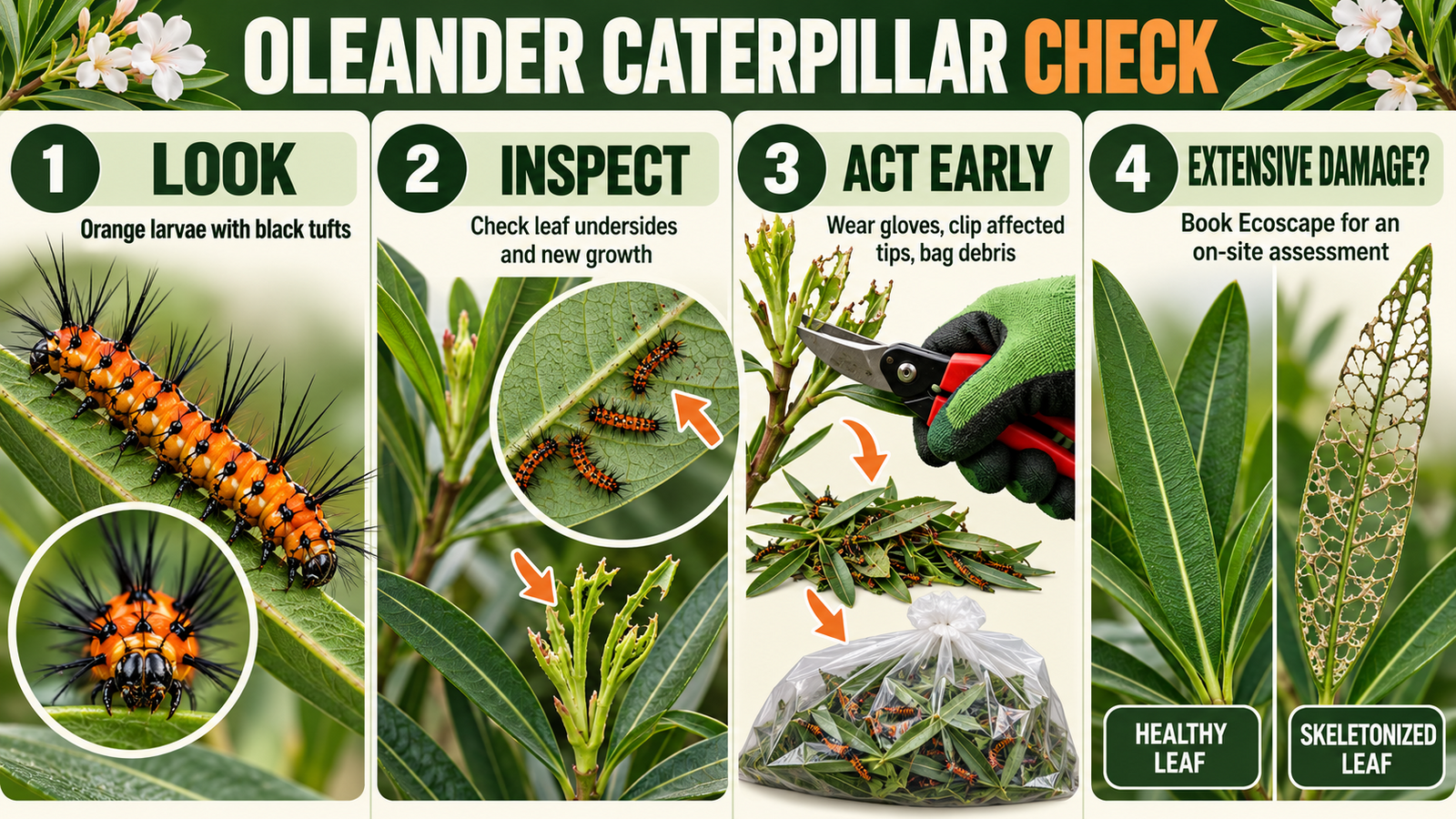
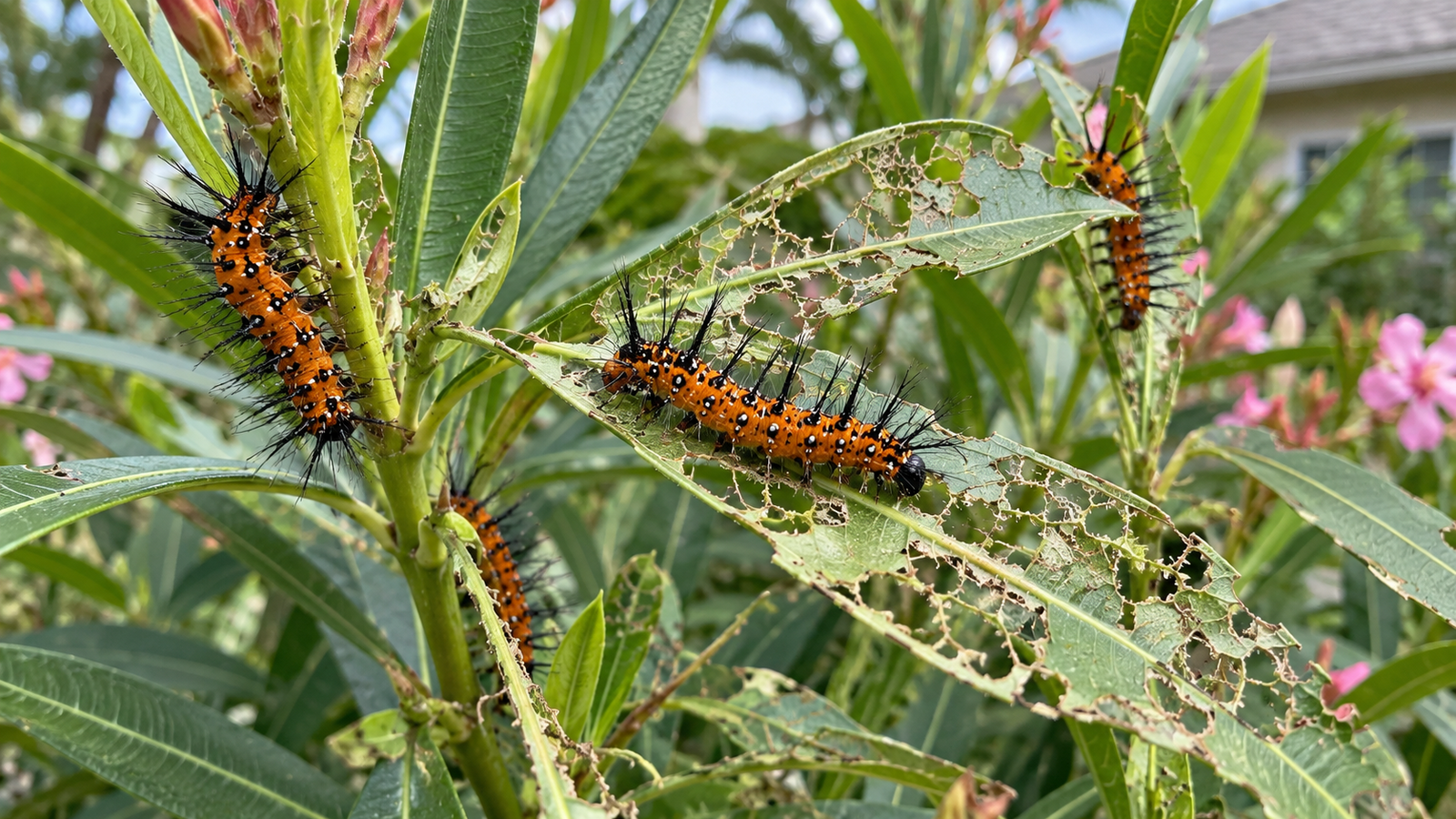
Oleander caterpillars are bright orange with conspicuous black hair tufts. Young larvae often feed together on the undersides of leaves, removing the soft tissue and leaving veins behind. This skeletonized appearance can spread through a shrub quickly. Older larvae may consume entire leaves and wander onto nearby walls or plants. Their bold color and group feeding make them easier to identify than many Florida leaf-chewing pests.
Inspect the right parts of the shrub
Begin with new growth and the lower surface of leaves near recently damaged tips. Look for clusters of small larvae, pale feeding windows, skeletonized leaves, dark droppings, and bare stems. Compare several branches before deciding how widespread the problem is. Check neighboring oleanders as well, but do not assume every orange insect is the same species. A clear photo of the larvae and feeding pattern helps document changes.
Act early on a small colony
For a limited infestation, wear gloves and protective clothing because oleander sap is toxic and can irritate skin. Clip only the affected tips or remove larvae without crushing them against bare skin. Bag the material rather than dropping it beneath the shrub, and wash tools after use. Keep children and pets away from cut foliage, and never burn oleander trimmings or use them in compost intended for edible gardens.
Protect beneficial insects and blooms
Avoid spraying the entire landscape simply because one oleander has damage. Broad treatments can affect pollinators and natural enemies, especially when nearby plants are flowering. If a product is considered, the label must list the plant, target pest, application site, and safe directions. Never apply more than the label allows, and keep treatments off open blooms visited by bees and butterflies.
Support recovery in Florida conditions
A healthy, established oleander can often replace lost foliage after the feeding stops. Keep the root zone evenly watered without leaving saturated soil, maintain mulch on the soil surface away from the stems, and avoid a heavy fertilizer push during stress. Heat and drought can slow recovery, while overwatering may create a second problem. Monitor new leaves weekly for fresh feeding and returning larvae.
Avoid common identification mistakes
Do not diagnose by leaf loss alone. Cold injury, drought, scale insects, and pruning can also leave sparse branches, but they do not produce orange larvae and skeletonized leaves together. The caterpillar's long hairs may look threatening, yet the greater practical hazard during cleanup is contact with toxic oleander sap. Avoid severe shearing that removes healthy foliage and hides whether feeding has actually stopped.
When to request an on-site assessment
Professional help is useful when larvae cover multiple shrubs, the plants are too large to inspect safely, or repeated defoliation continues despite careful cleanup. Book Ecoscape Outdoor Services for an on-site assessment of the damaged oleanders and surrounding landscape. Ecoscape can confirm the visible pattern, recommend practical next steps, and help protect the shrubs without turning a localized pest problem into unnecessary whole-yard treatment.