Recognize Palm Weevil Damage Before Crown Collapse
Why Palmetto Weevils Matter
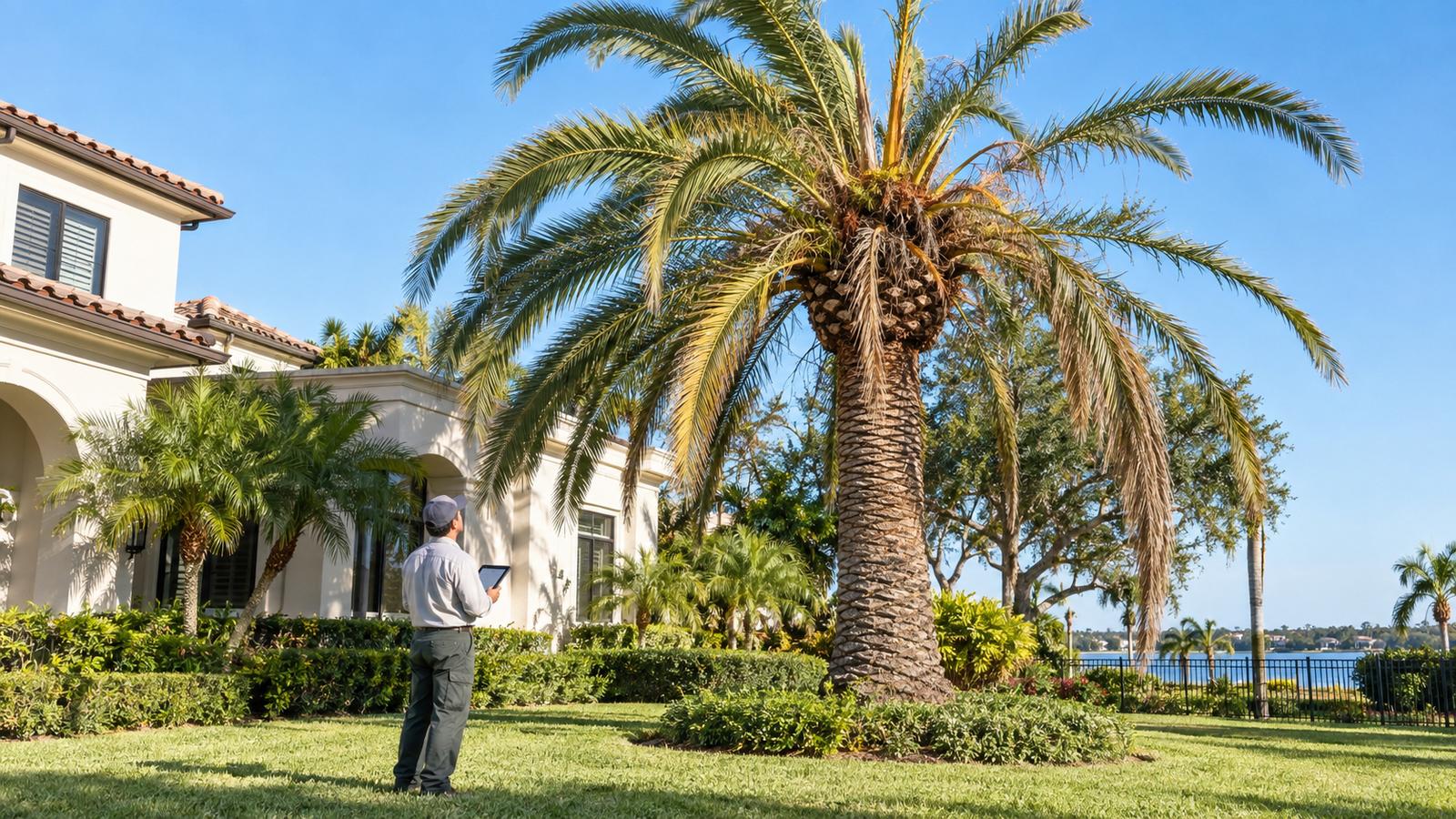
The palmetto weevil is native to Florida and can become a serious pest of stressed, damaged, or recently transplanted palms. Adults lay eggs in vulnerable crown tissue, and the larvae feed within the palm where early damage is difficult to see. Canary Island date palms are well-known hosts, but several palm species can be affected. Once feeding and associated decay compromise the growing point, decline may be irreversible. The crown can eventually break or topple, changing a plant-health problem into a property and personal-safety concern.
Watch the Newest Growth
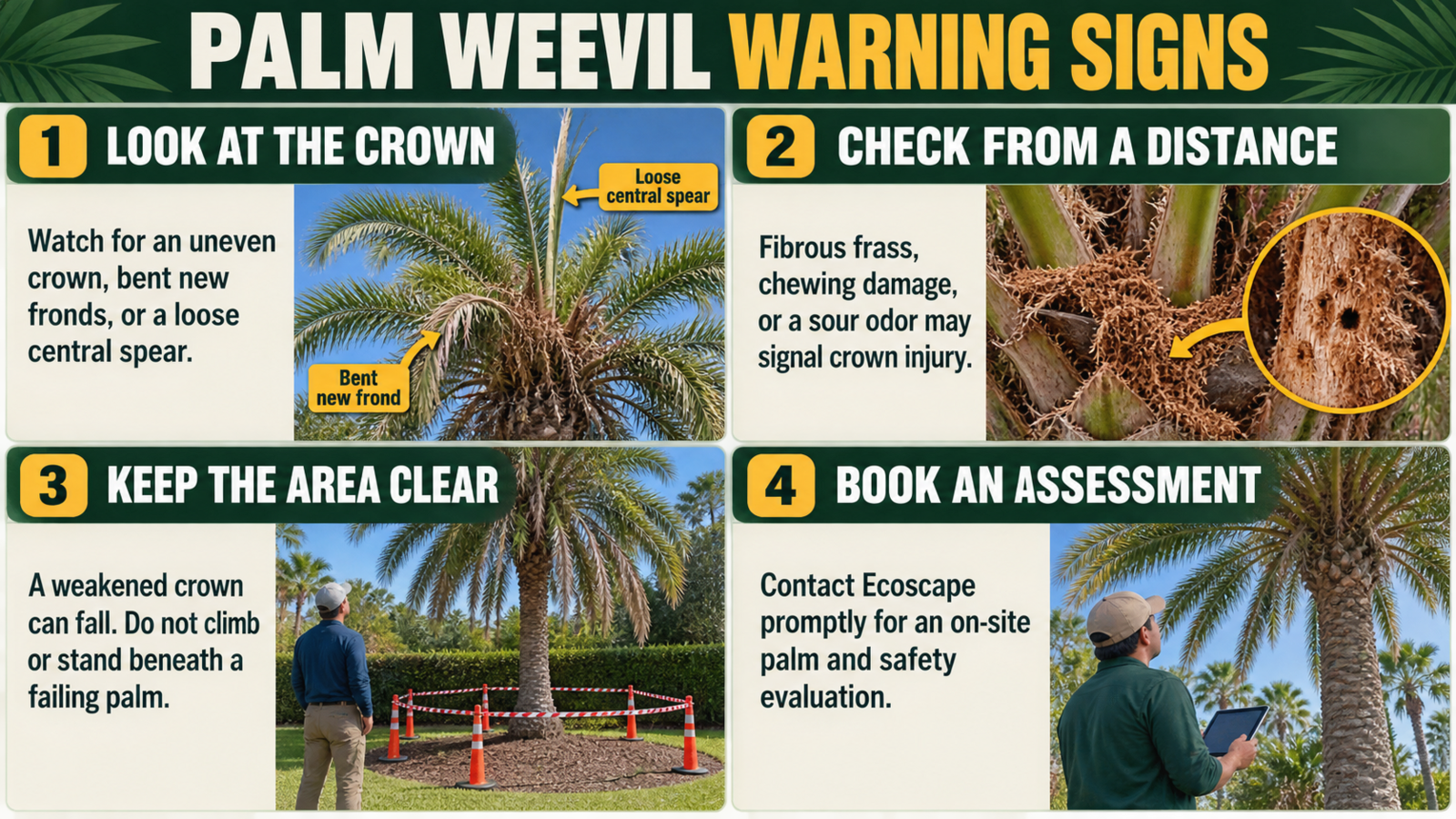
Begin with the center of the crown rather than the oldest lower fronds. Warning signs can include an uneven or thinning canopy, distorted new leaves, new fronds that bend or droop unexpectedly, and a central spear that appears loose or collapses. On upright palms, older leaves may begin to droop before the crown fails. A palm that changes shape rapidly deserves attention even if much of the foliage is still green. Photograph the crown from a fixed, safe location so changes can be compared over several days.
Inspect Safely From the Ground
Use binoculars or a camera zoom to examine the crown without climbing or standing directly below it. Look for reddish-brown fibrous debris, chewed tissue, holes, or fluid around damaged crown material. A fermented or sour odor may accompany internal decay, although odor alone is not a diagnosis. Larvae and cocoons are usually hidden inside the palm. Do not pull forcefully on a spear, cut open the crown, or strike the trunk to investigate. Those actions can worsen damage and expose someone to falling material.
Separate Weevil Damage From Look-Alikes
Palm decline can also result from lethal bronzing, Fusarium wilt, nutrient deficiencies, lightning, cold injury, root damage, transplant stress, or excessive moisture. The sequence and location of symptoms matter. One-sided leaflet death differs from a collapsing central crown, while broad yellowing may follow another pattern. Weevils may also attack a palm already weakened by disease or stress, making the original cause harder to determine. Avoid naming the problem from one brown frond. Review the crown, trunk, root zone, recent work, irrigation, and speed of decline together.
Create a Safety Zone Immediately
If the crown is leaning, separating, or dropping heavy material, keep people, pets, vehicles, and equipment away from the fall area. Do not park beneath the palm or allow workers to prune it from a ladder. Wind and rain can increase the chance of sudden failure. Mark the area clearly and arrange a prompt on-site evaluation. A severely damaged palm may not be recoverable, but only a safe assessment can determine the appropriate next step. Treat a visibly unstable crown as a hazard rather than a routine pruning task.
Avoid Common Response Mistakes
Do not remove green fronds in an attempt to lighten or reshape the crown. Excessive pruning adds stress and does not reach larvae feeding inside damaged tissue. Avoid drilling, injecting, or applying insecticide without a confirmed plan, correct product labeling, and an understanding of the remaining crown integrity. Do not move suspect palm debris around the property unnecessarily. Most important, do not delay because the outer canopy still looks partly green. Internal feeding can be advanced before the full crown shows obvious decline.
Book Ecoscape Before the Crown Fails
Book an Ecoscape Outdoor Services assessment when a palm develops distorted new growth, a loose spear, sudden crown asymmetry, fibrous crown debris, or accelerated drooping. Ecoscape can evaluate visible symptoms from a safe position, review recent site stress, establish an exclusion area, and recommend the appropriate property response. For scientific background, see the UF/IFAS palmetto weevil guide. Contact Ecoscape promptly rather than approaching or climbing a palm whose crown may be structurally compromised.