
Recognize Root Intrusion in Yard Drains Before Flooding
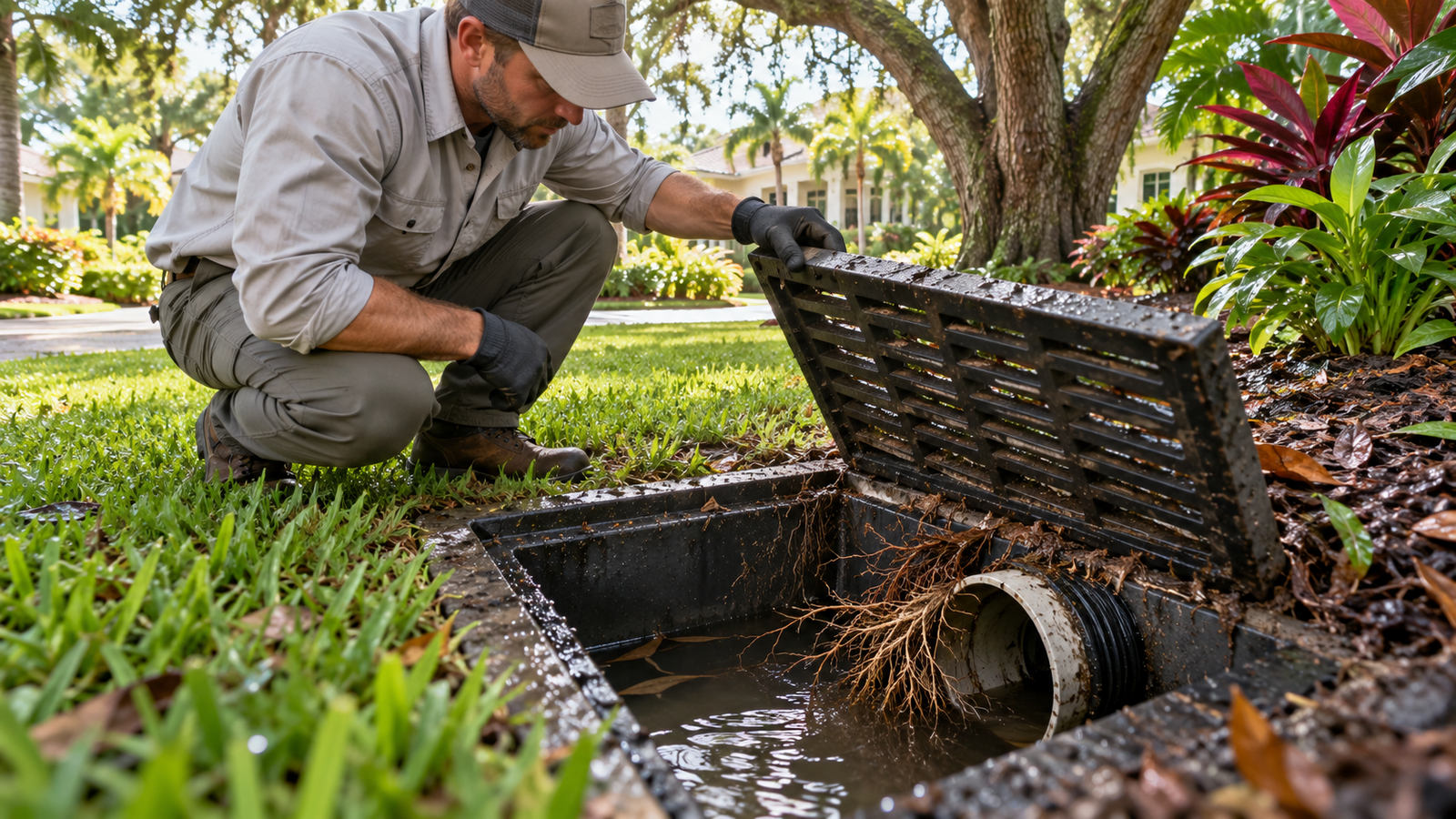
Recognize the Pattern of Root Intrusion
Roots do not usually enter an intact drainage system without an opening, but they can exploit loose joints, cracks, gaps, and wet sediment. Warning signs include a drain that slows again soon after surface cleaning, repeated ponding near one section, fine roots visible inside a basin, or recurring debris at an outlet. Compare performance during several rain events. One brief puddle may reflect an intense storm, while the same slow area after ordinary rainfall deserves closer attention.
Rule Out Surface Blockage First
Turn off nearby irrigation and wait for standing water to recede enough for safe inspection. Remove leaves, grass clippings, mulch, and loose soil from the grate with gloved hands. Check that the grate sits level and that water can enter from every side. Many drainage problems begin at the surface, especially during Florida's wet season. If clearing the inlet restores normal flow and the problem does not return, roots may not be the primary cause.
Inspect Accessible Inlets and Outlets
Lift a removable grate only when the area is stable and free of electrical hazards, wildlife, and deep water. Look from above for fine feeder roots, sediment mats, shifted pipe connections, or roots entering around the basin wall. Also inspect the known discharge point for reduced flow or roots at the opening. Do not reach far into a pipe, enter a basin, or remove underground components. Photograph visible evidence and note which rain event produced the slow drainage.
Protect the Tree and the Drainage System
Do not cut large roots simply because they are close to a drain. Major root removal can weaken a tree or palm, and cutting without fixing the pipe opening invites new growth into the same wet area. A lasting correction may involve restoring a joint, replacing a damaged section, improving the basin connection, or adjusting the route around important roots. The landscape, tree stability, pipe condition, and safe discharge point should be considered together before excavation begins.
Consider Florida Soil and Rainfall
South Tampa's sandy soils can move into a damaged connection, creating a moist pocket that attracts fine roots and reduces pipe capacity. Saturated soil may also settle around a basin and pull a joint out of alignment. Keep mulch and newly installed plants away from drain openings, and avoid placing thirsty large-growing species directly over shallow drainage lines. After tropical rain, check both the inlet and outlet rather than assuming the visible puddle identifies the exact underground failure.
Avoid Quick Fixes That Create New Damage
Do not pour herbicide, salt, drain cleaner, or unapproved root-control products into a landscape drain. These materials can harm plants, soil, water quality, and drainage components without repairing the entry point. Avoid forcing blades, pressure equipment, or improvised tools into the pipe. Do not cover persistent ponding with extra soil or sod, because raising the surface can redirect water toward structures and hide the problem until the next heavy storm.
Track Drain Performance and Book an Assessment
After cleaning the grate, observe the drain during the next normal rainfall and photograph the water level at consistent intervals. Note whether water backs up immediately, drains slowly, or returns after appearing clear. Keep people away from slippery or unstable ground. If fine roots are visible, ponding repeatedly returns, or a nearby tree may be affected by repair work, book an Ecoscape Outdoor Services drainage assessment. We can evaluate the basin, drainage route, surrounding landscape, and root conflict before flooding or unnecessary cutting causes greater damage.
