Recognize Rugose Spiraling Whitefly Before Sooty Mold Spreads
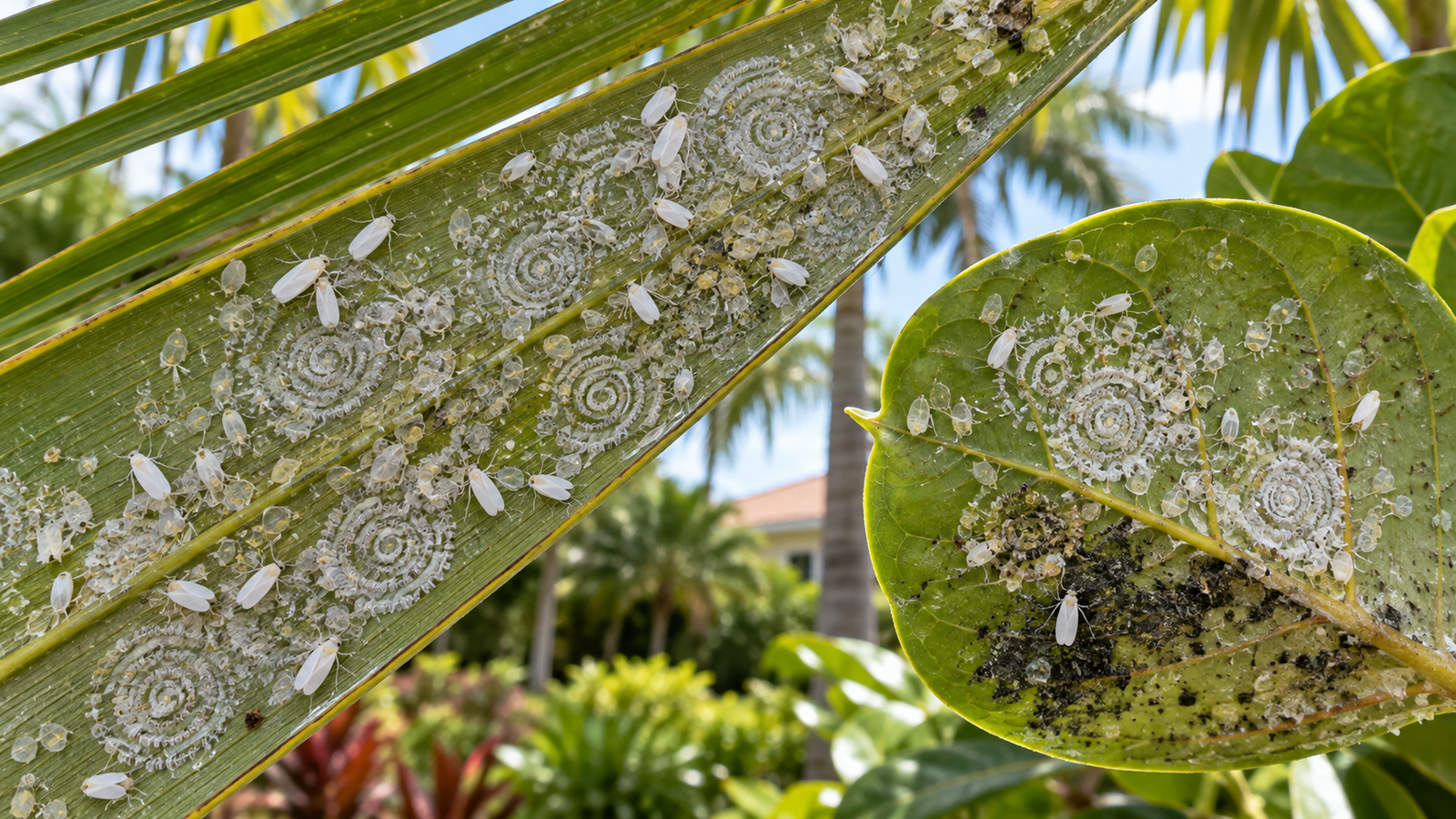
Recognize the signature white spirals
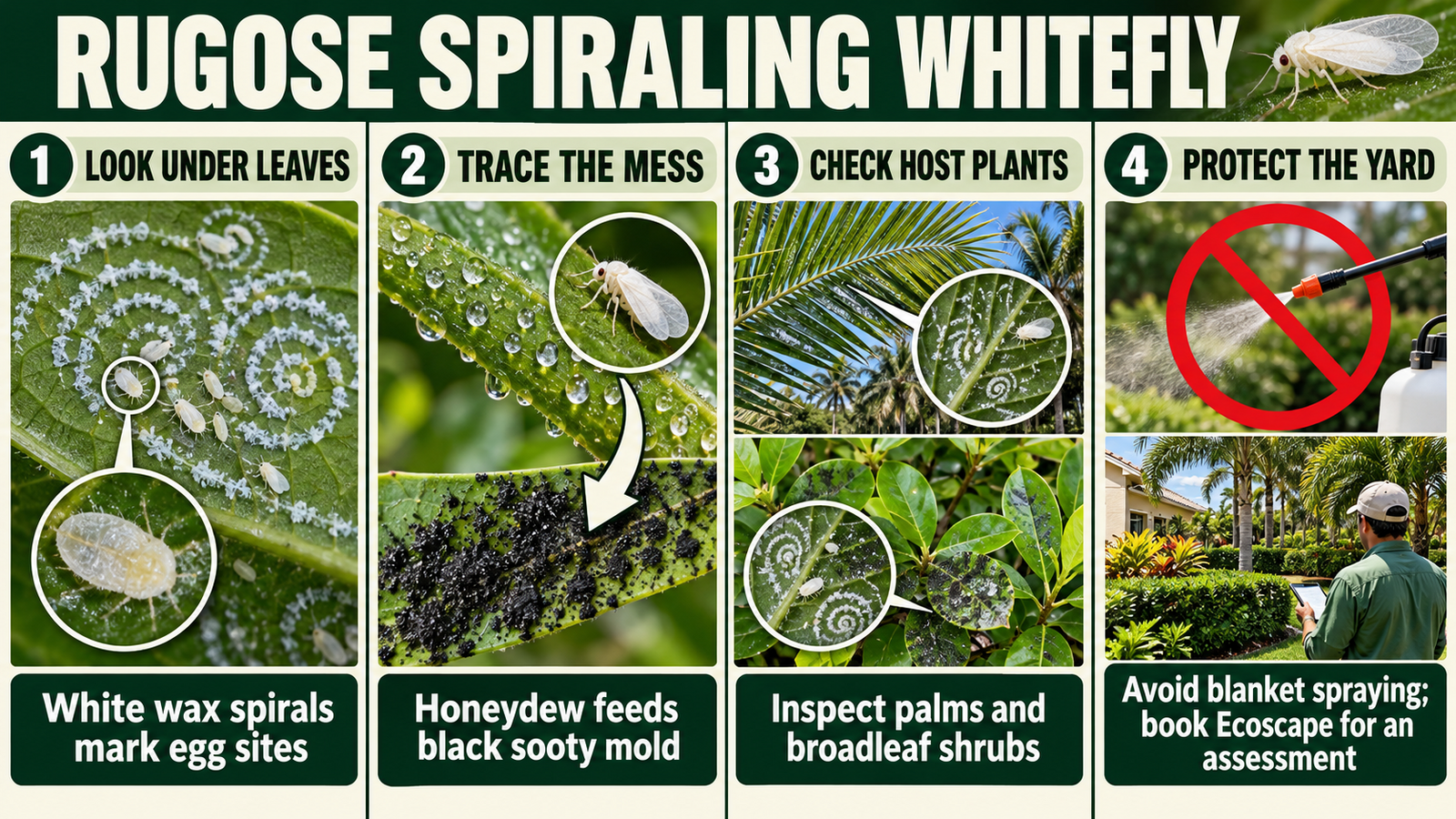
Rugose spiraling whitefly females place eggs in circular or spiral patterns, usually on the undersides of leaves, and cover them with white wax. Affected foliage may also hold small white adults, immature insects, and heavier waxy buildup. These signs can occur on palms and many broadleaf landscape plants. The spiral pattern is a stronger clue than seeing one small white insect fly from a disturbed leaf.
Inspect leaves without spreading the problem
Choose several branches or fronds from the lower, middle, and outer canopy. Turn leaves over gently and compare clean areas with affected ones. Look for fresh spirals, settled immature stages, sticky surfaces, ants visiting honeydew, and adults that lift when foliage moves. Photograph the underside and the entire plant. Keep pruning debris contained, and avoid carrying infested clippings through other planting beds during the inspection.
Connect honeydew to black sooty mold
Whiteflies feed on plant fluids and release sugary honeydew. Black sooty mold grows on that residue, coating leaves and sometimes objects beneath the plant. The mold is secondary; wiping the black coating without addressing active insects does not stop new deposits. Check patio furniture, cars, lower plants, and hard surfaces below the canopy for sticky spotting. Heavy leaf coverage can also reduce the light reaching the plant surface.
Protect natural enemies and nearby blooms
Avoid a blanket insecticide treatment based only on black leaves. Florida landscapes contain predators and parasitoids that can help suppress whiteflies, and broad treatments may disrupt those beneficial insects. Keep sprays away from open blooms visited by pollinators. If any pesticide is considered, the label must include the plant, pest, application site, method, and precautions. Treating an unreachable tall canopy also creates coverage and safety problems.
Use practical cleanup and plant care
On reachable foliage, a gentle water rinse can remove some loose wax, honeydew, and sooty mold after the active pest issue is addressed. Do not blast delicate leaves or drive debris into neighboring plants. Maintain appropriate root-zone watering, keep mulch away from stems, and avoid unnecessary fertilizer that forces tender growth. Prune only dead or badly damaged material rather than stripping a palm or shrub of functioning foliage.
Monitor before assuming the problem is gone
Old wax and sooty mold may remain after insect numbers decline, so compare dated photos and inspect new growth every one to two weeks. Fresh spirals, new sticky deposits, increasing ants, leaf drop, or spreading black coating show continued activity. Do not confuse whitefly wax with scale, mealybugs, mineral residue, or powdery mildew. Accurate identification prevents repeated treatments that never address the actual cause.
Request an Ecoscape assessment for widespread damage
If multiple palms or shrubs are affected, the canopy is out of reach, or honeydew is coating nearby property, book Ecoscape Outdoor Services for an on-site assessment. Ecoscape can document the visible pattern, evaluate plant stress and access, and recommend a focused landscape response. Early assessment is especially useful before unnecessary pruning or broad spraying disrupts healthy foliage and beneficial insects throughout the yard.