
Recognize Sooty Mold as a Sign of Sap-Feeding Insects
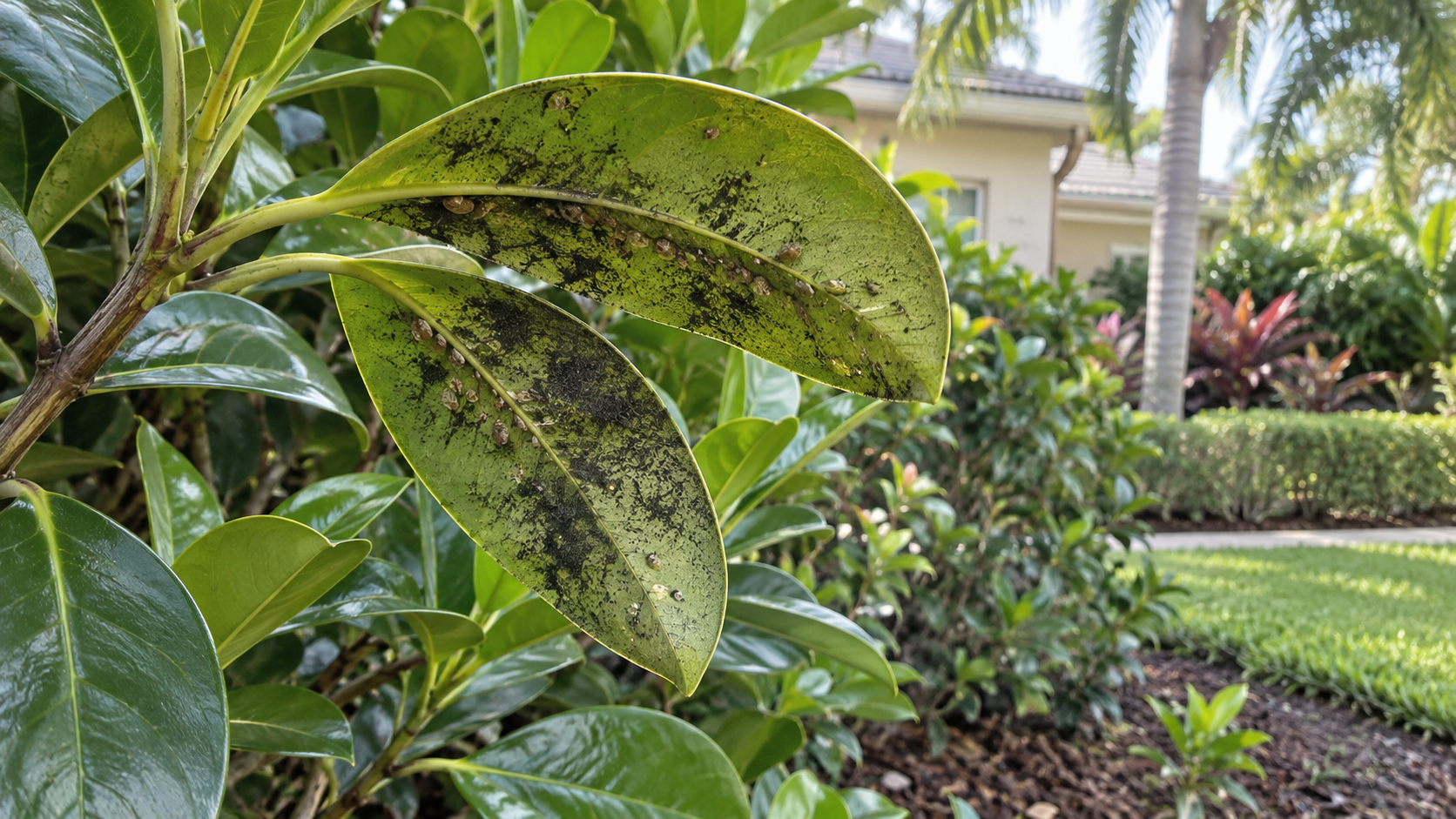
What the Black Coating Means
Sooty mold looks like black powder or soot across leaves, stems, furniture, pavement, or vehicles beneath a plant. The fungus grows on sticky honeydew produced by sap-feeding insects. It does not usually invade the leaf tissue, but a heavy coating blocks light and reduces the plant’s ability to function. In Florida’s warm climate, the coating can spread quickly when insect activity, humidity, and dense foliage occur together.
Inspect Above the Stain
Look at the plant directly above the black surface. Check tender new growth, branch joints, stems, and the undersides of leaves. Scale insects often resemble small raised bumps. Aphids cluster on soft growth. Whiteflies may lift from the foliage when disturbed. Mealybugs appear cottony. Use a hand lens and take clear photos. Identifying the insect matters because sooty mold is evidence of the feeding problem, not the original cause.
Follow the Honeydew Trail
Touch a protected leaf or surface and check for stickiness. Ants traveling up the trunk or stems often indicate honeydew because they feed on the sugary material and sometimes protect the insects producing it. Inspect nearby plants as well. Honeydew can drip from an overhanging tree onto healthy shrubs below, making the lower plant look responsible. Trace the residue upward before choosing any response.
Support the Plant First
Improve airflow with selective pruning that respects the plant’s natural form. Correct overwatering and avoid excessive nitrogen, which can encourage soft growth attractive to some pests. Rinse light residue from durable foliage with plain water during a time that allows leaves to dry. Do not blast delicate plants or force water into dense crowns. Healthy plants tolerate minor insect activity better than roots already stressed by poor drainage or irrigation.
Avoid Treating the Symptom Alone
Cleaning the black coating without addressing the insect source leads to another layer of mold. Do not apply random household cleaners, oils, or pesticides to every affected plant. Products differ by pest, plant species, temperature, and label restrictions. Spraying during intense Florida heat can injure foliage. Broad treatment also harms beneficial insects. Confirm the pest and use a licensed pest-control provider when regulated treatment is needed.
Track the Pattern
Photograph the same branches once a week and note new leaf growth, insect numbers, stickiness, ant activity, and fresh black residue. Old sooty mold can remain after the pest declines, so new growth provides a better measure of progress. Check irrigation and plant spacing during each visit. If the canopy continues thinning, leaves yellow, or multiple plants become affected, arrange a closer diagnosis instead of increasing treatment frequency blindly.
Use the Right Professional Help
Ecoscape Outdoor Services is not a pesticide-spraying company. Our maintenance teams help South Tampa clients notice developing plant stress, improve pruning, correct irrigation issues, and document conditions for diagnosis. When treatment requires a license, we help direct clients toward qualified pest-control partners. Catching honeydew, insects, and sooty mold early gives the plant a better recovery path and prevents unnecessary replacement or damaging trial-and-error applications.
