Recognize Take-All Root Rot Before Turf Thins Across the Yard
Root Disease Starts Below the Blades
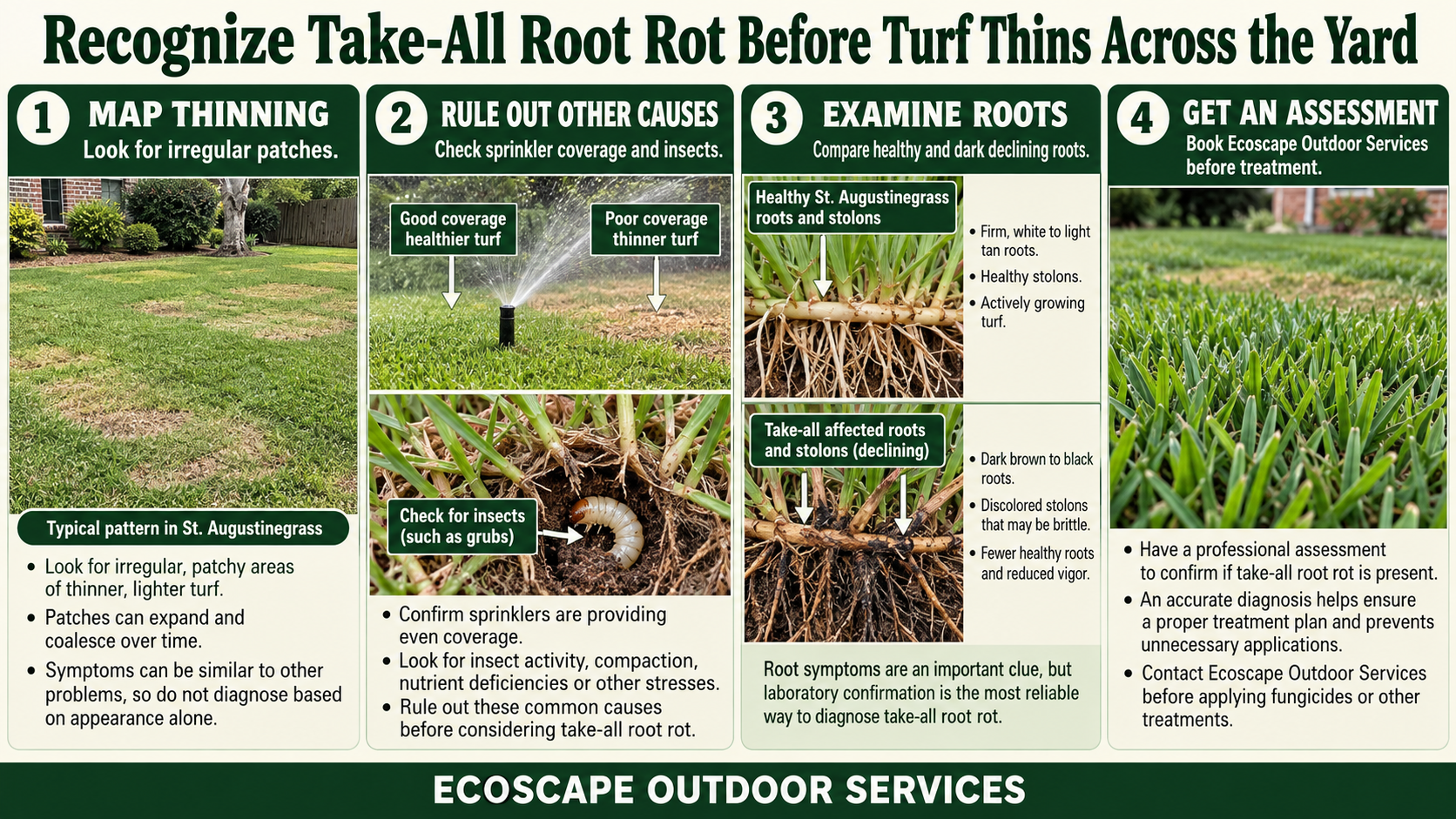
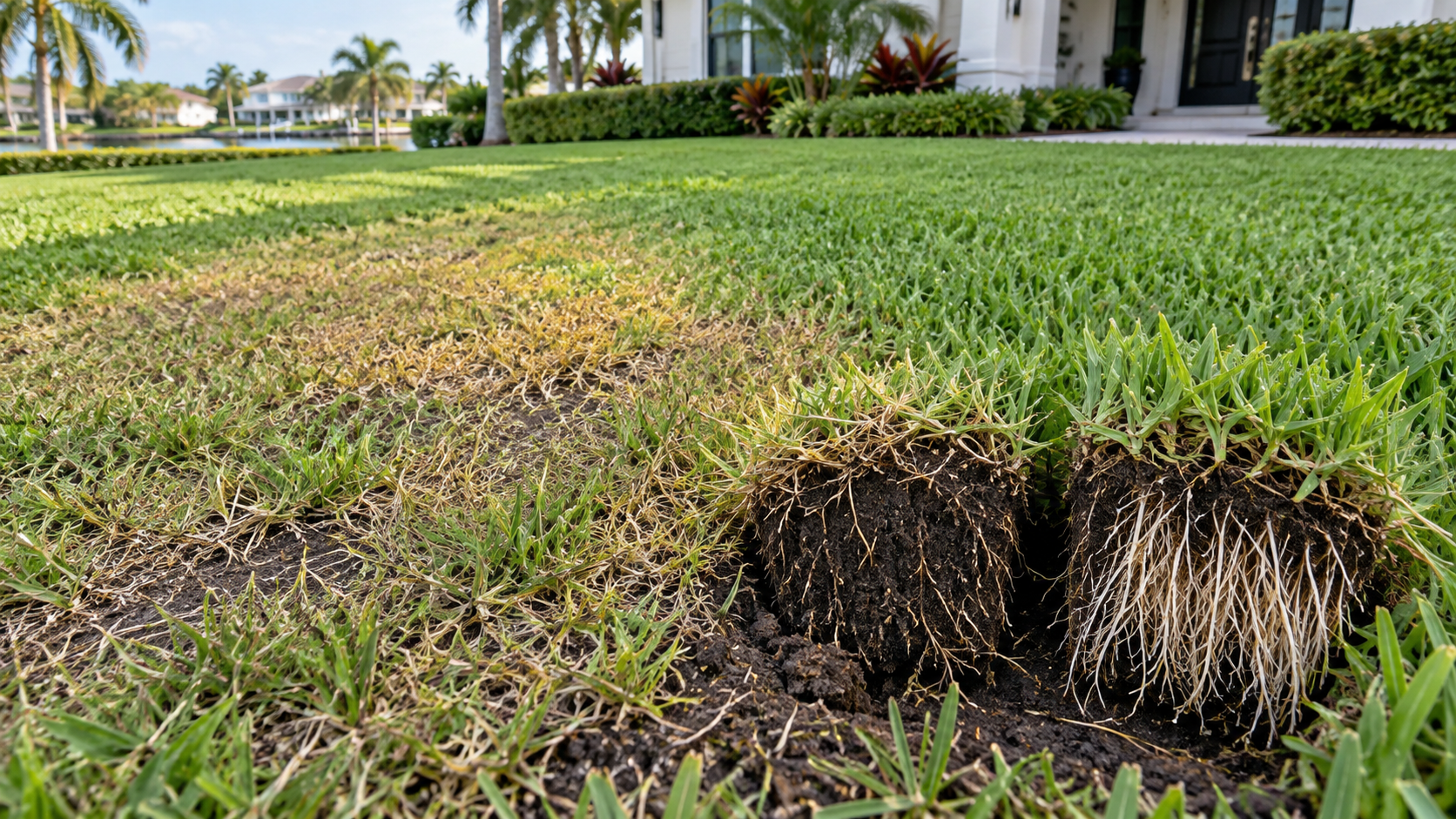
Take-all root rot affects the root system and can cause broad, irregular thinning in warm-season turf, especially St. Augustine grass. Early symptoms often resemble drought, nutrient trouble, or poor irrigation. Blades lose color, growth slows, and sections become easier to lift as roots decline. Because the visible canopy changes after root damage has started, close inspection matters. Treating only the yellow leaves misses the part of the plant driving the decline.
Study the Pattern
Walk the entire lawn and map where thinning begins. Compare high and low areas, shade and sun, irrigation zones, recent construction, and places where water sits. Take-all decline often spreads in irregular areas rather than a perfect sprinkler-shaped arc. Look for weak stolons, sparse growth, and patches that do not respond normally to moisture. Photograph the borders each week. Movement at the edge provides useful evidence when arranging a professional diagnosis.
Examine Roots and Stolons
Lift a small sample from the transition between healthy and affected grass. Healthy roots should show active light-colored tissue, while declining roots may appear shortened, dark, or weak. Check stolons for firmness and growing points. Do not pull samples only from the dead center because severely damaged turf offers fewer clues. Keep each sample labeled by location. A qualified diagnostic service may need turf, roots, soil, and background information to separate disease from insects or environmental stress.
Correct Stress Conditions
Improve drainage where soil remains wet and adjust irrigation to actual moisture. Keep mower blades sharp and avoid cutting stressed turf too low. Reduce heavy traffic, repeated turns, and soil compaction in affected areas. Remove thick layers of leaves or debris that keep the canopy damp. Do not bury stolons with excessive topsoil. Healthy cultural conditions do not guarantee disease control, but they reduce additional stress and support remaining roots during evaluation and recovery.
Avoid Guessing With Products
Do not apply random fertilizer, lime, fungicide, or household treatment because the lawn looks yellow. Excess nutrients or poorly timed products can increase stress and waste money. Florida applications must follow labels, licensing requirements, and local seasonal rules. Take-all symptoms overlap with irrigation failures, chinch bugs, compaction, shade, and other diseases. Confirm the diagnosis and use a licensed lawn-treatment provider when a regulated application is appropriate.
Track Recovery, Not Old Damage
Damaged blades and dead sections will not turn green again. Measure progress through new roots, stronger stolons, denser growth, and a stable patch boundary. Recheck irrigation after repairs and photograph the same locations every two weeks. Delay major turf replacement until disease pressure and site conditions are addressed. New sod installed over the same wet, compacted, or untreated root zone can fail in the same pattern and add unnecessary cost.
Use the Right Team
Ecoscape Outdoor Services is not a pesticide-spraying company. Our South Tampa maintenance teams help clients identify abnormal thinning, review mowing and irrigation, improve drainage, and document patterns for diagnosis. When treatment requires a license, we coordinate with qualified providers. Combining accurate diagnosis with strong maintenance gives surviving turf a better recovery path and helps determine whether targeted repair or broader sod replacement makes financial sense.