Recognize Waterlogged Roots Before Florida Plants Collapse
Wilting Does Not Always Mean Dry Soil
Plants with damaged, oxygen-starved roots often wilt because the roots no longer supply the leaves properly. Adding more water makes the condition worse. After several rainy days, check the soil before responding to drooping foliage. Compare the affected plant with nearby plants of the same type and note whether it sits in a low area, beside a downspout, or beneath roof runoff.
Look for the Early Pattern
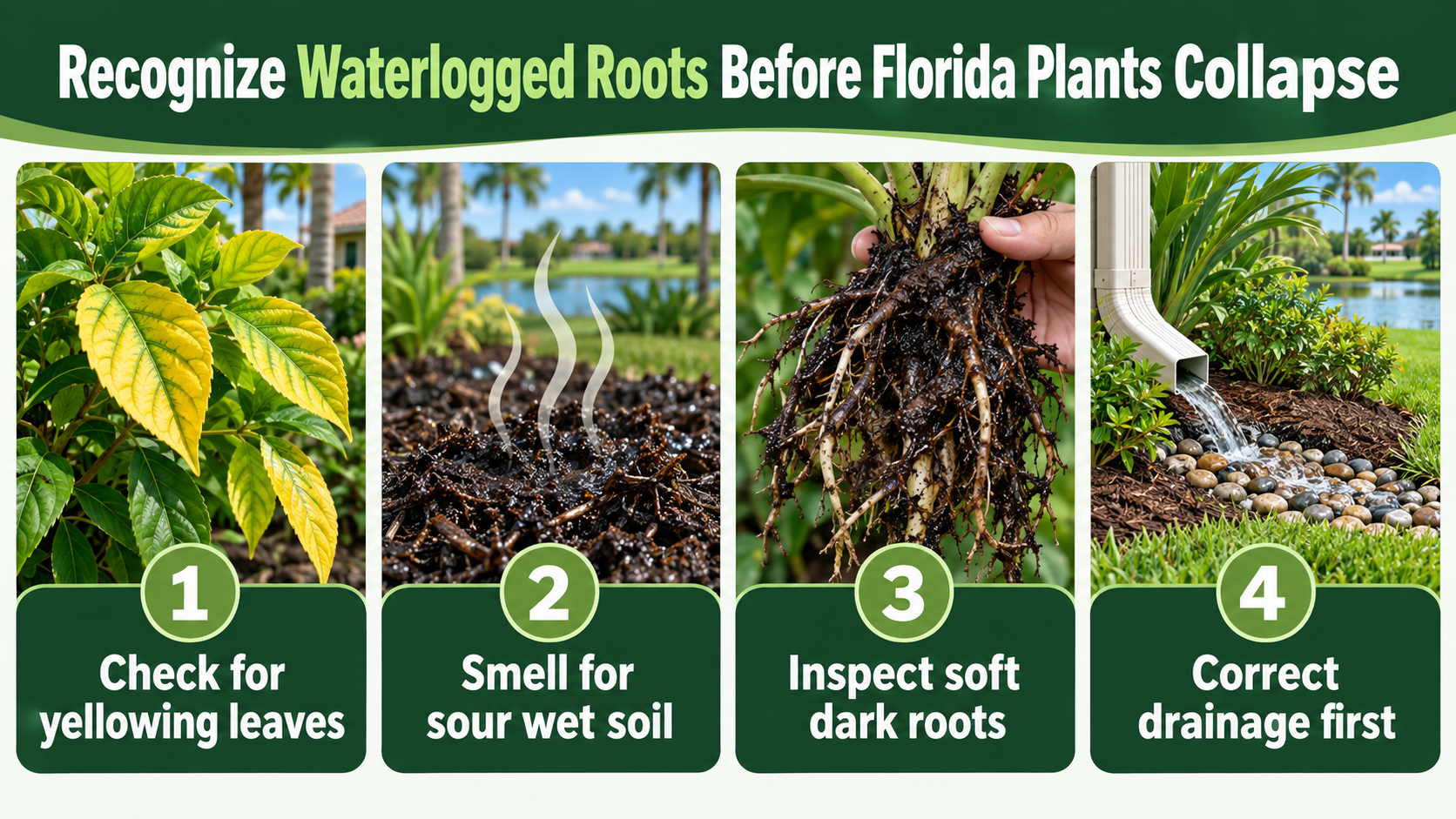
Waterlogged plants often develop dull color, yellow lower leaves, premature leaf drop, weak new growth, or generalized decline. Symptoms may appear across the whole plant instead of one branch. Heat stress often improves overnight, while root-zone trouble persists into the morning. A plant that remains limp at sunrise deserves a soil and root inspection before any irrigation or fertilizer is added.
Smell and Feel the Soil
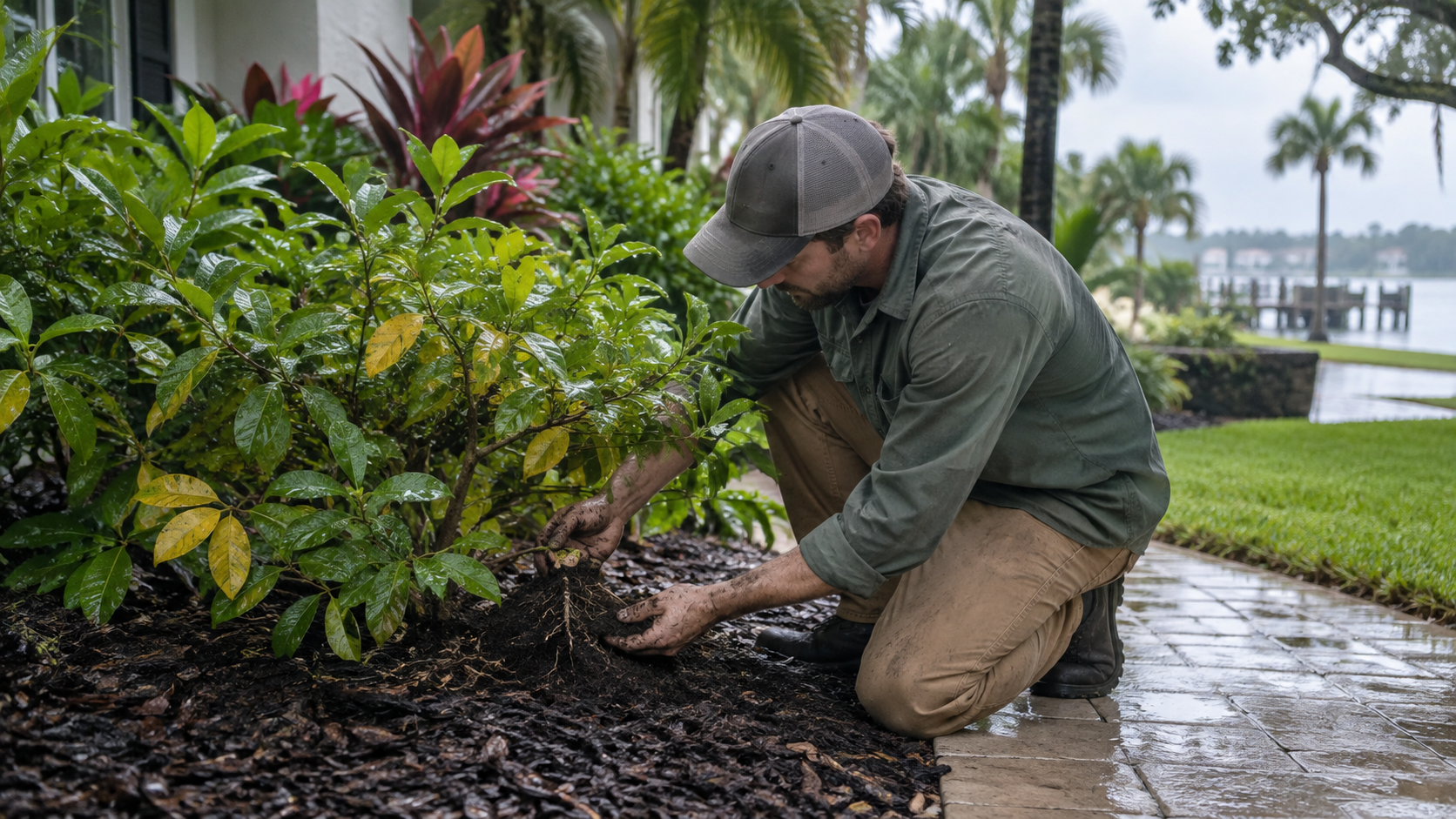
Healthy moist soil smells earthy and holds together without feeling slimy. Saturated soil may smell sour or stagnant. Dig a small inspection hole near the outer root zone rather than cutting into the trunk or crown. Observe how quickly water enters the hole. Standing water, gray soil, black organic material, or constantly slick texture signals poor air movement and slow drainage.
Inspect Fine Roots Carefully
Expose a small number of feeder roots. Healthy roots are generally firm and light colored inside. Declining roots may be dark, soft, peeling, or sparse. Do not tear apart the entire root ball during diagnosis. Take clear photographs and replace the soil after inspection. Severe decay, valuable specimens, and large trees deserve evaluation from a qualified plant professional or arborist.
Find the Source of Saturation
Rain alone is not always the full problem. Roof discharge, irrigation leaks, broken lines, compacted fill, buried construction debris, deep planting, and blocked drains often concentrate water. Watch the area during a storm and after irrigation. Mark how long water remains. Correct the source instead of adding surface soil, which may bury the root flare and trap even more moisture.
Support Recovery Without Forcing Growth
Pause irrigation around the affected plant and restore safe drainage. Remove dead material only when its condition is clear. Avoid heavy pruning, fertilizer, and repeated transplanting during active decline. Healthy roots need time to regrow. Mulch should remain thin over the root zone and several inches away from stems. Monitor new growth and soil moisture for several weeks.
Diagnose Before Replacing the Plant
Ecoscape Outdoor Services examines grade, irrigation, downspouts, plant depth, and soil moisture before recommending replacement. A new plant placed in the same saturated hole will face the same failure. South Tampa landscapes perform better when drainage and planting conditions receive attention first. Early diagnosis often preserves the plant and prevents repeated installation expense.
Source: UF/IFAS Gardening Solutions