Redirect Air-Conditioner Condensate Away From Soggy Plant Beds
Understand why one bed stays wet
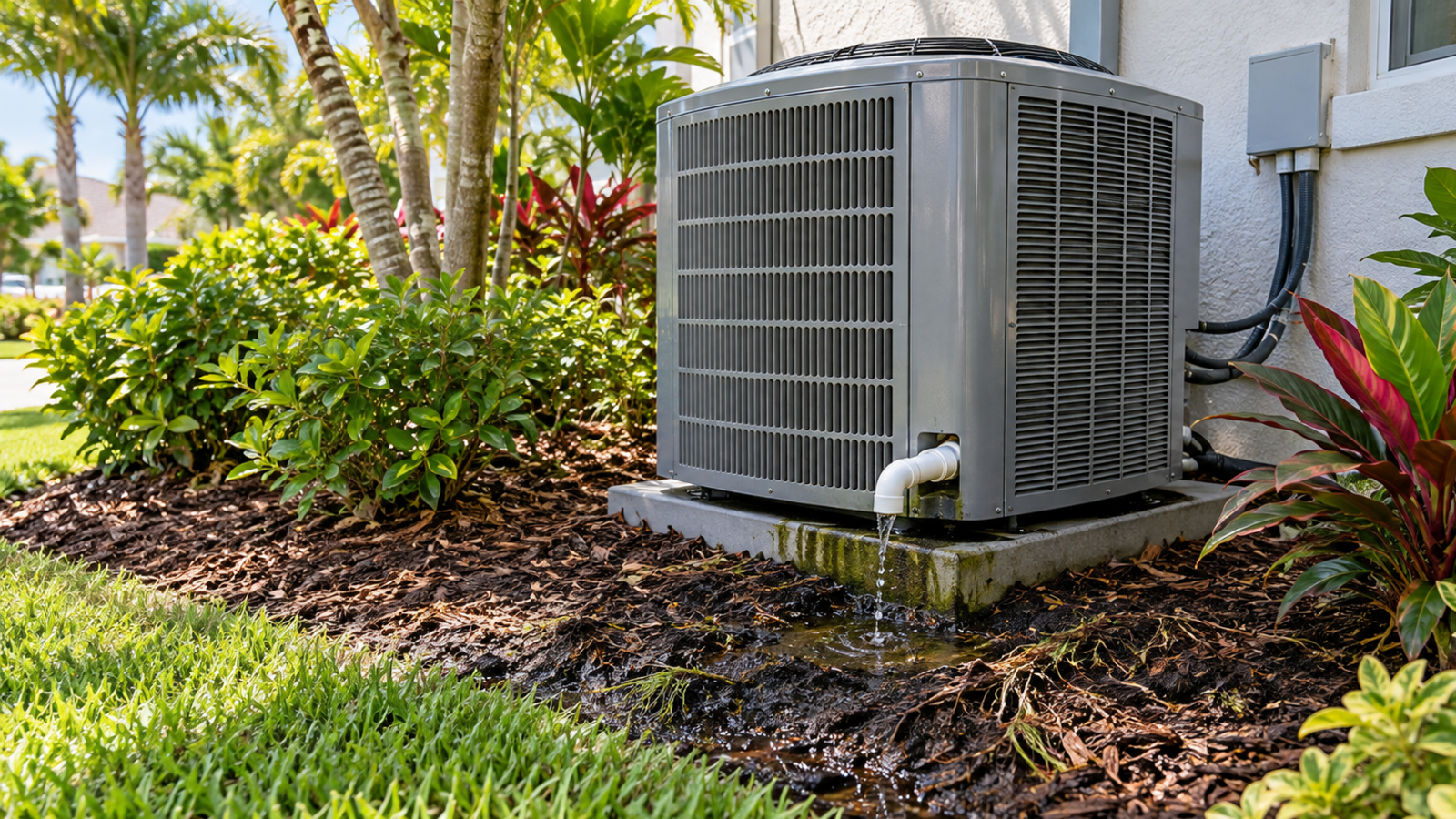
An air-conditioning system can release condensate whenever it removes moisture from humid indoor air. In Tampa's warm climate, that may create a steady discharge during long cooling cycles. If the outlet ends in a low bed, the same small area can stay saturated while nearby soil appears normal. Persistent moisture can weaken roots, float mulch, stain hard surfaces, encourage algae, and erode soil along the building.
Find the outlet and trace the water
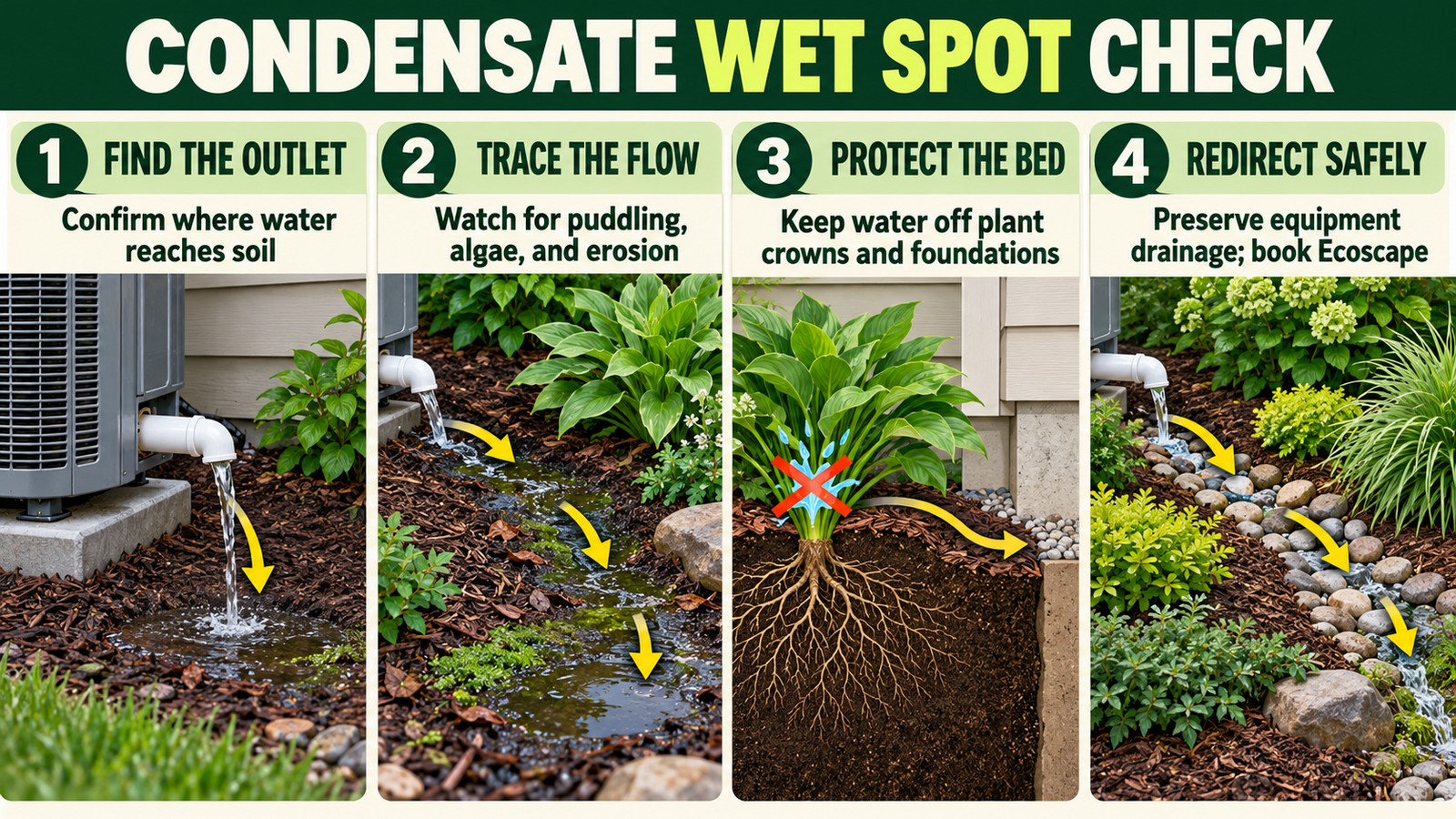
Locate the visible discharge point without opening or modifying the air-conditioning equipment. Observe where the water lands and follow its path across the soil during normal operation. Mark puddles, green algae, washed mulch, exposed roots, and water moving back toward the foundation. Compare the wet spot after a dry day with conditions after irrigation or rain so condensate is not confused with a leaking sprinkler or downspout runoff.
Protect plant crowns and root zones
Constant water directed at a plant crown or one side of a root ball can create low-oxygen soil and uneven stress. Move loose mulch away from saturated stems and avoid adding new plants directly over the discharge point. Do not solve the problem by adding fertilizer or increasing irrigation. Check leaves for yellowing, wilting in wet soil, and dieback, then allow drainage conditions to improve before judging whether the plant can recover.
Create a deliberate landscape path
The landscape should guide water to a safe, visible area where it can spread or infiltrate without crossing a walkway, undermining equipment, or returning toward the house. Depending on grade and space, the solution may involve a shallow stone-lined path, a corrected bed contour, or a suitable drainage connection. Any change must preserve the condensate outlet's ability to drain freely and keep required clearance around the equipment.
Plan for Florida rain and sandy soil
A route that handles routine condensate may still fail during a summer downpour. Check whether roof runoff, irrigation overspray, and condensate all enter the same low point. Sandy soil drains quickly when open but can settle, erode, or become clogged with fine organic material. Keep mulch from damming the outlet, maintain positive slope away from the structure, and inspect the area after heavy rain and extended cooling periods.
Avoid unsafe or temporary fixes
Do not cap the outlet, raise it with an improvised fitting, bury it where blockage cannot be seen, or direct water across a walkway. Avoid piling rock against the equipment pad or foundation, and do not excavate until underground irrigation, lighting, and utility locations are understood. After landscape corrections, photograph the route and recheck it weekly for a month for renewed puddling, algae, mulch movement, or plant stress.
Book a landscape drainage assessment
If the wet area persists, reaches the foundation, damages plants, or combines with irrigation and roof runoff, book Ecoscape Outdoor Services for an on-site assessment. Ecoscape can evaluate the visible discharge path, surrounding grade, planting layout, and drainage options without claiming to service the air-conditioning equipment. For a correction project, schedule a free quote tied specifically to keeping the condensate from saturating the bed.