
Redirect Foot Traffic Before Turf Turns Into Bare Soil
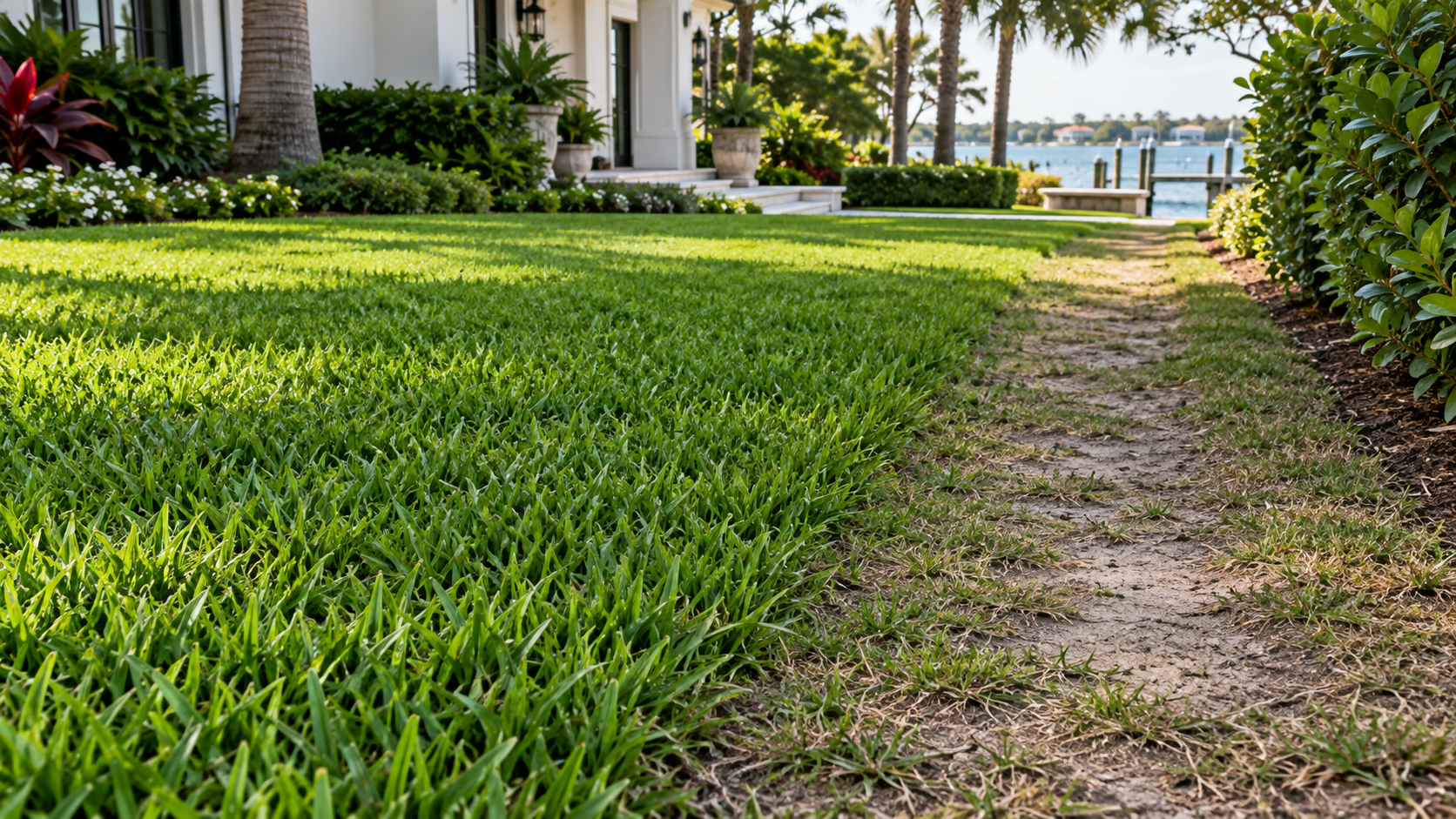
Recognize Traffic Damage Early
Grass thinning along the shortest route to a gate, pool, trash area, side yard, or dock often points to repeated foot traffic. Blades bend and break first. The soil then compacts, roots lose oxygen, and water stops entering evenly. Once bare soil appears, weeds and erosion take advantage of the weakened strip.
Confirm the Cause
Look at the shape and location of the damage. A narrow line following a natural walking route suggests traffic. Broad decline might involve shade, irrigation, insects, disease, or drainage. Check soil firmness, sprinkler coverage, and sunlight before ordering sod. New grass placed over the same compacted route will usually fail for the same reason.
Change the Movement Pattern
Redirect people, pets, carts, and service equipment while the turf recovers. Temporary stakes, planters, or a clear alternate route help break the habit. Move trash bins and hose storage if their location forces repeated crossings. On service routes, choose one reinforced access point instead of allowing equipment to wander across a larger section of lawn.
Relieve Compaction Carefully
Core aeration opens compacted soil so air and water reach the root zone. The timing and equipment must match the turf type, soil moisture, irrigation depth, and site access. Mark sprinkler heads, shallow lighting cable, drains, and utilities first. Avoid aggressive cultivation when turf is dormant, saturated, diseased, or too weak to recover quickly.
Choose a Permanent Surface
If traffic cannot move, build for it. Stepping stones, a paver path, compacted shell, or another suitable walkway protects the surrounding grass. The finished surface needs a stable base, safe spacing, drainage, and a height compatible with mowing. Avoid loose materials where they will scatter into turf, pools, drains, or neighboring beds.
Repair Only After Conditions Improve
Loosen and level the soil, correct drainage and irrigation problems, then install sod during favorable conditions. Keep traffic off the repair until roots anchor. Water new sod based on soil moisture and weather, then reduce frequency as it establishes. Do not bury the area under extra topsoil without preserving positive drainage away from buildings.
Protect the Lawn With Better Planning
Ecoscape Outdoor Services evaluates worn paths as a property-layout issue, not only a turf problem. We help South Tampa owners improve access, soil condition, drainage, irrigation, and material selection before repairing grass. Addressing the reason people cross the area protects the new sod and gives the property a cleaner, safer, more intentional layout.
