Reduce Mowing Frequency as Florida Turf Growth Slows
Fall Changes Growth Before It Changes Color
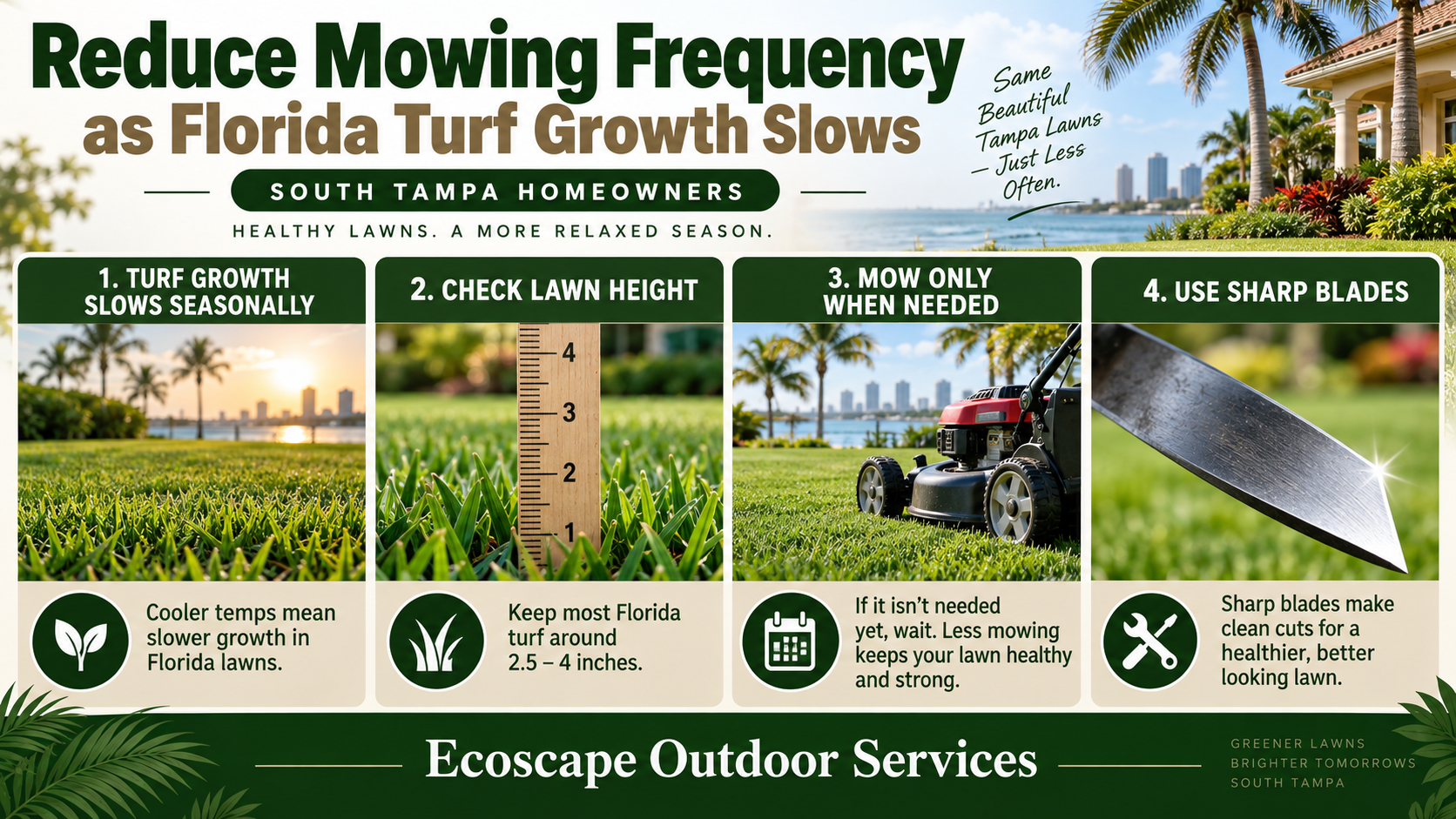
Warm-season turf in South Tampa often remains green after its growth rate begins slowing. Shorter days, cooler nights, rainfall changes, and species differences affect how quickly new leaf tissue develops. Continuing a peak-summer mowing schedule when little growth has occurred adds traffic and wear without improving appearance. The correct fall schedule follows measured growth, not a fixed weekly habit or a northern seasonal calendar.
Measure Before Starting the Mower
Check several sunny and shaded areas before deciding whether the lawn needs service. Compare current height with the established target for the grass type. Mow when enough new growth exists to remove no more than one-third of the leaf blade. Avoid using seedheads, isolated weeds, or one fast-growing wet spot as the only reason to cut the entire property. Address those isolated conditions separately when practical.
Keep the Correct Cutting Height
Slower growth is not a reason to scalp the lawn or lower the deck for a final short cut. Removing too much leaf tissue reduces photosynthesis and exposes stems and soil as recovery slows. Maintain the appropriate height for St. Augustine, Zoysia, Bahia, or the installed cultivar. Verify the actual cut with a ruler because mower lever numbers do not always equal finished turf height.
Adjust Irrigation With the Weather
Lower mowing demand often arrives with lower water demand, yet irrigation controllers may still run on summer settings. Check soil moisture, rainfall, and current local watering rules before changing the schedule. Watch for runoff, prolonged wetness, and soft ground beneath mower tires. Do not water simply because a mowing visit is planned. Turf should be firm enough to support equipment without ruts, compaction, or torn roots.
Manage Leaves and Clippings Separately
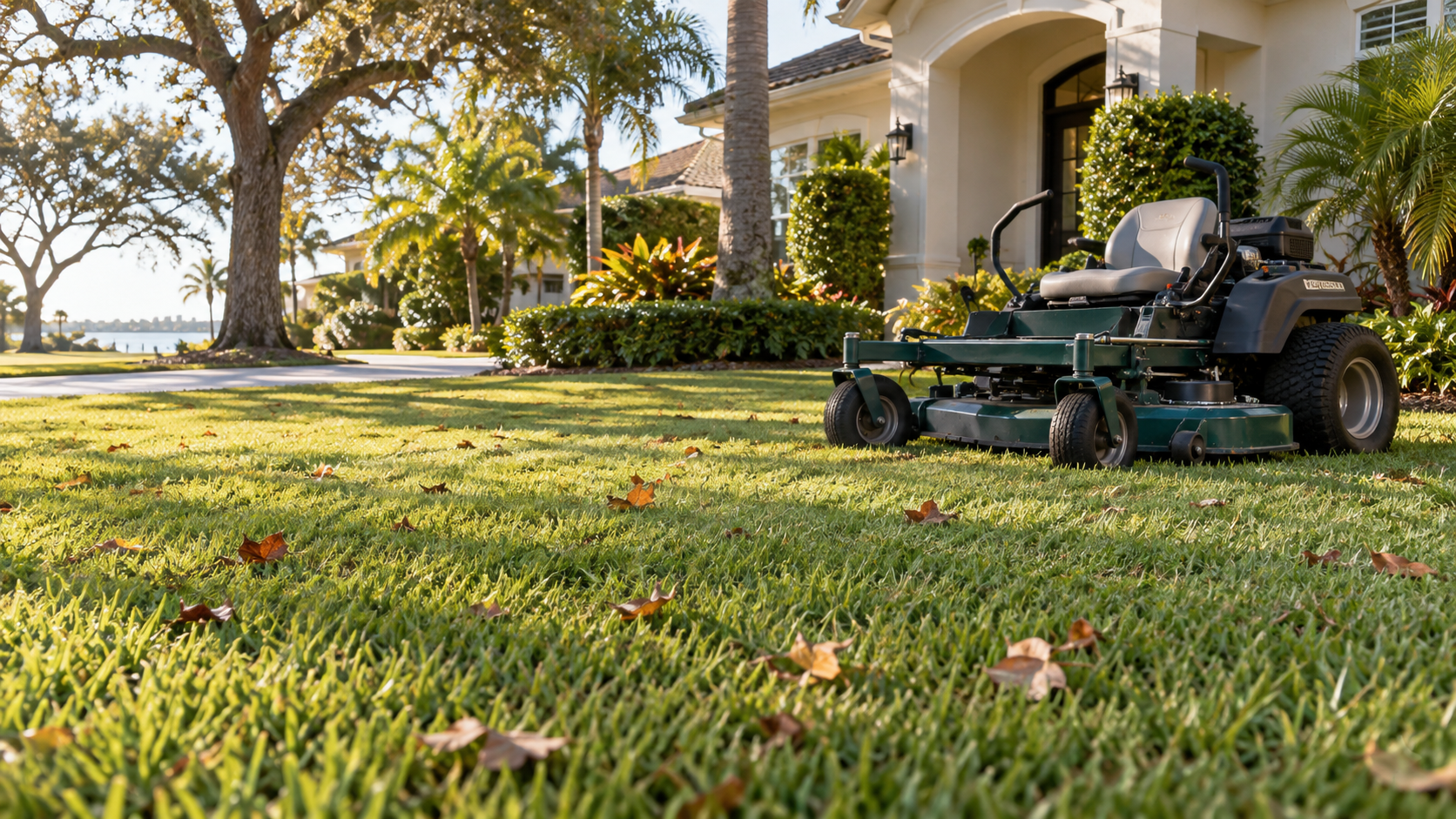
A light layer of dry leaves may be mulched during an appropriate mowing visit, but heavy accumulation blocks sunlight and traps moisture. Remove dense leaf piles even when the turf does not need cutting. Keep leaves and clippings out of streets, drains, planting crowns, and rock beds. If mowing produces clumps, the lawn was too wet, too tall, or cut too aggressively. Correct the condition instead of leaving piles behind.
Inspect Turf Between Visits
Longer intervals make visual inspections more important. Look for irrigation leaks, disease patterns, insect activity, weeds, fallen branches, and areas damaged by traffic. Mark changes with dated photos and compare them after the next cycle. Continue edging and property cleanup only as needed instead of forcing every summer task onto the fall schedule. Resume more frequent mowing when measured growth increases again.
Use a Seasonal Maintenance Standard
Ecoscape Outdoor Services adjusts South Tampa property maintenance around turf growth, weather, soil firmness, grass type, and presentation standards. We focus on completing the work the property needs while protecting long-term lawn quality. Property owners should review the route after major weather changes and confirm the cut height stays consistent. A disciplined fall schedule prevents unnecessary mowing, reduces wear, and keeps the lawn prepared for stronger growth when conditions change.