
Refresh a Natural Bed Edge Before Mulch Spreads
What a Natural Edge Does
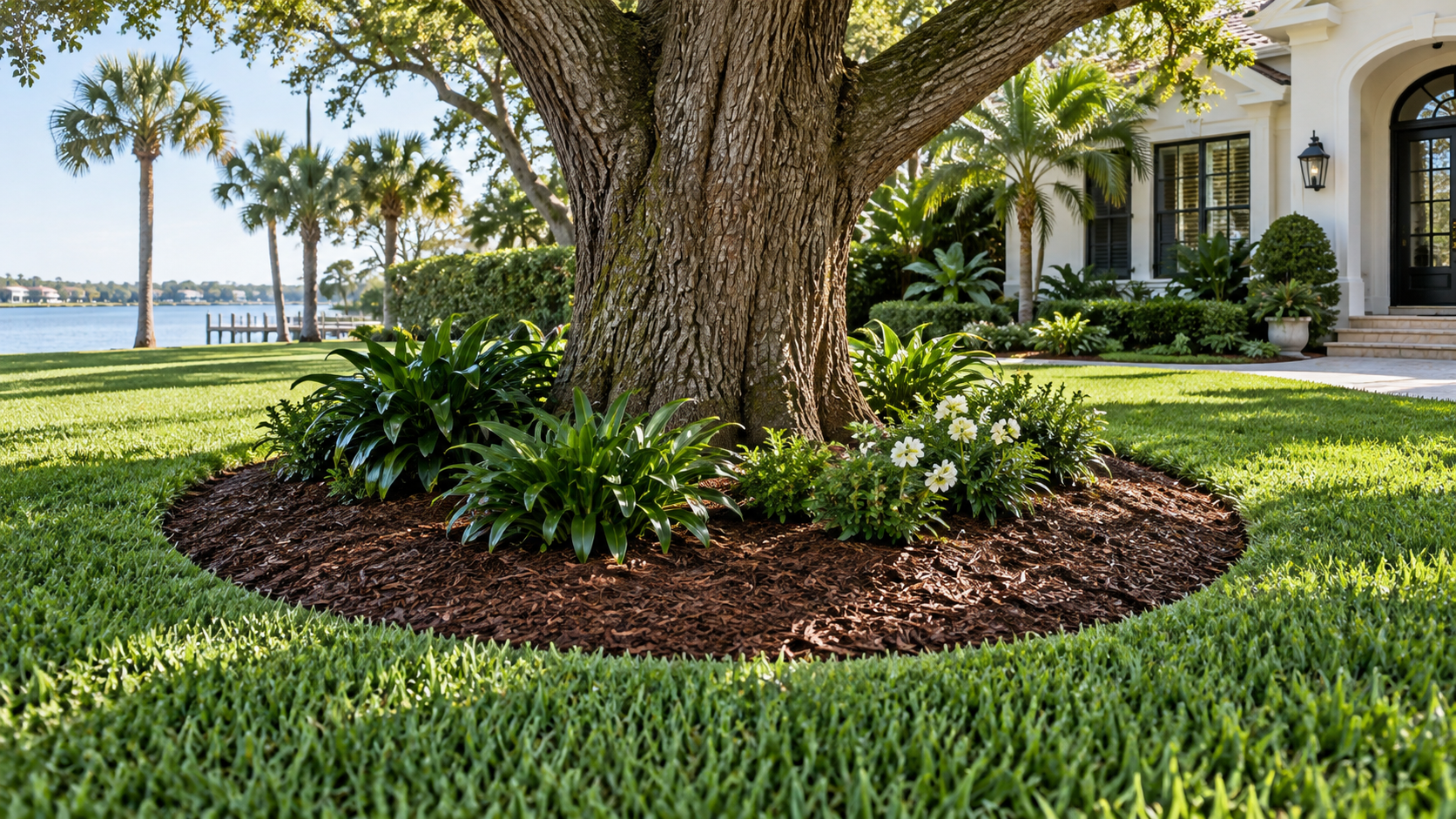
A natural edge uses a clean-cut soil trench to separate turf from mulch without installing metal, plastic, stone, or composite material. The technique creates a soft, professional curve and gives loose mulch a place to settle. It works especially well around trees and flowing plant beds where a visible manufactured border would conflict with the design.
Mark the Shape First
Lay out the edge with a hose, marking paint, or visual guide before cutting. Use broad, smooth curves that mowing equipment can follow. Avoid small waves and tight corners. Step back and view the line from the street, entry, and primary windows. A good bed shape supports the architecture and makes the lawn look larger and more organized.
Cut a Clean Trench
Use a sharp half-moon edger, spade, or suitable bed-edging machine. Cut the turf side nearly vertical and slope the bed side gently into the soil. Remove severed grass roots and loose clumps. The trench needs enough definition to stop runners and catch mulch without creating a deep channel that holds water or presents a trip hazard.
Keep Mulch Below the Turf Line
Spread mulch evenly through the bed, then taper it down as it reaches the trench. Do not bury the crisp turf face. Mulch piled across the edge quickly spills into the lawn and allows grass runners to root through it. Keep material away from tree trunks, plant crowns, drains, lighting fixtures, and building walls while maintaining proper depth across the root zone.
Plan for Routine Renewal
A natural edge is not permanent. St. Augustine runners cross the line, rain softens the trench, and maintenance gradually moves soil and mulch. Refresh the edge before it disappears, often during seasonal bed cleanup or mulch installation. Light, frequent correction takes less labor and removes less soil than rebuilding an overgrown border after several months.
Know When Installed Edging Works Better
Choose a physical restraint where rock, shell, steep grades, heavy runoff, or constant foot traffic would overwhelm a trench. Composite, metal, paver, and stone edges each need correct anchoring and elevation. Natural edges suit mulch beds and graceful curves. Material borders suit locations needing stronger containment or a more architectural appearance.
Create a Finished Bed Line
Ecoscape Outdoor Services shapes and maintains South Tampa beds with attention to mowing access, drainage, tree roots, irrigation, lighting, and the chosen material. A clean natural edge makes mulch stay organized and creates a sharp transition without drawing attention to hardware. Consistent upkeep protects the intended design through rapid Florida growth and heavy rain.
