Remove Algae From Shaded Walkways Before It Becomes a Slip Hazard
Green Growth Signals a Safety Problem
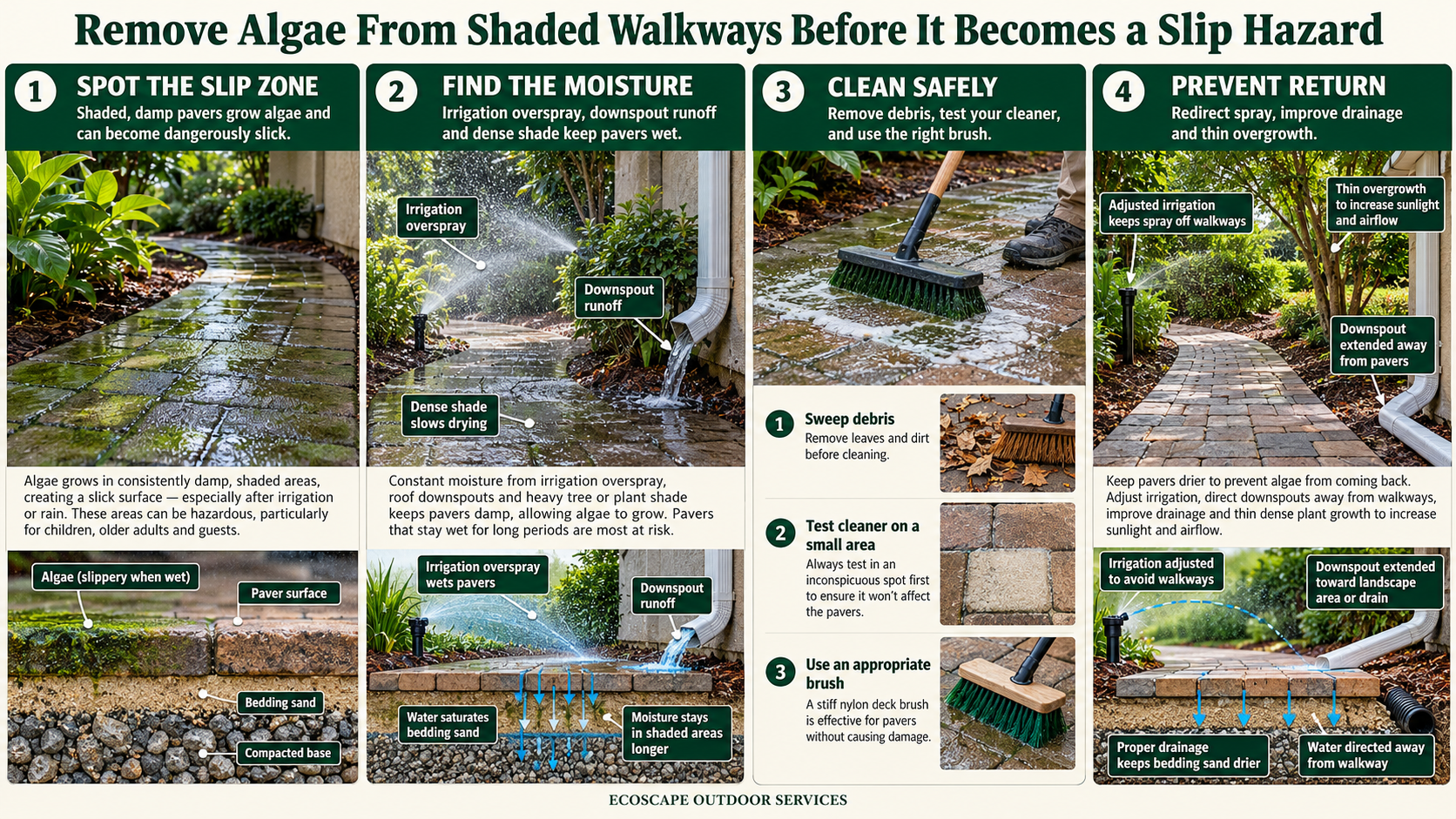
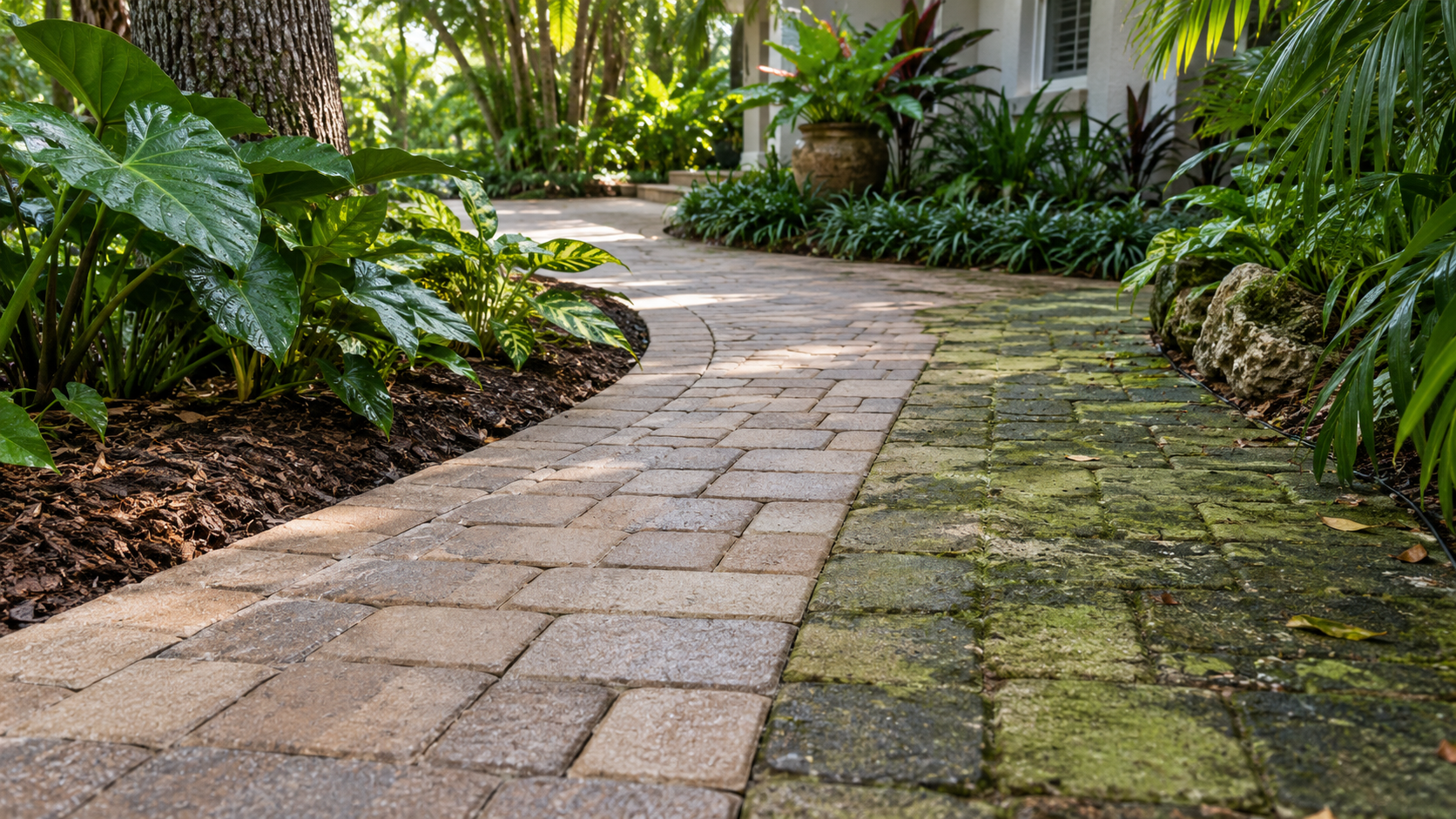
Algae often develops on shaded pavers, concrete, stepping stones, and poolside paths where moisture lingers. The surface may look only discolored when dry, then become dangerously slick after rain or irrigation. South Tampa humidity, dense tropical planting, and frequent summer storms create ideal conditions. Treat the growth as a property safety issue, especially along entrances, side yards, service routes, and paths used after dark.
Find the Moisture Source
Inspect the walkway early in the morning and after each nearby irrigation zone runs. Look for overspray, leaking heads, downspout discharge, poor drainage, low joints, and dense foliage that blocks air movement. Note whether the affected area dries by midday. Cleaning without correcting persistent moisture produces a short-lived result. Keep roof runoff and landscape drainage from concentrating across walking surfaces or beside door thresholds.
Clean a Test Area First
Sweep away leaves, soil, and loose organic matter before applying any cleaner. Test a small hidden section to confirm the product and method will not discolor pavers, damage joint sand, etch concrete, or affect nearby metal. Use the lowest effective pressure and follow the surface manufacturer’s care guidance. Aggressive pressure washing can scar materials, open joints, and spread dirty water across plants and adjacent walls.
Protect Plants and Drainage
Read every product label and keep cleaning solution away from turf, roots, ponds, storm drains, and irrigation components. Pre-wet nearby plants when the approved method calls for it, control runoff, and rinse only as directed. Never mix cleaning chemicals. Block the work area while the surface is wet and move hoses out of travel paths. Wear suitable footwear and keep children, pets, clients, and crews away until the walkway dries.
Correct the Conditions That Return
Adjust sprinkler direction, repair leaks, clear drains, and prune only enough foliage to improve light and airflow without harming the plant. Reset sunken pavers when water pools in the same depression. Redirect downspouts to a safe landscape outlet. Avoid placing thick mulch above the edge of the walkway because it holds moisture and spills organic material onto the surface. These changes slow regrowth and make routine cleaning more effective.
Inspect High-Traffic Areas Routinely
Walk shaded routes after rain and look for green film, dark slick patches, settled water, lifted pavers, and loose stones. Give extra attention to steps, slopes, gates, pool equipment access, and the path between parking and the front door. Use photos to track recurring locations. Recheck cleaned areas after one week and during the next wet period. Fast follow-up confirms whether the moisture correction worked.
Include Walkways in Property Maintenance
Ecoscape Outdoor Services helps South Tampa owners identify landscape conditions behind algae-prone walkways, including irrigation overspray, heavy shade, trapped debris, and drainage patterns. We coordinate practical corrections around plants, turf, rock, edging, and lighting so the path remains usable and visually clean. Add walkway safety to monthly landscape inspections rather than waiting for heavy buildup. A clean route starts with controlling water and organic debris.