Remove Frost Covers After the Freeze Passes
Protection Should Be Temporary
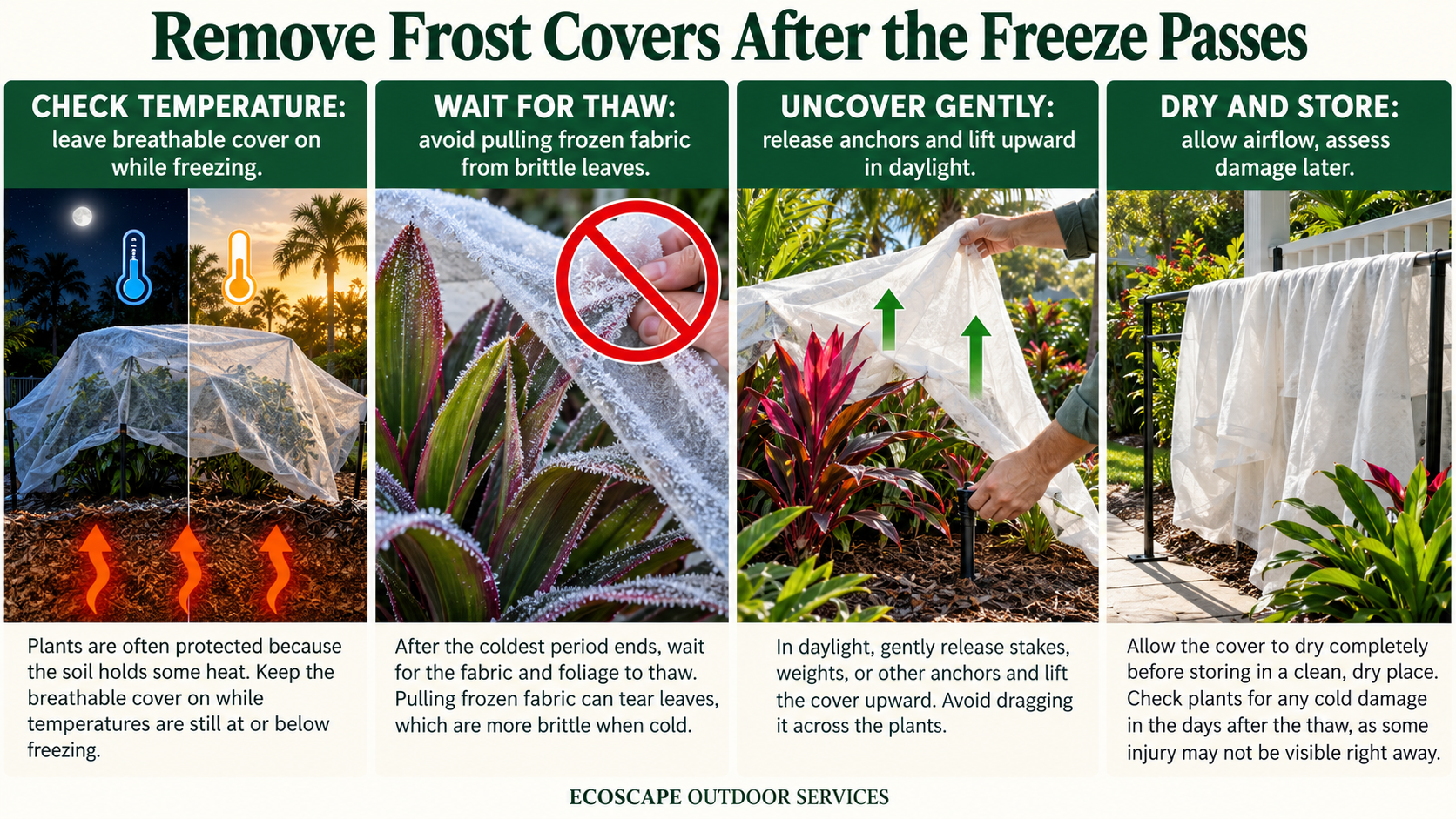
A breathable frost cover traps warmth rising from the soil and reduces heat loss from tender plants during a cold Florida night. Once the freeze passes and sunlight warms the landscape, the same cover can hold excess heat and moisture around foliage. Heavy fabric may also press on soft leaves as temperatures rise. Cold protection works best as a short-term response. Remove or ventilate the cover when safe daytime conditions return.
Wait for the Right Moment
Check the actual temperature at the property rather than relying only on a regional forecast. Low pockets, waterfront exposure, wind, and surrounding buildings create different conditions across South Tampa. Leave protection in place while temperatures remain near freezing. Once the air warms safely above the danger range and frost begins melting, uncover plants gradually. Avoid pulling stiff frozen fabric across brittle leaves during the coldest part of the morning.
Lift the Cover Carefully
Release stakes and weights before pulling upward from the center. Fold the material away from branches instead of dragging it across foliage. Support any wet or icy section so its weight does not snap stems. Keep the cover from catching on thorns, landscape lights, irrigation heads, or decorative stakes. If another cold night is expected, fold the fabric nearby in a clean, dry location so it can be reinstalled before sunset.
Let Plants Warm Naturally
Give uncovered foliage time to dry and warm in gentle morning light. Do not spray frozen leaves with hot water or place a heater beside the plant. Check soil moisture before watering. Dry root zones may need normal irrigation earlier in the day, while saturated soil needs no additional water. Avoid fertilizer and heavy pruning immediately after a freeze. Stressed plants need time to show which tissue survived before corrective work begins.
Delay Damage Decisions
Cold-injured leaves often turn dark, translucent, tan, or limp. Those symptoms do not prove the entire plant is dead. Leave damaged upper growth in place until the threat of repeated cold passes, unless broken material creates a safety issue. Later, scratch-test small stems for green tissue and watch for new buds. Premature cutting exposes lower growth and encourages tender regrowth before South Tampa’s cold season has fully ended.
Clean and Store the Material
Dry frost cloth completely before folding it for storage. Shake off leaves, insects, and soil. Repair small tears and label covers by bed or plant group so installation is faster during the next cold event. Do not store damp fabric in a sealed container because mildew and odor develop quickly. Replace plastic sheets with breathable horticultural fabric. Plastic touching foliage transfers cold and can trap damaging condensation.
Follow Up After One Week
Photograph protected plants after uncovering and inspect them again seven to ten days later. Ecoscape Outdoor Services helps South Tampa property owners prepare sensitive landscapes, adjust irrigation, position breathable covers, and evaluate cold damage after temperatures recover. We focus on protecting the plant without creating heat, moisture, or pruning problems the next day. Proper removal is part of cold protection, not an optional final step.