
Remove Tree Stakes Before They Damage the Trunk
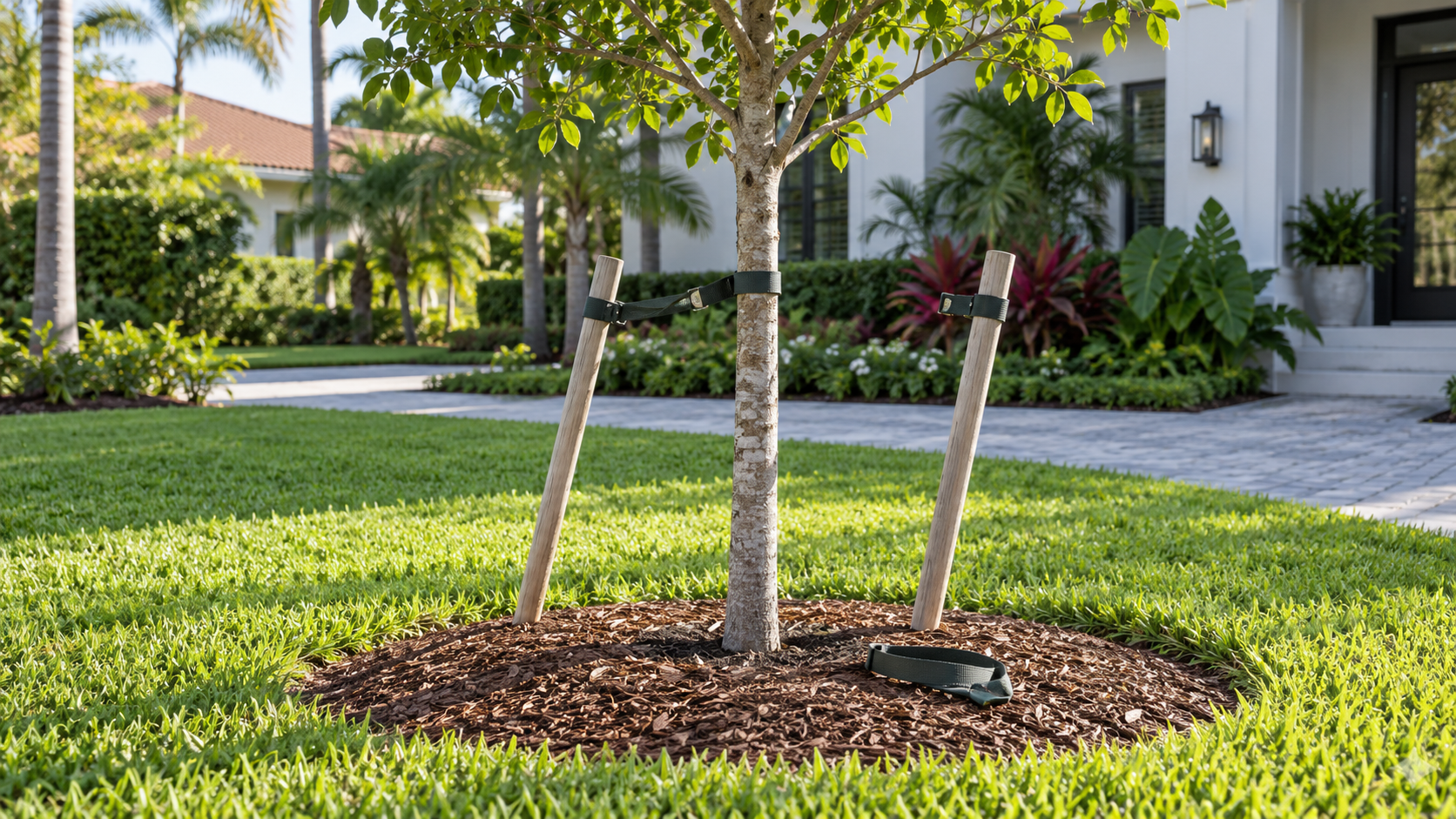
Understand Why Stakes Are Temporary
Tree stakes support a newly planted root ball when wind or loose soil prevents it from staying upright. They are temporary equipment, not a permanent part of the landscape. A tree develops stronger trunk taper and anchoring roots when the trunk moves slightly in normal wind. Rigid support left in place too long limits this movement and often creates weak growth.
Check Whether Support Is Needed
Many properly planted container trees stand securely without stakes. After planting, hold the trunk several feet above the ground and move it gently. The trunk should flex while the root ball stays mostly stable. Stake only when the root ball shifts, the site receives strong wind, or the tree has an unusually heavy canopy. Correct planting depth and firm backfill come first.
Install Stakes and Ties Correctly
Place stakes outside the root ball so they do not damage major roots. Use broad, flexible tree ties instead of wire, rope, or narrow cord against the bark. Attach ties low enough to support the root ball while allowing the upper trunk to move. Keep each tie loose enough to prevent rubbing and tight enough to limit excessive lean during storms.
Remove Support on Time
Inspect ties every month and after strong wind. Most small landscape trees need staking for only one growing season or less. Remove the system as soon as the roots hold the tree securely. South Tampa trees grow quickly during warm, wet months, so a strap which looked loose at installation might begin pressing into expanding bark within a short period.
Account for Florida Conditions
Summer storms, saturated soil, shallow planting areas, and broad evergreen canopies increase movement after installation. Check soil drainage before adding stronger support. A wet root ball will shift even with several stakes. If the tree repeatedly leans, correct grade, irrigation, planting depth, or root-ball stability instead of tightening straps until the trunk loses all natural movement.
Avoid Damage and Follow Up
Do not drive nails through the trunk or wrap wire around bark. Remove nursery straps, labels, and trunk guards which hold moisture or restrict growth. After stake removal, watch the tree through the next several storms. A slight lean might need careful correction, while severe movement often signals a root or planting problem. Check mulch depth and keep the root flare visible.
Let Ecoscape Protect New Tree Investments
Ecoscape Outdoor Services evaluates tree stability, root depth, drainage, wind exposure, irrigation, and mature size during installation. Our team uses support only where needed and includes follow-up inspection as part of responsible establishment care. Proper staking protects a young tree during its vulnerable stage. Timely removal protects the trunk and helps the tree develop the strength needed for South Tampa weather.
