Remove Tree Suckers Without Tearing Bark or Damaging Roots
Remove Tree Suckers Without Tearing Bark or Damaging Roots
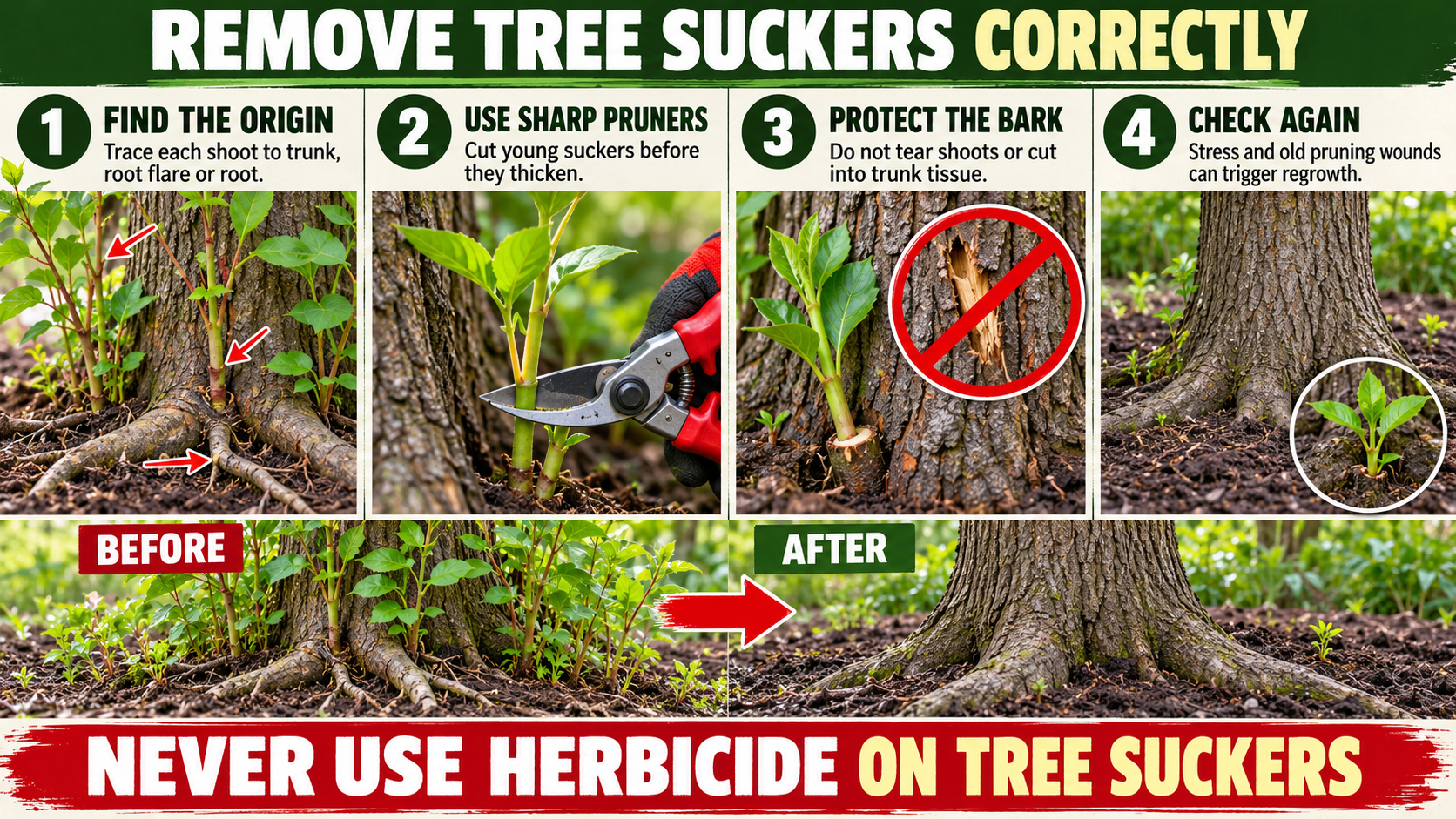
Tree suckers are vigorous shoots that arise from the trunk base, root flare, or roots. They are different from upright watersprouts growing higher in the canopy. Suckers compete with the desired trunk, crowd the base, hide defects, and create repeated maintenance. Early removal is faster and produces a smaller wound than waiting for the shoots to become woody stems.
Trace every shoot to its origin
Move mulch and loose soil gently so you see where each shoot begins. A sucker attached to the trunk base needs a different cutting angle than a shoot arising several inches away on a root. Do not dig aggressively around structural roots. On grafted trees, growth below the graft might belong to the rootstock and should not be allowed to overtake the selected canopy.
Use the right tool
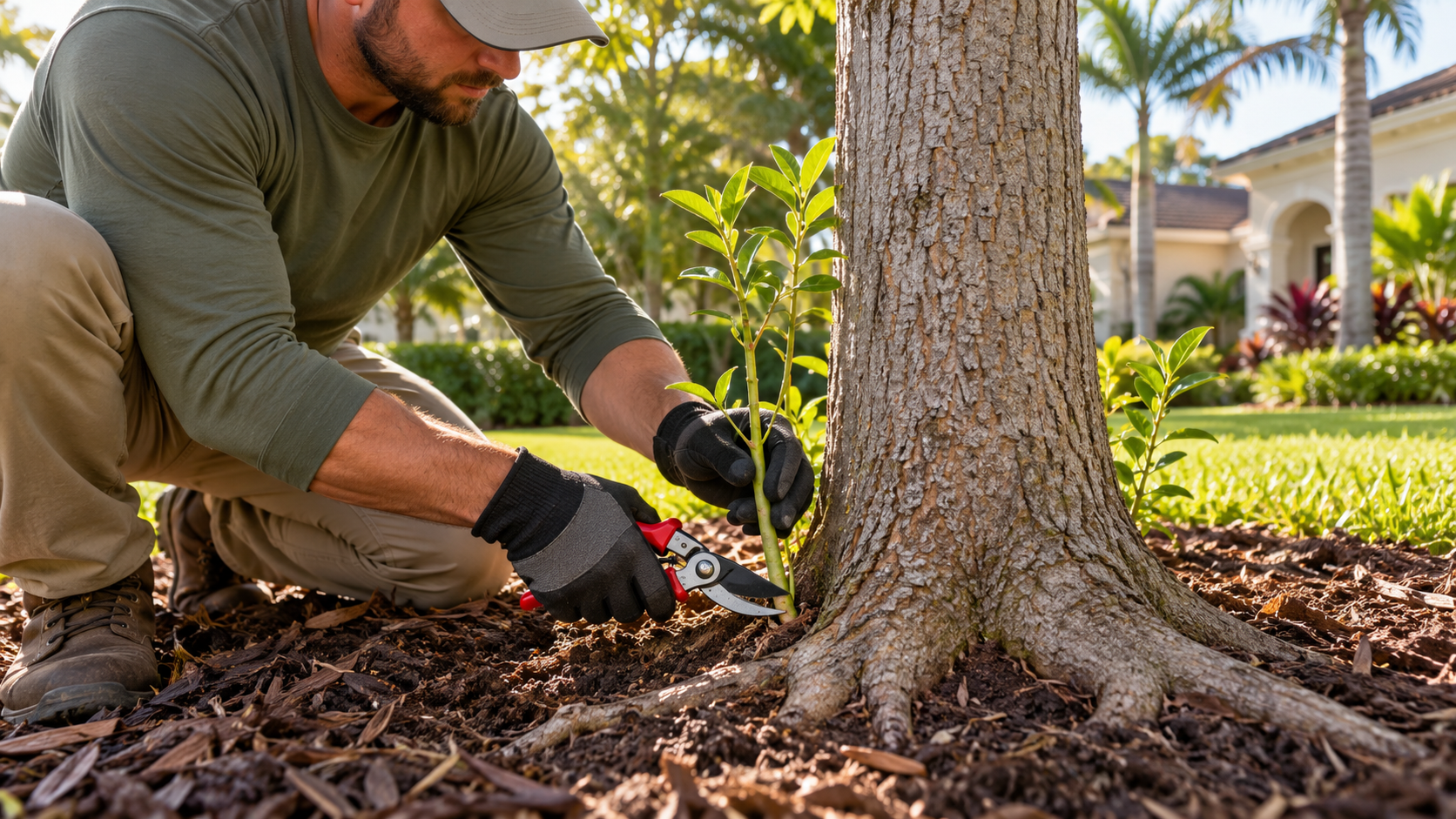
Use clean, sharp hand pruners for young shoots and loppers only when the stem diameter requires them. Position the blade close to the sucker’s point of origin without cutting into trunk bark, root bark, or the swollen root flare. Support the shoot with one hand and make a controlled cut. Do not twist, pull, or tear it away.
Protect bark and roots
String trimmers and mower decks cause far more injury than a careful pruning cut. Keep equipment away from the trunk, expose a visible mulch-free collar around the base, and never shave the flare to make it look smooth. A torn strip of bark creates a larger wound and an entry point for decay. Wound paint is not a substitute for a clean cut.
Skip herbicide on attached growth
Do not spray tree suckers with herbicide. A sucker remains connected to the parent tree, so systemic product might move into tissues you intend to keep. Mechanical pruning is the recommended approach. Collect the cut shoots and inspect the base again while it is visible for girdling roots, bark injury, cavities, or excess mulch.
Expect and address regrowth
Some species naturally sucker, and stressed trees often produce more shoots. Recheck during routine maintenance and remove new growth while tender. Then address likely triggers such as root injury, buried flare, drought stress, excessive pruning, or trunk damage. Repeated removal manages the symptom, while better root-zone care reduces avoidable stress.
Protect the tree’s structure
Ecoscape Outdoor Services will distinguish suckers from desirable growth, prune them at the correct origin, protect bark and surface roots, and flag structural concerns that need an arborist. Schedule a South Tampa tree-care visit before small shoots become competing stems.