Remove Volunteer Tree Seedlings Before Roots Take Hold
Why This Tip Matters
A small tree seedling in a landscape bed is easy to overlook. Birds, wind, squirrels, compost, and nearby trees place seeds in moist mulch throughout the year. If the seedling grows beside a foundation, fence, drain, irrigation line, established shrub, or air-conditioning pad, its roots and trunk soon become harder to remove. Pulling it while young protects the intended landscape and avoids a much larger removal later.
What Counts as a Volunteer Seedling
A volunteer is any plant that appeared without being intentionally installed. Some are desirable native seedlings growing in the wrong place. Others are aggressive exotic species, fast-growing nuisance trees, palms, or shoots arising from nearby roots. Do not assume every unfamiliar sprout is a weed. Compare its leaves, stem arrangement, bark, and point of origin with nearby plants. If you are uncertain, photograph it and identify it before removal. Protected or valued plants deserve a careful decision.
Inspect Common Hiding Places
Check behind shrubs, along fences, below bird perches, beside downspouts, around utility equipment, and inside groundcover beds. Look under the canopy rather than scanning only from the sidewalk. Seedlings often remain hidden until the stem becomes woody. Monthly inspections during Florida’s warm and rainy months make the work much easier. Mark any questionable plant and revisit it after identification rather than cutting it repeatedly without knowing what it is.
Remove Small Seedlings Correctly
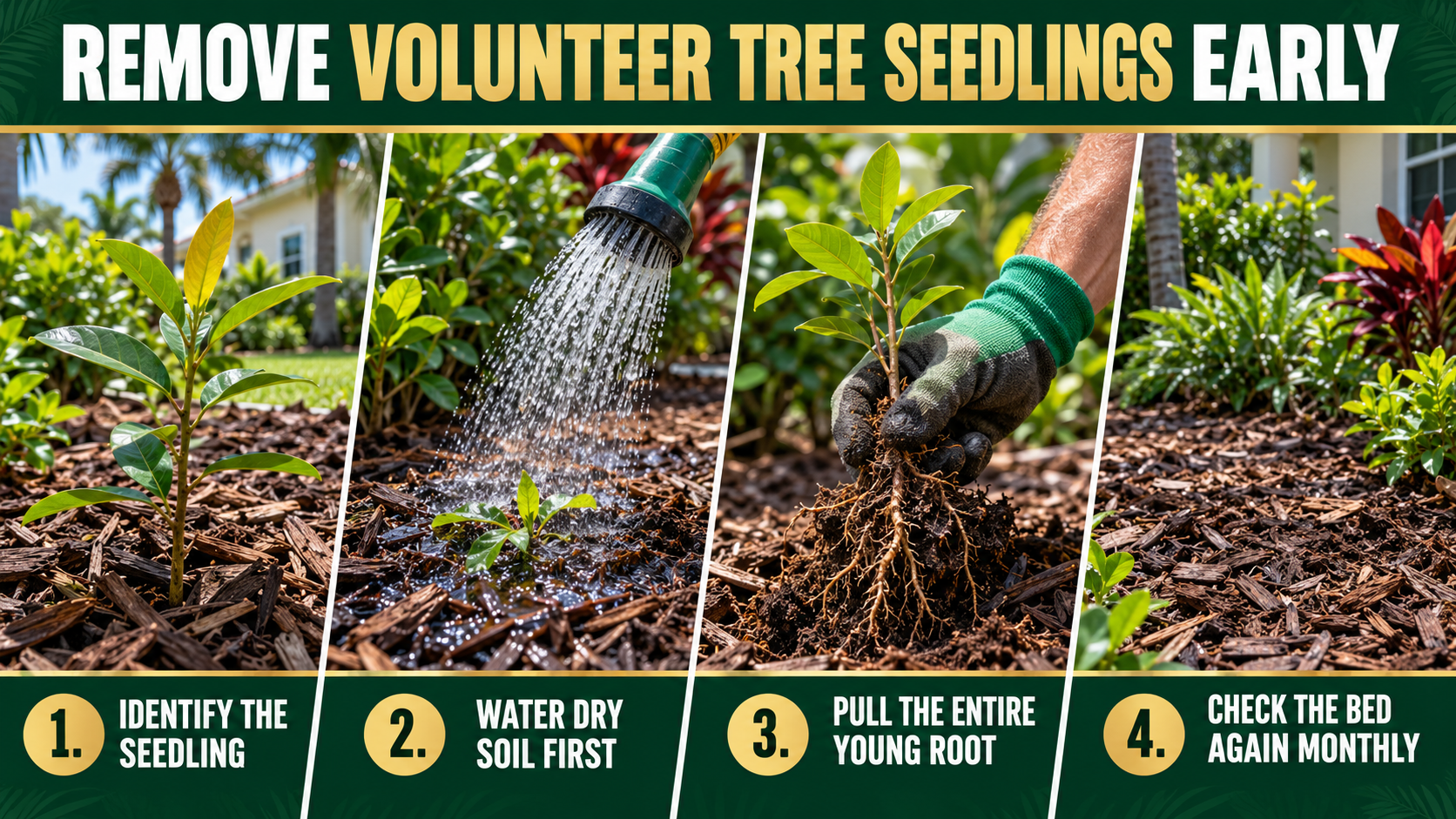
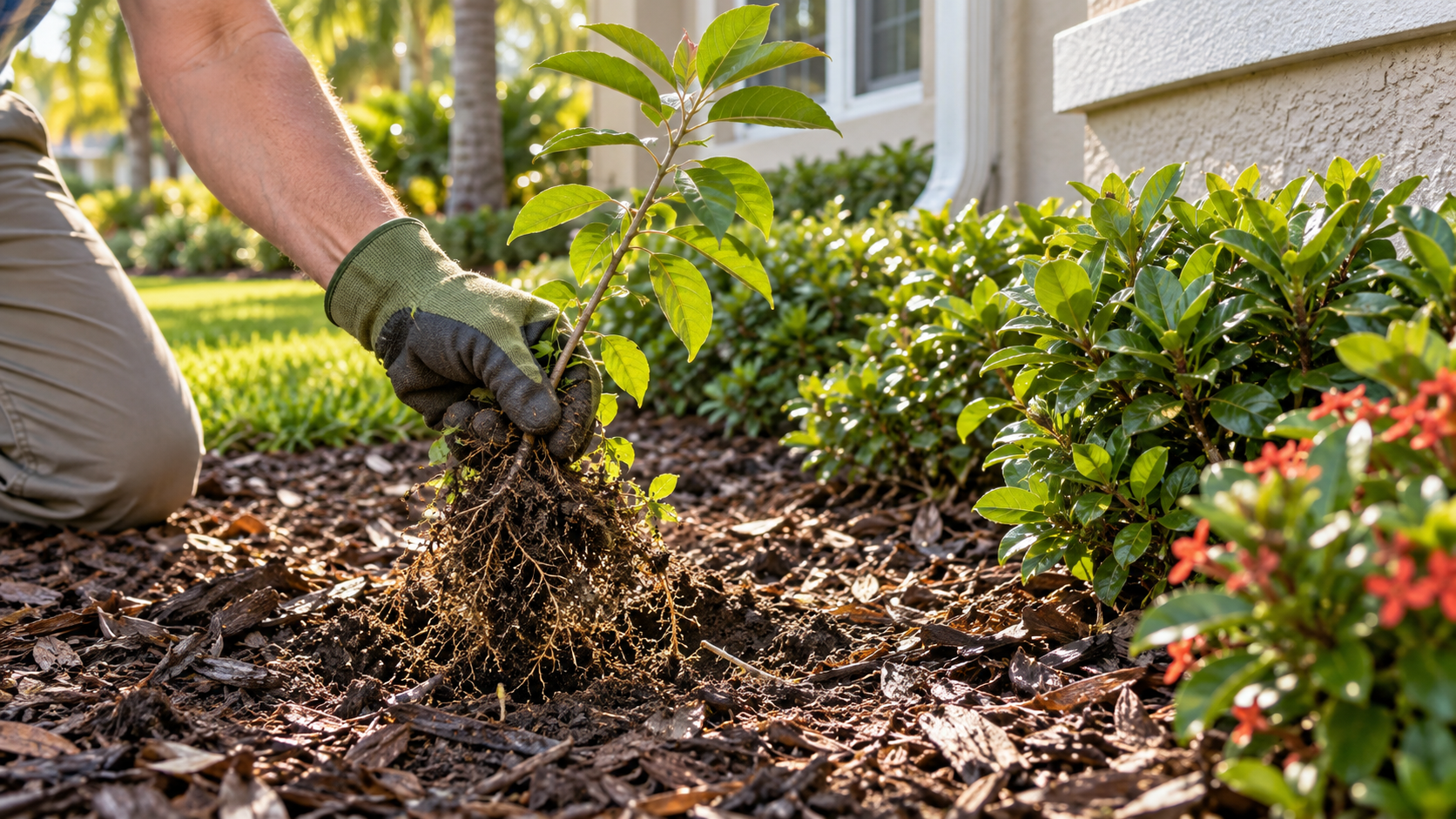
Wear gloves and water dry soil lightly before pulling. Moist soil releases fine roots more easily, but saturated soil compacts underfoot and becomes messy to work. Grip the seedling near the soil surface and pull steadily upward. Avoid jerking, which can snap the stem and leave the root behind. Use a hand weeder or narrow trowel when the taproot resists. Work carefully around irrigation tubing, low-voltage lighting cable, shallow tree roots, and buried edging. Replace disturbed soil and mulch after removal.
Handle Larger Volunteers With Care
Once the stem becomes woody or the plant reaches several feet tall, simple pulling may damage nearby roots or underground systems. Do not yank a large seedling growing against the foundation, through a fence, or beside utilities. Cutting the top alone often leads to regrowth. The correct method depends on species, trunk size, location, and whether the plant arose from seed or from an established root system. A qualified professional should assess plants near structures, utilities, protected trees, or areas where removal requires digging.
Prevent the Next Wave
Maintain a two-to-three-inch mulch layer without piling mulch against plant crowns or the house. Mulch reduces germination and makes new seedlings easier to spot. Remove fallen fruit, seed pods, and heavy leaf debris when practical. Trim volunteer growth before it produces seed. Inspect after rainy periods because moisture accelerates germination. Avoid landscape fabric as a universal solution. Seeds can germinate in organic material that accumulates above the fabric, and roots may become tangled through it.
Monitor the Area
Return to the bed after several weeks. A clean pull should not regrow from the same point. New shoots from the same location may indicate a broken root, a suckering species, or a connection to a larger nearby plant. Document repeated growth so you can choose a targeted solution instead of cutting it indefinitely. Keep the bed open enough to see trunks, irrigation components, and the soil line around intended plants.
How Ecoscape Outdoor Services Helps
Ecoscape Outdoor Services inspects landscape beds closely during maintenance and renovation work. We identify unwanted growth, protect installed plants, remove manageable seedlings, and flag larger volunteers before they become structural or access problems. For South Tampa properties with dense beds, utilities, irrigation, and limited working space, early attention saves labor and preserves the planned design.