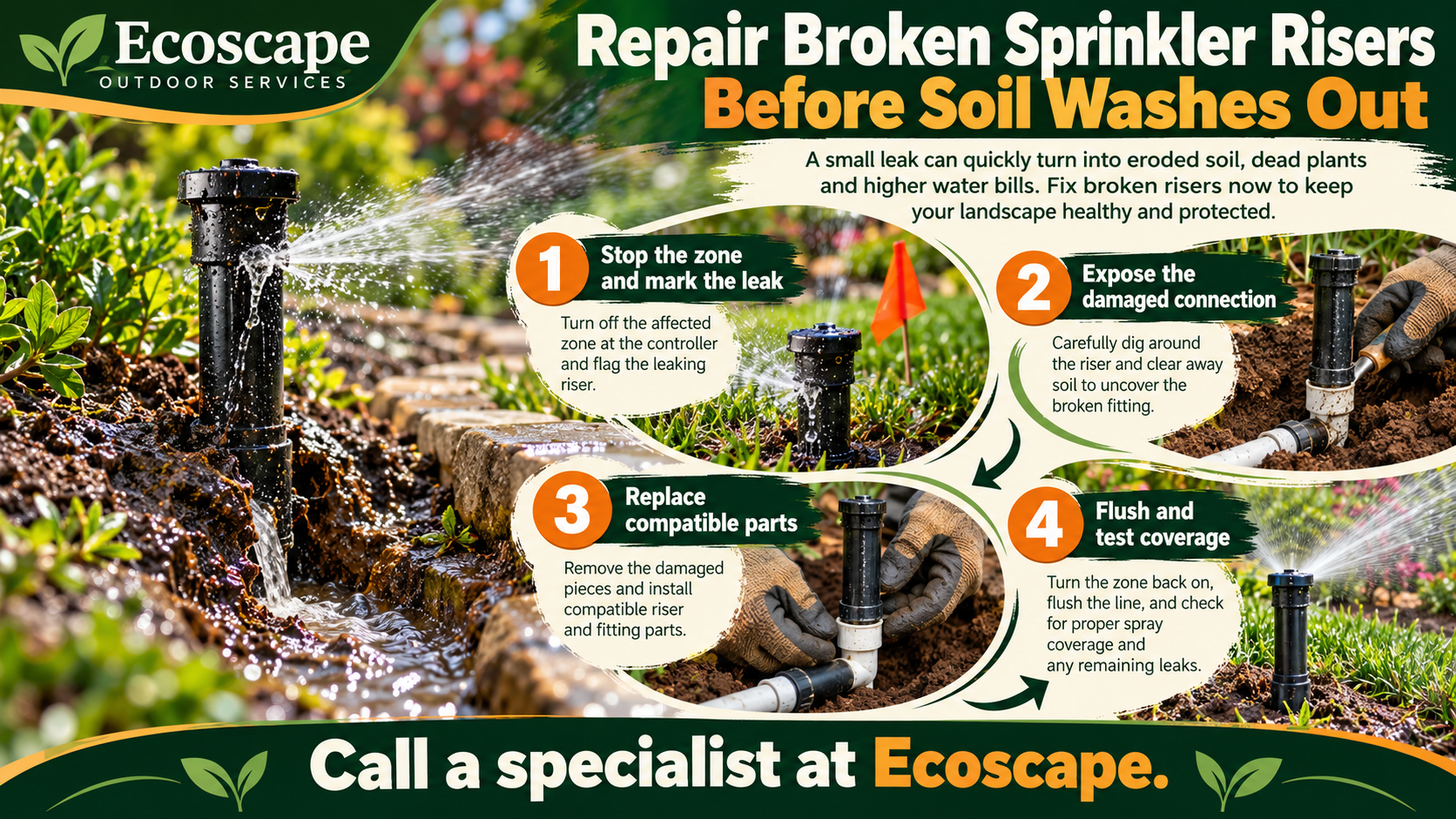
Repair Broken Sprinkler Risers Before Soil Washes Out
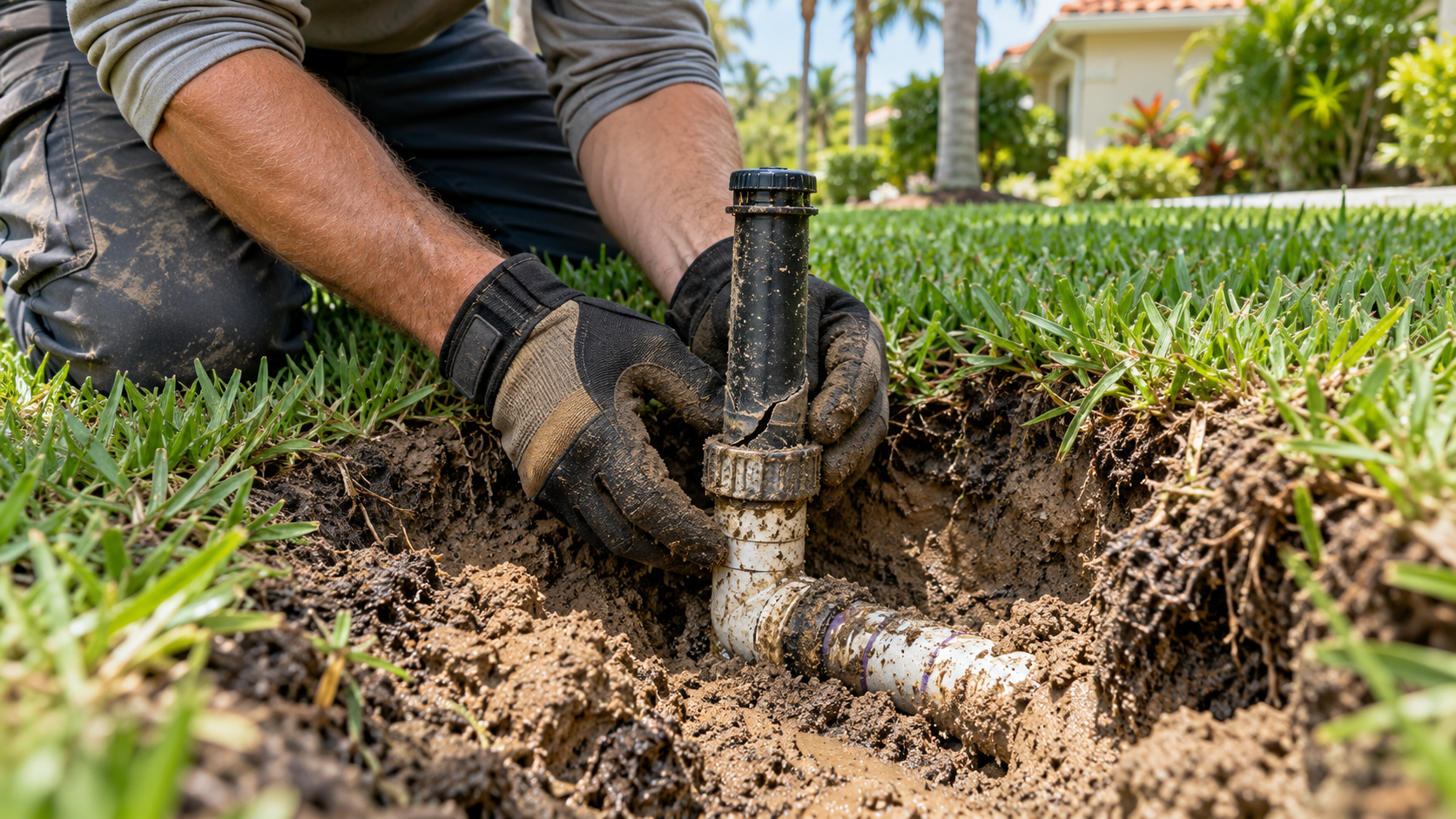
Watch for Water Below the Head
A sprinkler spraying poorly while soil bubbles beside it often points to a leak below the surface. A cracked riser, damaged swing connection, loose fitting, or broken lateral pipe allows water to escape before it reaches the nozzle. Repeated operation washes soil away and creates soft spots or depressions. Stop the affected zone when you notice active leakage instead of extending its run time.
Locate the Fault
Mark the location and photograph the symptoms before shutting off the water. Compare the nearby heads and inspect for mower damage or recent digging. A leaking seal at the top of a head differs from a break beneath it. Expose enough of the assembly to identify the damaged part. Keep people and equipment away from a soft excavation area, particularly along driveways and walking routes.
Excavate With Care
Turn off the zone and isolate its supply where appropriate. Release pressure before disconnecting fittings. Remove turf in a reusable section and excavate carefully around pipes and nearby utilities. Keep loose soil out of open connections. Avoid pulling the head upward to reach it, which stresses the lateral line. If water remains present with the controller off, investigate the valve or source before continuing the repair.
Use Compatible Replacement Parts
Match connection size, thread type, material, and assembly design. Inspect the head body and adjoining fittings for damage. Replace the failed component rather than concealing a leak beneath new soil. Follow manufacturer guidance for threaded joints and sealants. Overtightening plastic fittings creates additional failures. A flexible connection sometimes improves adjustment and impact tolerance, but the correct choice depends on the existing system and installation.
Flush and Test Before Backfilling
Remove debris through the appropriate flushing procedure before installing or restoring the nozzle. Run the zone and check the exposed connection for leakage. Confirm the head operates and retracts correctly, then set it to the finished lawn grade. Check arc and coverage against neighboring heads. Backfill with suitable soil after the repair passes inspection. Restore turf without leaving an oversized hole around the head.
Look Beyond a Single Failed Part
Check whether the head sits where mower wheels repeatedly pass or vehicles cut across the lawn. Review whether the surrounding grade changed during a recent sod installation. A raised head or stressed connection often fails again unless the installation is corrected. Do not bury the top to protect it from mowing, because turf then blocks the spray. Balance protection with proper operation at the finished grade. Keep a photo of the exposed assembly and replacement parts with your irrigation maintenance notes.
Recheck the Finished Area
Inspect the repair during the next watering cycle and after the soil settles. Persistent wetness, renewed bubbling, or weak output warrants another review. Avoid mowing over soft soil or a protruding head. Repeated failures suggest installation height, impact exposure, pressure, or connection layout needs correction. Ecoscape checks the leak and surrounding coverage so the repair protects both irrigation performance and the lawn. Call a specialist at Ecoscape.
Helpful Resource