Repair Exposed Landscape Fabric in Gravel Beds
Find Out Why the Fabric Surfaced
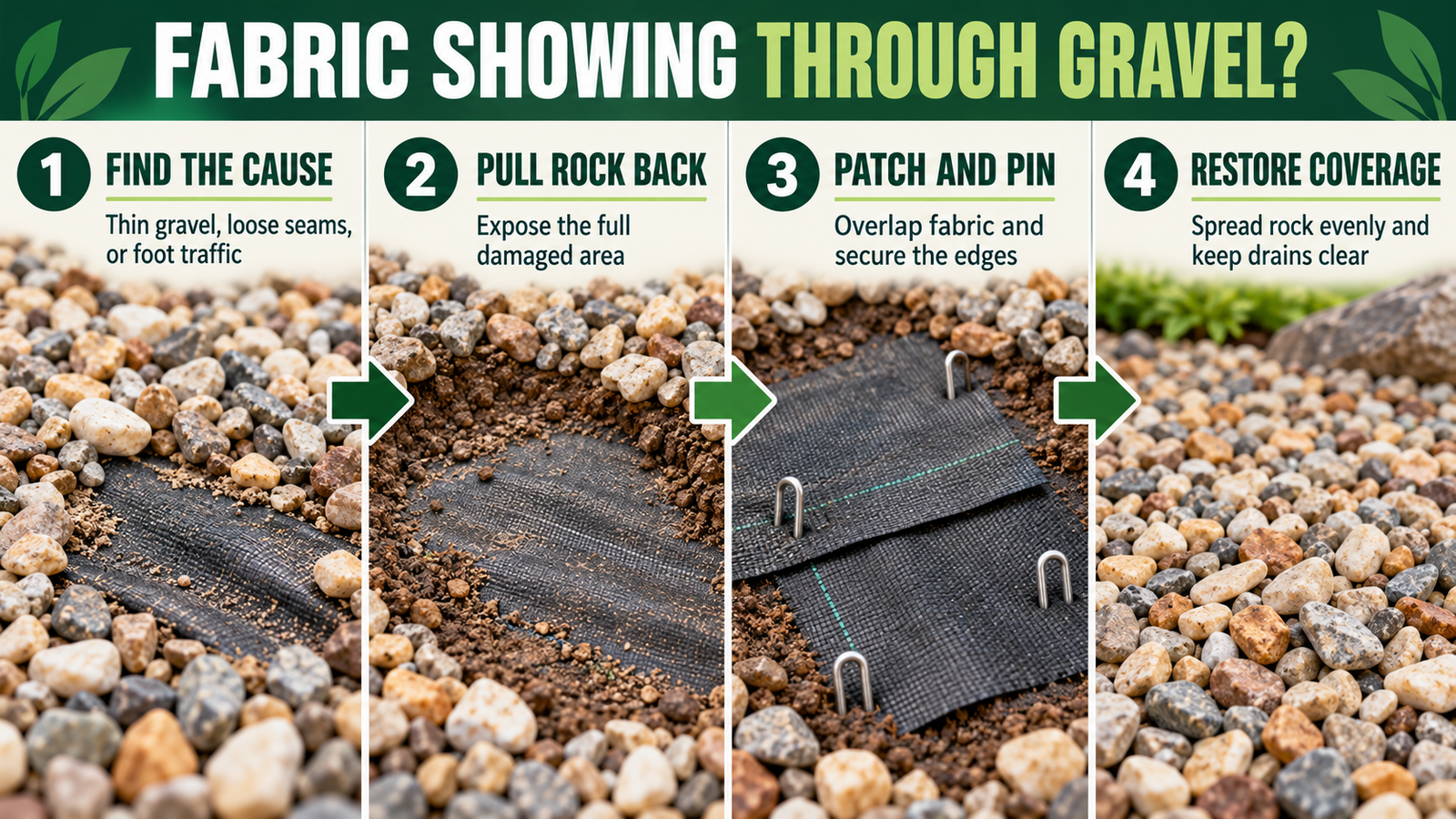
Landscape fabric normally stays hidden beneath decorative gravel, so a visible edge or seam is evidence that the cover layer moved or the fabric loosened. Common causes include foot traffic, runoff, poor overlap, too few staples, edging failure, animal activity, and gravel that was installed too thinly. In Florida beds, intense rain can move smaller stone toward low spots and expose high areas. Mark every exposed section before starting so the repair addresses the whole pattern rather than one corner.
Inspect the Bed Before Moving Rock
Check where runoff enters and exits, whether the edging still holds the stone, and whether a downspout or sprinkler is pushing material across the bed. Look for drain grates, irrigation tubing, lighting cable, shallow roots, and utility access that must remain clear. Fabric is not a substitute for correcting erosion or drainage. If soil has washed away beneath the material, the base needs to be restored before the fabric can lie flat. Photograph the original condition for comparison.
Pull the Gravel Back Carefully
Use a plastic rake or gloved hands to move gravel far enough to expose the full damaged area. Avoid sharp shovels around irrigation lines, low-voltage cable, and plant roots. Separate excessive soil, leaves, and mulch that accumulated on top of the fabric because weeds can germinate in that organic layer. Do not drag dirty gravel across the lawn or sidewalk. Place it on a tarp so the material stays contained and can be returned evenly after the repair.
Flatten, Overlap, and Secure the Fabric
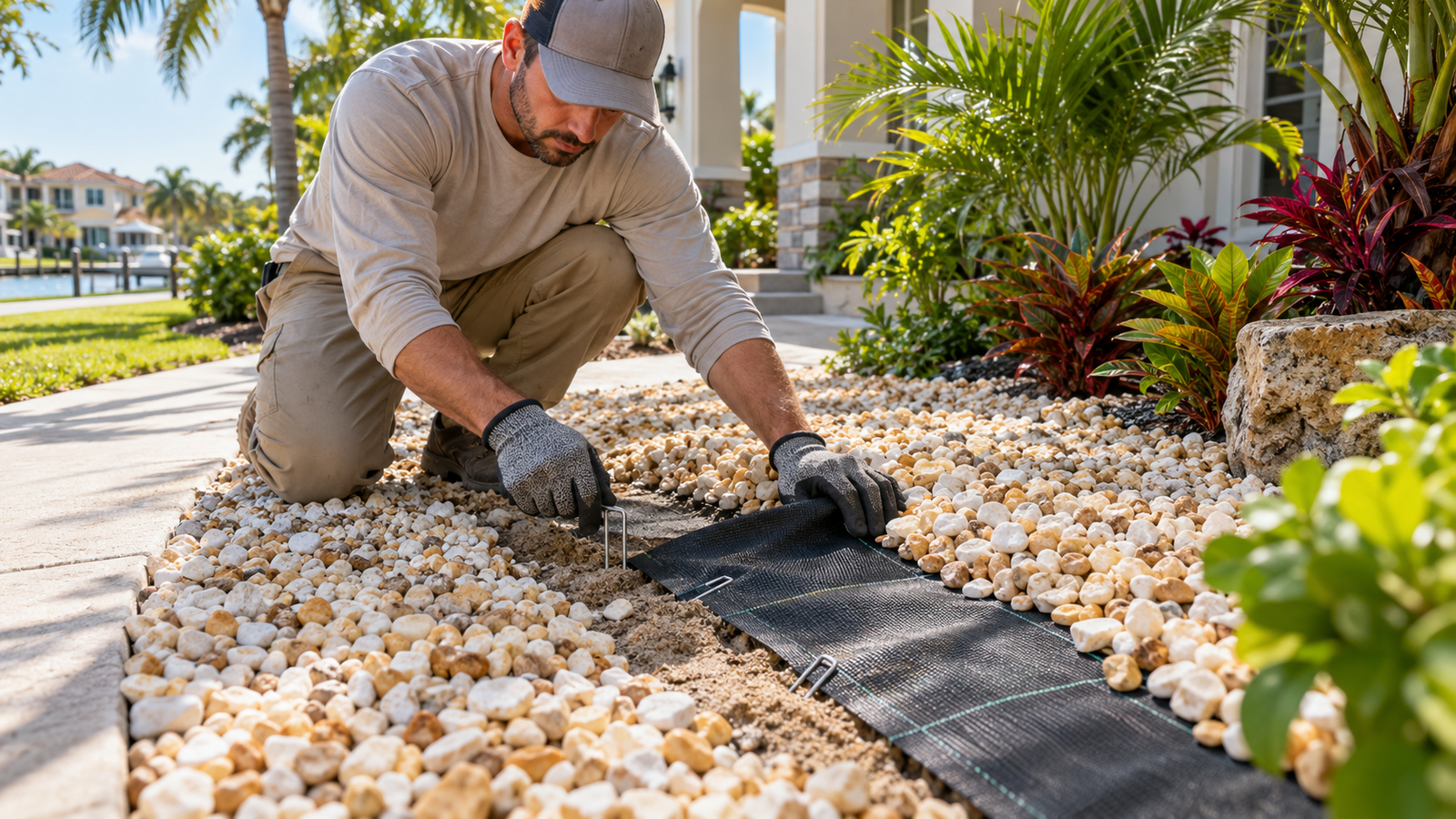
Remove trapped debris, smooth the underlying soil, and replace badly torn fabric with a compatible woven landscape product. Overlap repair pieces beyond the damaged edges rather than leaving a narrow butt joint that can open again. Pin seams, curves, and cutouts firmly with landscape staples suited to the soil. Cut neat openings around plants without wrapping fabric tightly against stems or trunks. The material should lie flat, drain properly, and remain below edging and surrounding hardscape.
Restore Even Gravel Coverage
Return clean gravel gradually and spread it to the bed's intended depth without burying plant crowns, tree flares, lighting fixtures, irrigation heads, or inspection areas. Match the existing stone size and color when additional material is needed. Feather high and low areas so the finished surface looks even from the walkway. Keep gravel out of lawn edges, catch basins, channel drains, and street gutters. A stable edge and corrected runoff path help the repair last longer than simply hiding the fabric.
Avoid Quick Fixes That Fail
Do not pour a thin bag of stone over exposed fabric and assume the problem is solved. The same seam will return if traffic, water movement, missing staples, or base settlement remains. Avoid stacking new fabric over wrinkled layers, fastening through irrigation tubing, or using solid plastic that traps water around roots. Herbicide is not a fabric repair, and fabric will not prevent every weed; windblown seeds can still root in sediment collected above it.
Monitor the Bed and Plan a Lasting Repair
Recheck the bed after the next heavy rain and after routine blowing or cleanup. Watch for renewed exposure, stone collecting at the low edge, soft spots, or gravel entering drains. Small movement can often be corrected early, while recurring washout may require better edging, grading, or drainage. If several seams are exposed or the rock depth and base need rebuilding, schedule a free quote with Ecoscape Outdoor Services. We can evaluate the bed, runoff, edging, and material needs together before the fabric and gravel deteriorate further.