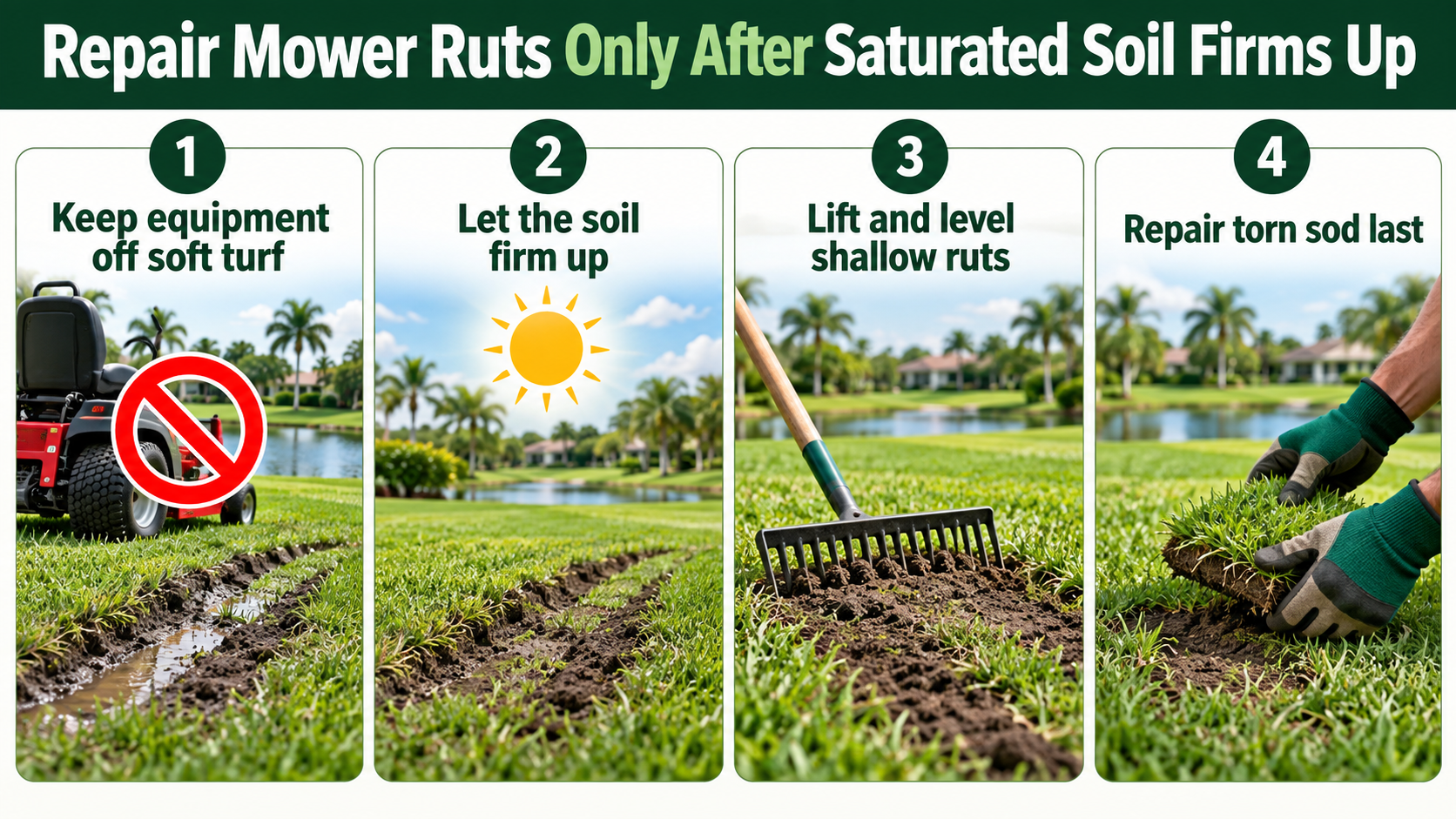
Repair Mower Ruts Only After Saturated Soil Firms Up
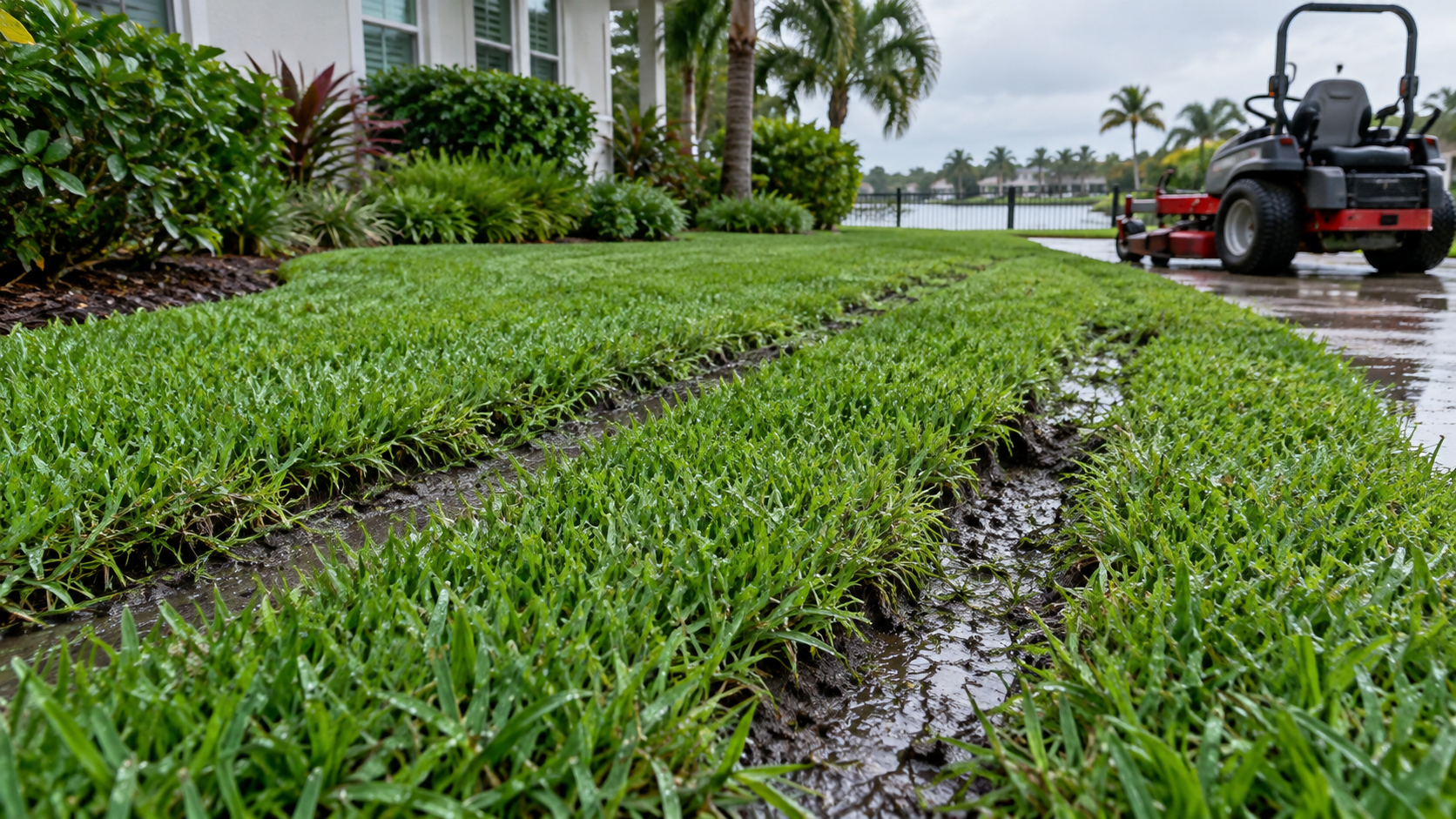
Wet Soil Cannot Support Normal Traffic
Florida summer rain may leave the soil beneath green turf soft enough to deform under a mower, wheelbarrow, or vehicle. The damage extends beyond visible tracks. Pressure squeezes pore space from saturated soil and may tear stolons or displace roots. If footprints remain deeply visible or water rises around each step, postpone equipment traffic until conditions improve.
Stop Before the Rut Deepens
A spinning tire removes turf quickly. Continuing forward often turns a shallow depression into exposed mud. Stop the machine, disengage the blades, and choose the gentlest safe exit. Avoid repeated attempts along the same track. Mark the area so crew members and residents stay away. Immediate restraint reduces the amount of sod and soil requiring repair later.
Let the Root Zone Firm Up
Wait until the surface no longer feels spongy and soil does not cling heavily to footwear. Drying time depends on shade, grade, soil composition, temperature, and additional rain. Do not judge the site from pavement or the top few blades. Probe several inches deep beside the rut. Working wet soil smears its structure and locks in compaction.
Lift Shallow Depressions Gently
Once the soil is workable, use a garden fork to lift shallow settled areas without turning the turf over. Insert the tines at an angle beneath the depression and raise the root zone gradually. Press the surface level with surrounding turf. Avoid creating air pockets or burying grass crowns. Several light adjustments are safer than one aggressive lift.
Repair Torn Turf Separately
Replace sections where tires ripped stolons or exposed bare soil. Fit living sod back into place with firm soil contact and level edges. Use matching sod or plugs where the original turf is destroyed. Water repaired material enough to settle roots, then avoid constant saturation. Keep mowers off the area until new roots resist a gentle pull.
Correct the Reason the Area Stayed Soft
Recurring ruts point toward drainage, irrigation, shade, compaction, or scheduling problems. Check for leaking heads, low spots, roof discharge, and runoff from neighboring surfaces. Adjust the route so heavy turns occur on firmer ground. Use lighter equipment or hand work near chronic wet zones. A repair without an operational change rarely lasts through the next rainy week.
Protect the Lawn Before the Next Visit
Ecoscape Outdoor Services evaluates turf firmness before placing equipment on a lawn. Delaying one mowing visit is less damaging than creating weeks of repair. South Tampa clients receive better long-term results when mowing decisions reflect actual ground conditions. Healthy turf depends on sharp work, appropriate timing, and respect for saturated soil.
Source: UF/IFAS Gardening Solutions