
Repair Small St. Augustine Lawn Gaps With Plugs
Know When Plugs Make Sense
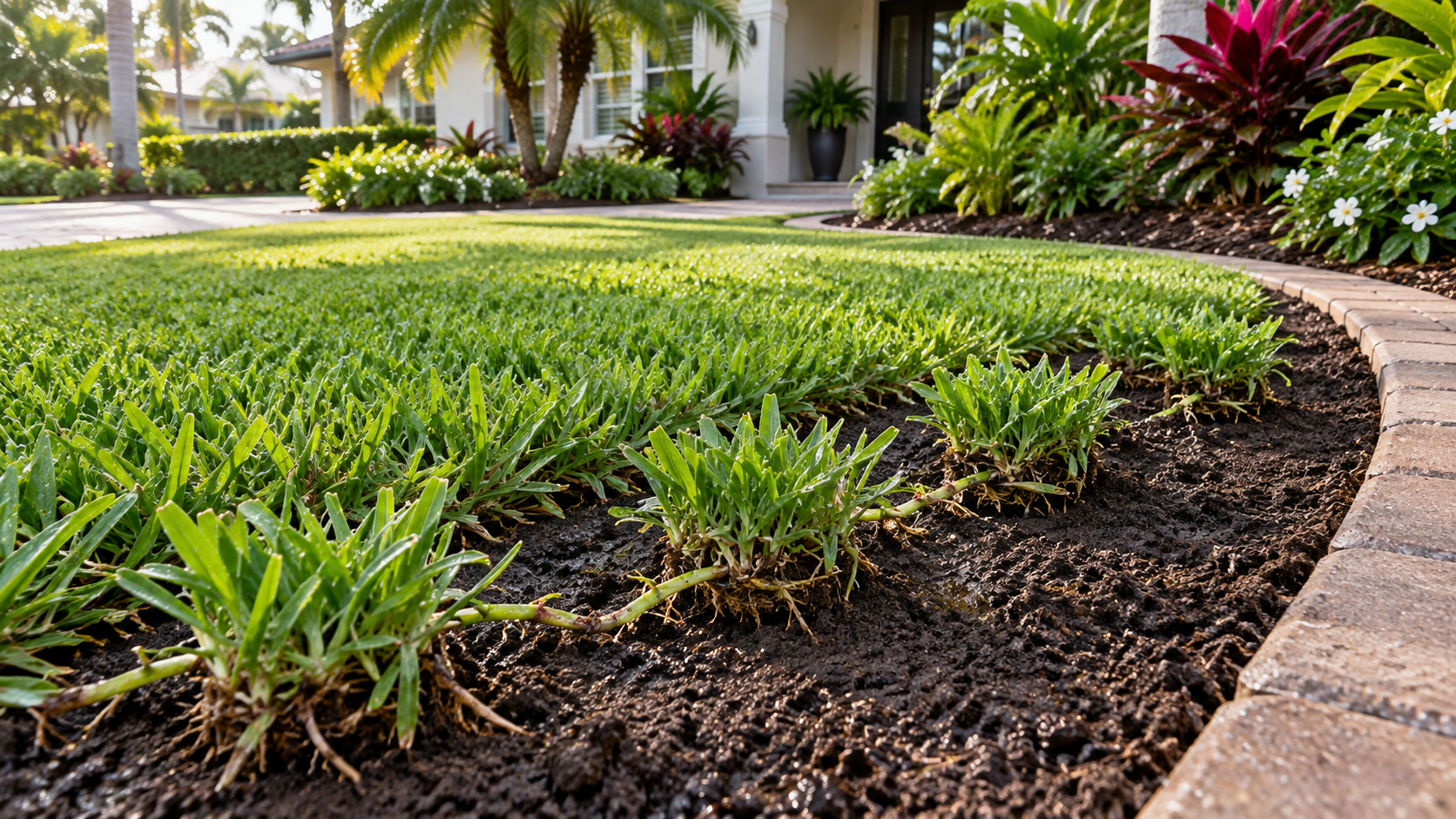
St. Augustine grass spreads through above-ground stolons, so healthy plugs can fill small, isolated gaps during warm active growth. Plugs work well along damaged edges, narrow utility repairs, and scattered bare sections where full sod replacement would create unnecessary waste. They are a poor solution for a large failed lawn or an area where the original problem remains active. Repair the cause first, then use plugs to rebuild coverage gradually.
Find the Reason for the Gap
Check sunlight, irrigation coverage, soil moisture, foot traffic, mower damage, insects, and disease patterns before installing grass. A shaded strip beneath dense trees may remain bare no matter how many plugs you add. A dry corner often points to a blocked or misaligned sprinkler. Soft soil suggests excessive water or drainage trouble. If the patch expands from one edge, inspect the transition between healthy and damaged turf instead of treating the center alone.
Prepare the Soil Correctly
Remove dead grass, weeds, loose thatch, and compacted debris from the repair area. Loosen the top few inches of soil without cutting irrigation lines or major roots. Bring the surface level with the surrounding lawn so the new plugs do not sit in a bowl or on a mound. Use clean, compatible soil only where needed. Do not bury living St. Augustine runners with a thick layer of topsoil during preparation.
Install Healthy Plugs
Use vigorous St. Augustine material of the same or a compatible cultivar. Cut or purchase uniform plugs with roots and soil attached. Space them closely enough for the desired fill time, often six to twelve inches apart for a small repair. Set every plug at the same grade as the existing lawn. Press the surrounding soil firmly to remove air pockets while keeping the grass blades and growing points above the surface.
Water for Establishment
Water immediately after installation, then keep the root zone evenly moist while the plugs establish. Frequency depends on temperature, rain, soil, and site exposure. Avoid constant saturation and runoff. Test the repaired area by hand because an irrigation zone may look active while missing the exact edge. As roots hold, reduce frequency and water more deeply. Keep traffic, pets, and mower turns off the area until new runners connect the plugs.
Avoid Setbacks During Filling
Do not scalp the plugs or mow them before they resist a gentle tug. Keep mower blades sharp and follow the proper height for St. Augustine grass. Avoid unlicensed fertilizer or pesticide applications. Florida treatment rules, product labels, and local seasonal restrictions still apply to a small repair. Hand-remove weeds carefully without pulling new runners. If plugs decline in the same pattern as the previous turf, stop replacing grass and reassess the underlying condition.
Track the Repair
Photograph the area every two weeks from the same angle. Look for rooted plugs, new stolons, consistent color, and narrowing soil gaps. Ecoscape Outdoor Services helps South Tampa lawn clients identify irrigation, mowing, drainage, traffic, and site problems before recommending repair. We can prepare small damaged sections, install compatible St. Augustine material, and protect the transition back into healthy turf. A targeted repair succeeds when the cause and the grass receive equal attention.
