Replace Cracked Irrigation Valve Box Lids Before Someone Steps Through
Why a damaged valve-box lid matters
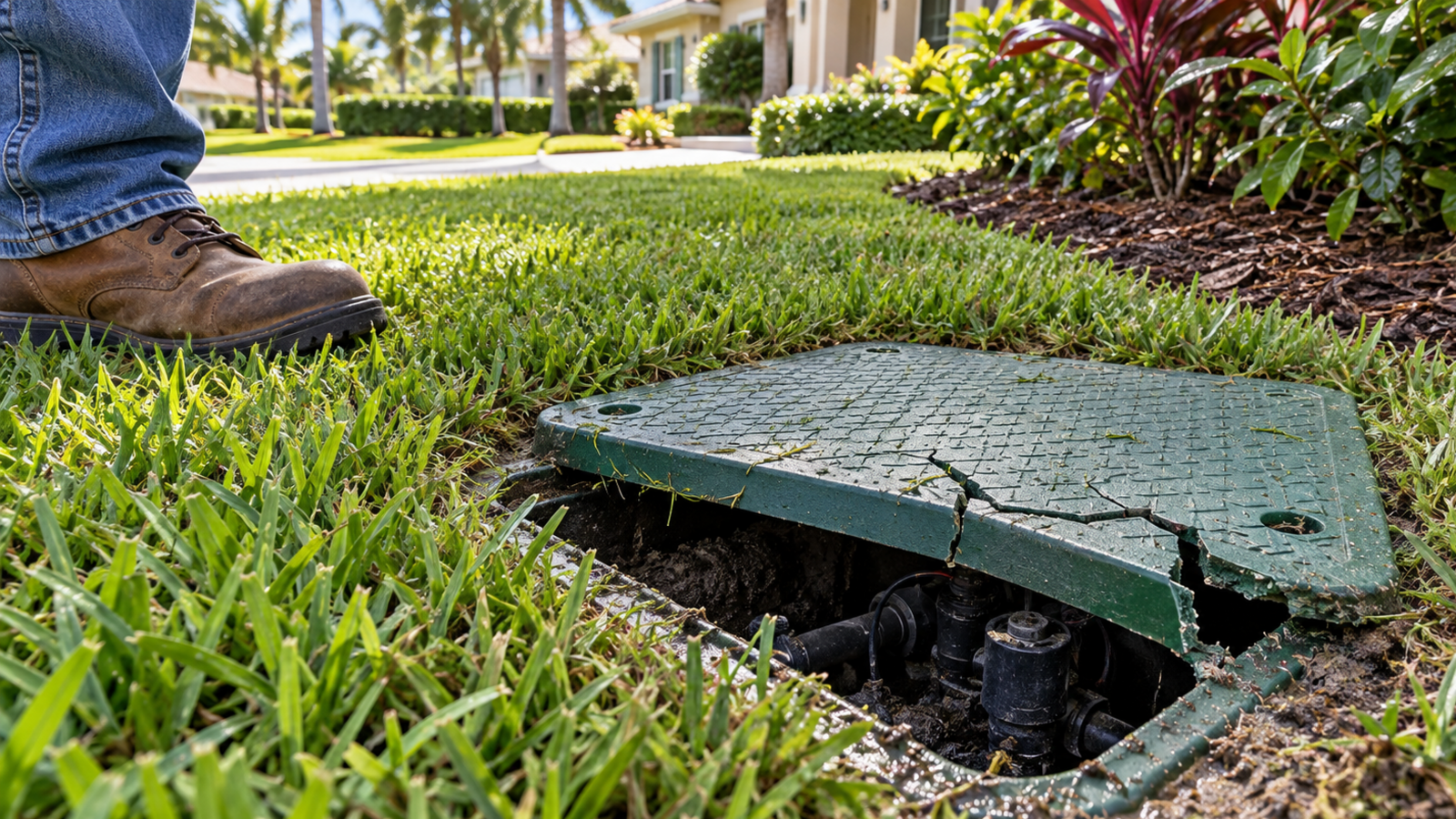
An irrigation valve box protects valves, wire connections, and pipe fittings while keeping them available for service. When the lid cracks, warps, or drops below grade, a person or mower wheel can break through it. The opening may also collect soil, mulch, insects, and stormwater. Because the system may keep operating normally, the safety problem can remain unnoticed until someone steps on the weakened cover.
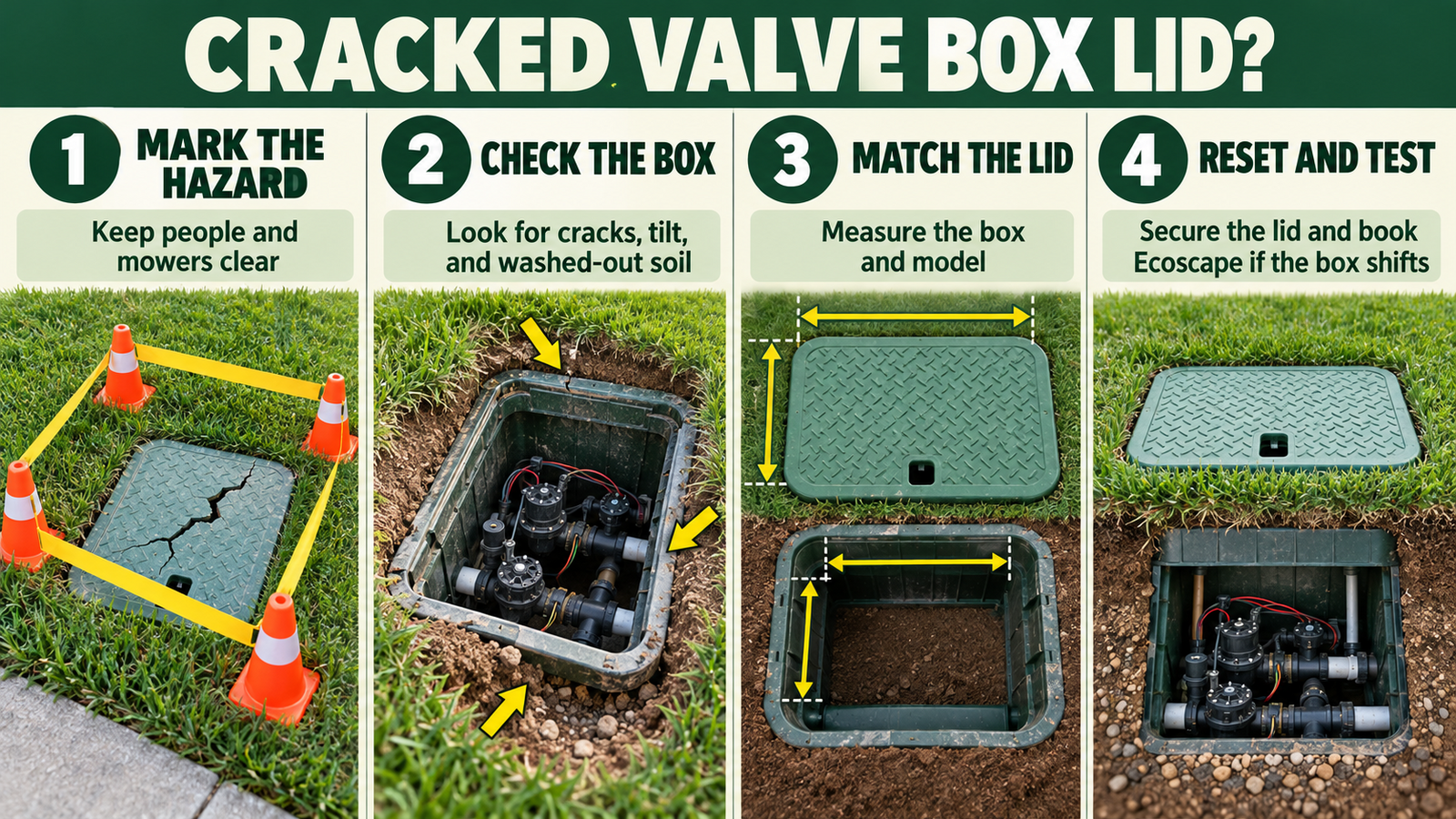
Mark the hazard immediately
Keep children, pets, visitors, and equipment away from the box as soon as damage is found. Use visible cones or flags outside the opening rather than placing weight on the lid. Do not cover it with plywood, a planter, or loose landscape material that hides the location. If water is actively leaking inside, turn off the affected irrigation schedule and leave the internal components alone until the source is assessed.
Inspect the lid, rim, and surrounding soil
Look for cracks through the lid, broken locking tabs, a distorted box rim, exposed gaps, and soil that has washed away from the sides. Confirm whether the entire box is tilted or only the cover is damaged. Do not reach into a box with standing water or unfamiliar wires. Photograph the lid, opening, and any molded identification so the replacement can be matched without repeatedly exposing the components.
Match the replacement instead of forcing it
Valve-box lids are not universally interchangeable. Measure the opening and compare the shape, brand, model, latch style, and load rating where available. A cover that rests only on two edges or must be trimmed to fit can shift under weight. If the box body is split, distorted, or too low, replacing only the lid will not solve the problem. The finished cover should sit securely and remain easy to locate.
Account for Florida rain and sandy soil
Heavy rain, repeated foot traffic, mower turns, and settling sandy soil can undermine the box even after a new lid is installed. Restore stable support around the outside without burying the cover or packing debris inside. Maintain positive surface drainage so runoff does not pour through the opening. After storms and major landscape work, check that the box remains level, visible, closed, and free of standing water.
Avoid common repair mistakes
Do not glue a cracked lid, stack loose pavers over it, drive stakes beside hidden pipes, or fill the box with soil to stop it from moving. Avoid raising the surrounding lawn so high that the lid disappears beneath turf. After replacement, operate the related zones and confirm that valves remain accessible and dry. Reinspect the cover after two weeks and after the next heavy rain for renewed settling or movement.
Book help when the box has shifted
A broken lid is often only the visible part of the problem. A sunken box, washed-out base, leaking fitting, crowded valve assembly, or damaged wiring needs a careful on-site review. Book an Ecoscape Outdoor Services appointment to assess the valve box, surrounding grade, and irrigation operation. Ecoscape can identify the practical repair scope and restore safe access before a mower or visitor turns a small defect into larger damage.