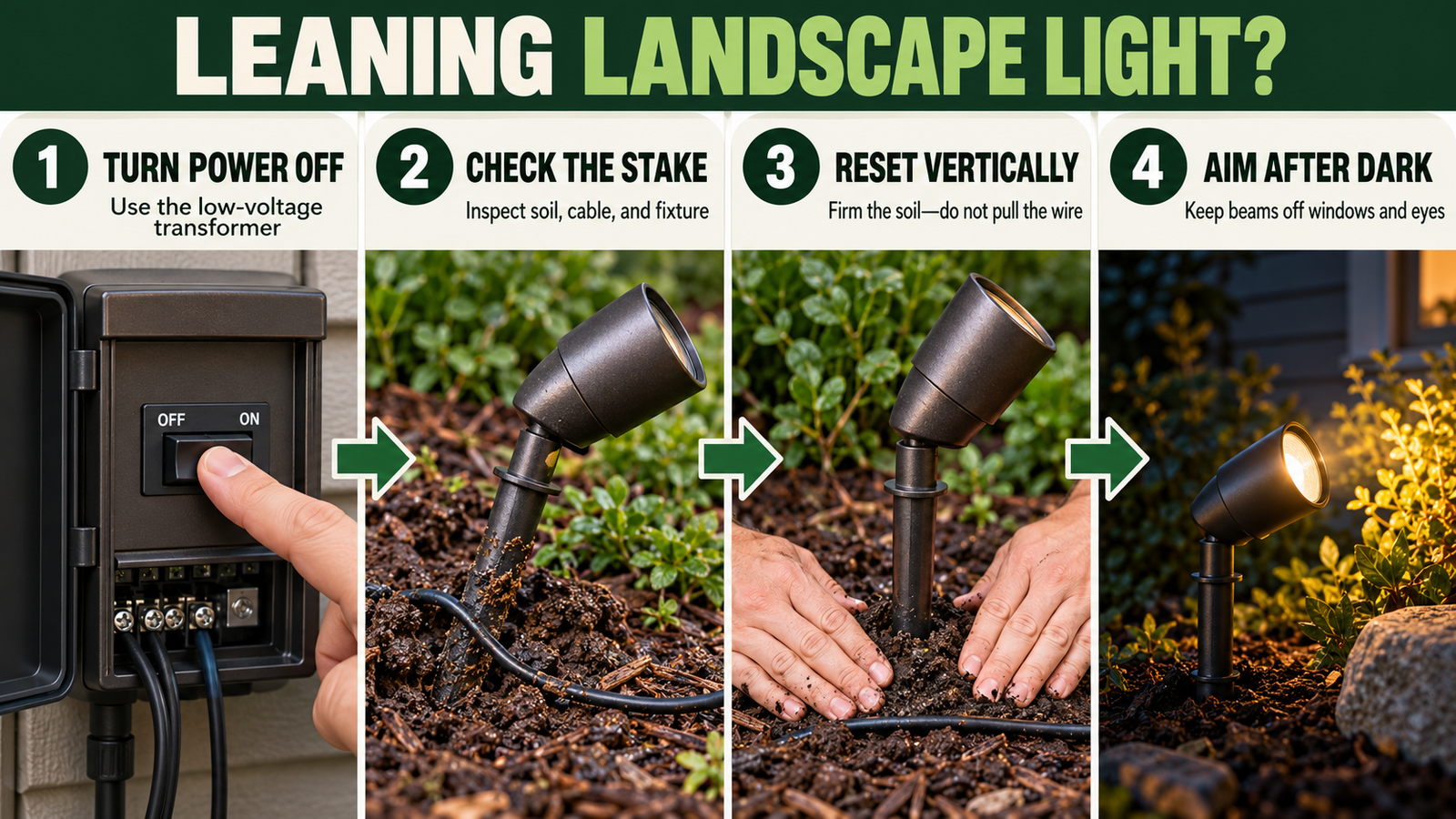
Reset Leaning Landscape Lights After Heavy Rain
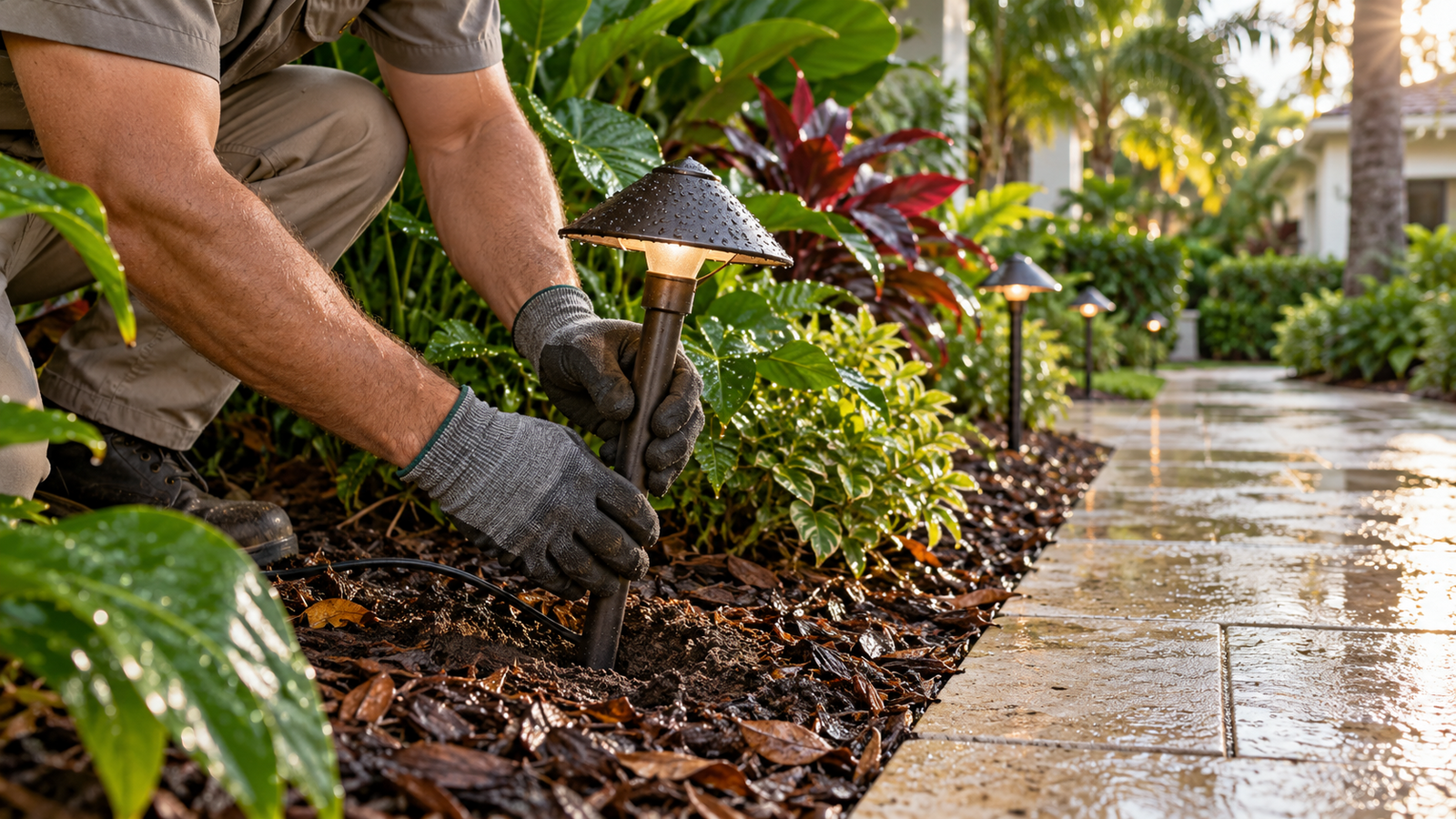
Understand Why the Fixture Started Leaning
Landscape lights often lean after heavy rain because saturated soil loses its grip on the stake. Runoff, mulch movement, repeated edging, pets, foot traffic, and roots can make the problem worse. A crooked fixture may cast glare into windows, leave a walkway dark, or place the housing where a mower or shoe can strike it. Note whether one light shifted or an entire row moved, because repeated movement can point to a drainage or installation-depth problem.
Turn the Low-Voltage System Off
Switch the landscape-lighting transformer off before touching the fixture or soil around its cable. Confirm that the lights are dark, and avoid working during rain, thunder, or standing-water conditions. Low-voltage systems reduce electrical risk but still require careful handling. Do not open the transformer, splice wiring, or handle damaged cable when the ground is wet. If the fixture is near household-voltage equipment or the power source is unclear, leave the area alone and arrange an on-site assessment.
Inspect the Stake, Cable, and Soil
Gently expose the top of the stake without yanking the fixture upward. Look for a cracked stake, loose threaded connection, pinched cable, exposed copper, corroded connector, or soil that has washed away. The cable should have enough relaxed movement for adjustment without being stretched. Also check whether mulch is piled against the lens or housing. If the stake is broken, the cable is damaged, or the fixture contains water, stop and keep the system off until it can be repaired.
Reset the Fixture Without Pulling the Wire
Hold the stake rather than the lamp head, return it to a vertical position, and firm suitable soil around the base in small layers. Do not twist the fixture repeatedly, because that can wind or loosen the buried cable. Keep the light outside the walking edge and allow water to drain away from the base. In very soft ground, a longer or more stable mounting method may be needed. Adding loose mulch alone will not support a fixture through another storm.
Restore the Beam After Dark
Once the soil is firm and the fixture is stable, restore power and review the beam after sunset. Aim path lights toward the walking surface without shining directly into eyes. Aim accent lights at the intended tree, wall, or planting feature while keeping glare off neighboring windows and streets. Compare spacing and brightness with nearby fixtures. Turn the transformer off again before making any additional physical adjustment, then repeat the nighttime review until the beam is useful and comfortable.
Avoid Common Lighting Mistakes
Do not straighten a fixture by pulling the cable, forcing the lamp head, or packing rocks tightly against the housing. Avoid burying connectors in water-holding pockets or covering lenses with mulch. Do not assume every dark fixture only needs a bulb; movement can loosen a connection or damage cable insulation. A light that repeatedly leans should not simply be reset after every storm. Correcting runoff, soil support, stake condition, or cable routing provides a more durable result.
Recheck the System and Schedule Help
Inspect the repaired light after the next irrigation cycle and heavy rain. Confirm that it remains upright, the beam stays correctly aimed, nearby soil is not washing away, and no connector or cable is exposed. Walk the entire lighting route to catch other loose fixtures before they become trip or equipment hazards. If several lights have shifted, a stake is broken, or wiring appears damaged, book an Ecoscape Outdoor Services lighting appointment. An on-site review can address fixture stability, beam aim, cable condition, and the drainage pattern causing the movement.