Restore Sprinkler Coverage Hidden by Overgrown Shrubs
Why shrubs change sprinkler coverage
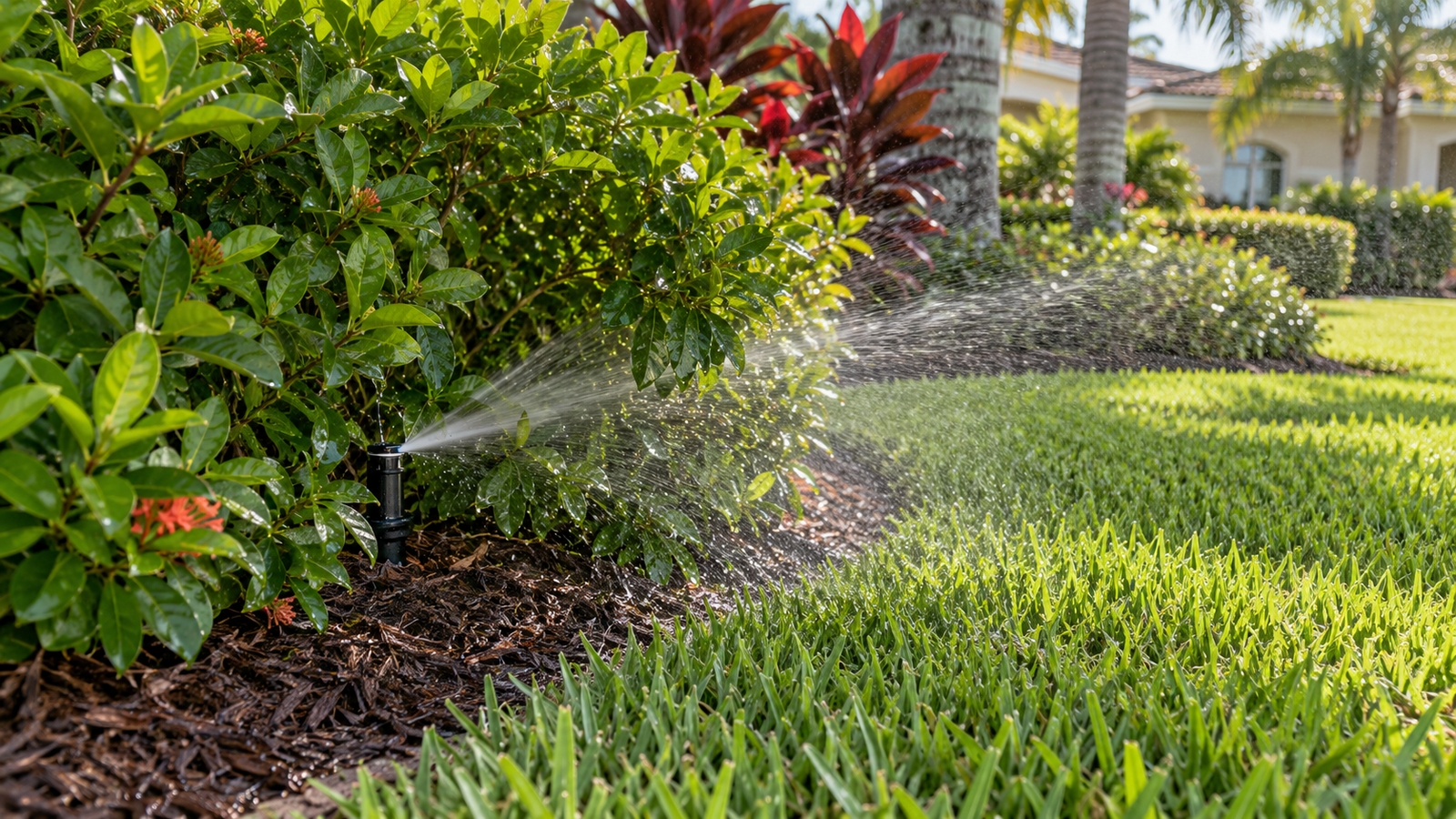
A spray pattern that worked when a landscape was new may fail after shrubs add height and width. Leaves intercept droplets, redirect water into mulch, and create a dry shadow in the lawn or bed beyond the plant. Because the sprinkler still runs, the problem can look like weak pressure, poor soil, or a sick plant. In Florida, fast warm-season growth can change coverage within a few months.
Run the entire zone before pruning
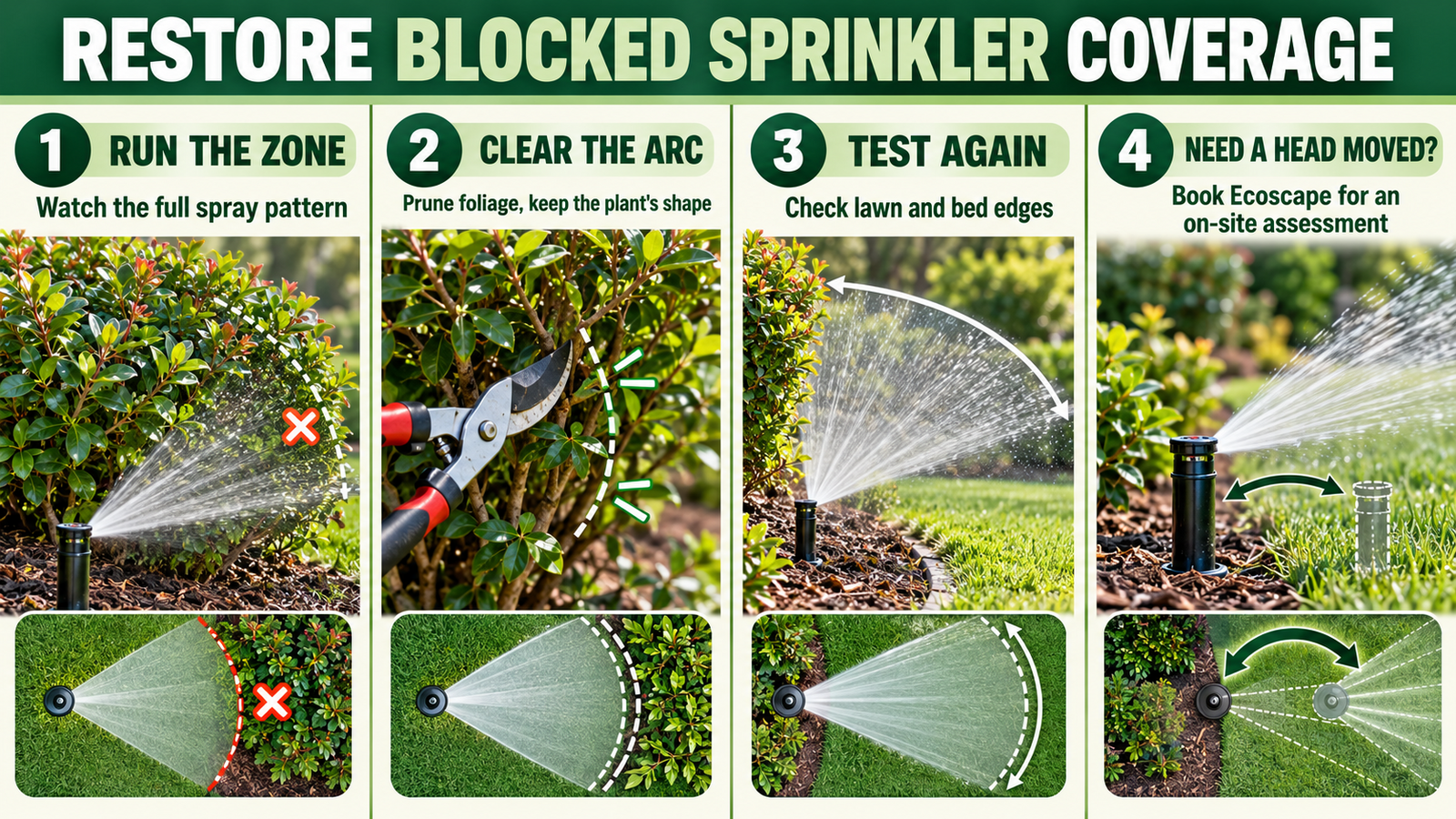
Turn on the affected zone and watch it from startup through a full cycle. Stand outside the spray and look for water striking leaves, trunks, fences, or edging. Compare the blocked side with an open head on the same zone. Note dry turf behind the shrub, puddling near its base, and spray blowing onto pavement. Mark each hidden head so it remains visible during trimming and mowing.
Clear the spray arc selectively
Prune only the shoots that cross the water path, following the plant's natural branching and mature shape. Remove dead, rubbing, or inward-growing stems first, then shorten obstructing growth back to a branch junction. Avoid shearing a deep hole through one side of the shrub or stripping lower foliage. Wear appropriate eye and hand protection, and keep tools away from the nozzle and buried riser.
Inspect the head and test again
With the zone off, brush away loose clippings and check that the cap is intact, upright, and near finished grade. Do not twist a head by force or dig until underground pipe locations are understood. Run the zone again after pruning. The spray should clear the plant, reach the intended edge, and avoid hard surfaces. Clean a removable clogged nozzle only according to its manufacturer's instructions.
Account for Florida growth and weather
Tampa's long growing season means hibiscus, viburnum, ixora, and other shrubs can reenter a spray path quickly. Schedule a visual zone check after major pruning, new planting, storm damage, and peak summer growth. Wind can distort a test, so confirm coverage again during calmer conditions. A rain sensor or seasonal controller adjustment saves water, but neither corrects a physical obstruction at the head.
Avoid common coverage mistakes
Do not compensate for one blocked area by adding minutes to the whole zone; that can overwater every open area without fixing the dry shadow. Avoid cutting a shrub far below its healthy foliage, raising a head on an unstable stack of fittings, or mixing incompatible nozzles. Recheck the lawn and bed for several watering cycles, looking for steady improvement rather than expecting stressed turf to green overnight.
When the layout needs professional help
If a healthy shrub will keep occupying the spray path, the lasting answer may be a different nozzle, corrected height, adjusted arc, or relocated head. Low pressure, multiple blocked heads, and buried components also deserve a system-level review. Book Ecoscape Outdoor Services for an on-site assessment of the affected zone so the plant can keep its shape while the irrigation delivers practical, even coverage.