
Rock Glue vs. Mulch Glue: What Works and What Does Not?
What These Products Are Designed to Do
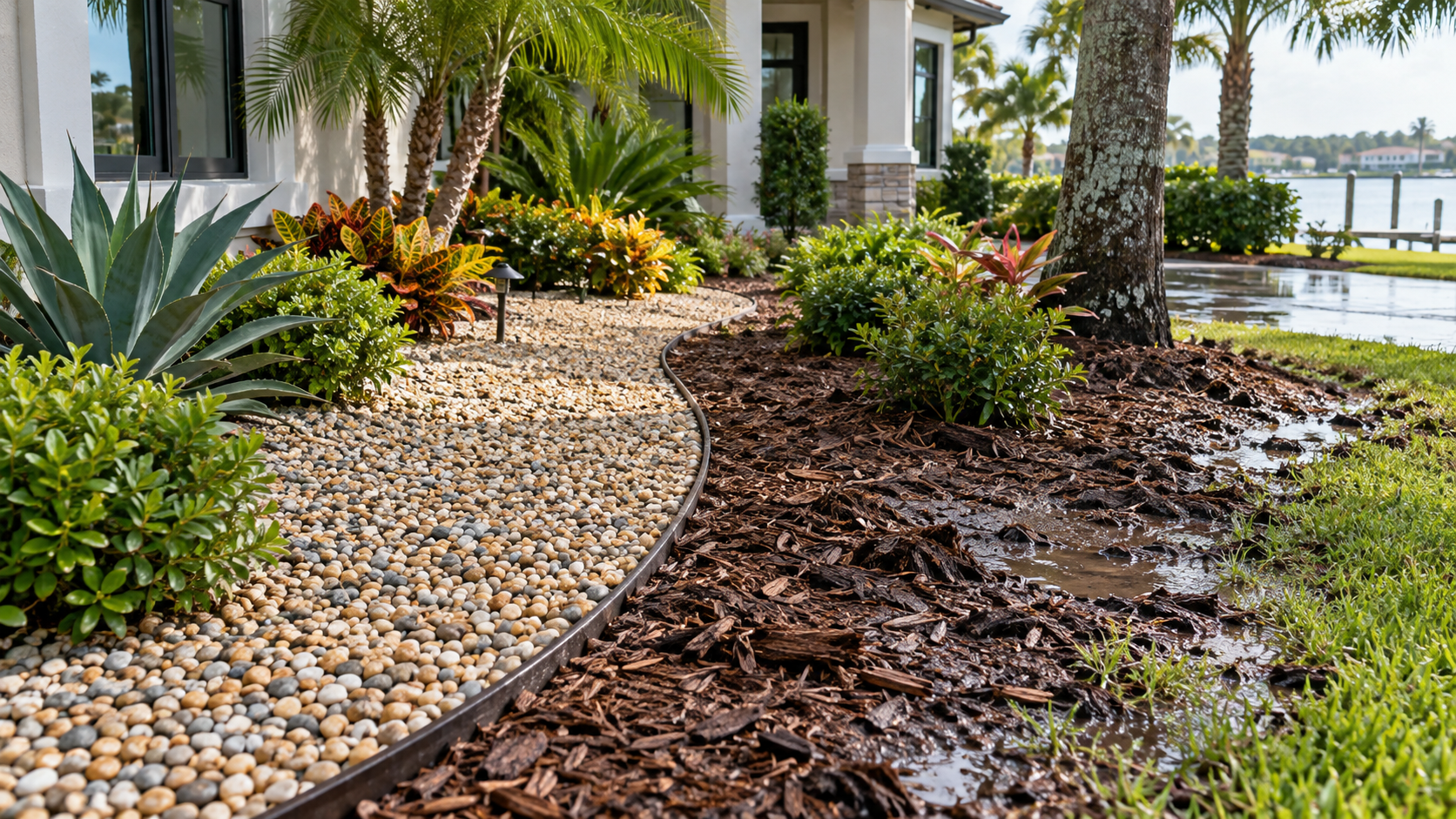
Rock glue and mulch glue are liquid binders sold to reduce movement in loose landscape materials. Rock glue targets small stones, pea gravel, and decorative aggregate. Mulch glue targets bark, wood chips, and pine straw. Both sound similar, yet the surfaces behave differently. Stone stays hard and stable. Organic mulch absorbs water, decomposes, shifts, and changes shape throughout Florida’s wet season.
Where Rock Glue Performs Well
Rock glue has a useful role in decorative areas with light foot traffic. It helps keep small stones out of lawns, pools, sidewalks, and drains. It also reduces minor washout along gently sloped beds and narrow paths. The best results come from clean, dry, compacted stone with enough open space for drainage. It does not replace a proper base, grading, or solid landscape edging.
Why Mulch Glue Often Disappoints
Mulch glue often fails because mulch never remains dimensionally stable. Bark swells when wet, shrinks as it dries, and breaks down into smaller particles. Heavy Tampa rain and irrigation move the loose material under any bonded surface layer. Thin applications provide little hold. Heavy applications might create a stiff or shiny crust that later breaks into sections while the mulch beneath it continues to shift.
Prepare the Area Before Using Rock Glue
Remove leaves, dust, soil, and weeds from the stone. Repair low spots and correct drainage before applying a binder. The aggregate should be completely dry, and the weather forecast should provide enough curing time before rain or irrigation. Follow the manufacturer’s coverage and application directions. Test a small hidden area first because some products slightly darken the stone or alter its finished appearance.
Common Installation Mistakes
Do not spray glue over dirty rock, loose soil, standing water, or an unstable base. Avoid treating driveways, heavily traveled paths, or areas where stones need regular movement for access. Never use a surface binder to conceal erosion. With mulch, avoid repeated glue applications that trap decomposed material. Proper depth, firm edging, suitable mulch weight, and controlled runoff deliver more dependable results.
Plan for Follow-Up Maintenance
Rock glue wears from ultraviolet exposure, rain, foot traffic, blowers, and routine landscape service. Inspect treated areas after major storms and expect selective reapplication. Keep organic debris from accumulating between stones because it creates a seedbed for weeds. If the rock repeatedly escapes the bed, address edging, slope, material size, or drainage instead of relying on more adhesive every time.
Choose the Right Long-Term Solution
For South Tampa landscapes, rock glue works best as a finishing aid in carefully selected decorative areas. Mulch glue rarely solves the reasons mulch moves. Ecoscape Outdoor Services evaluates material size, bed depth, edging, drainage, irrigation, and maintenance traffic before recommending a solution. A correctly built bed protects nearby turf and hardscape while reducing cleanup without creating a brittle surface that quickly fails.
