
Route Downspouts Into Safe Landscape Drainage
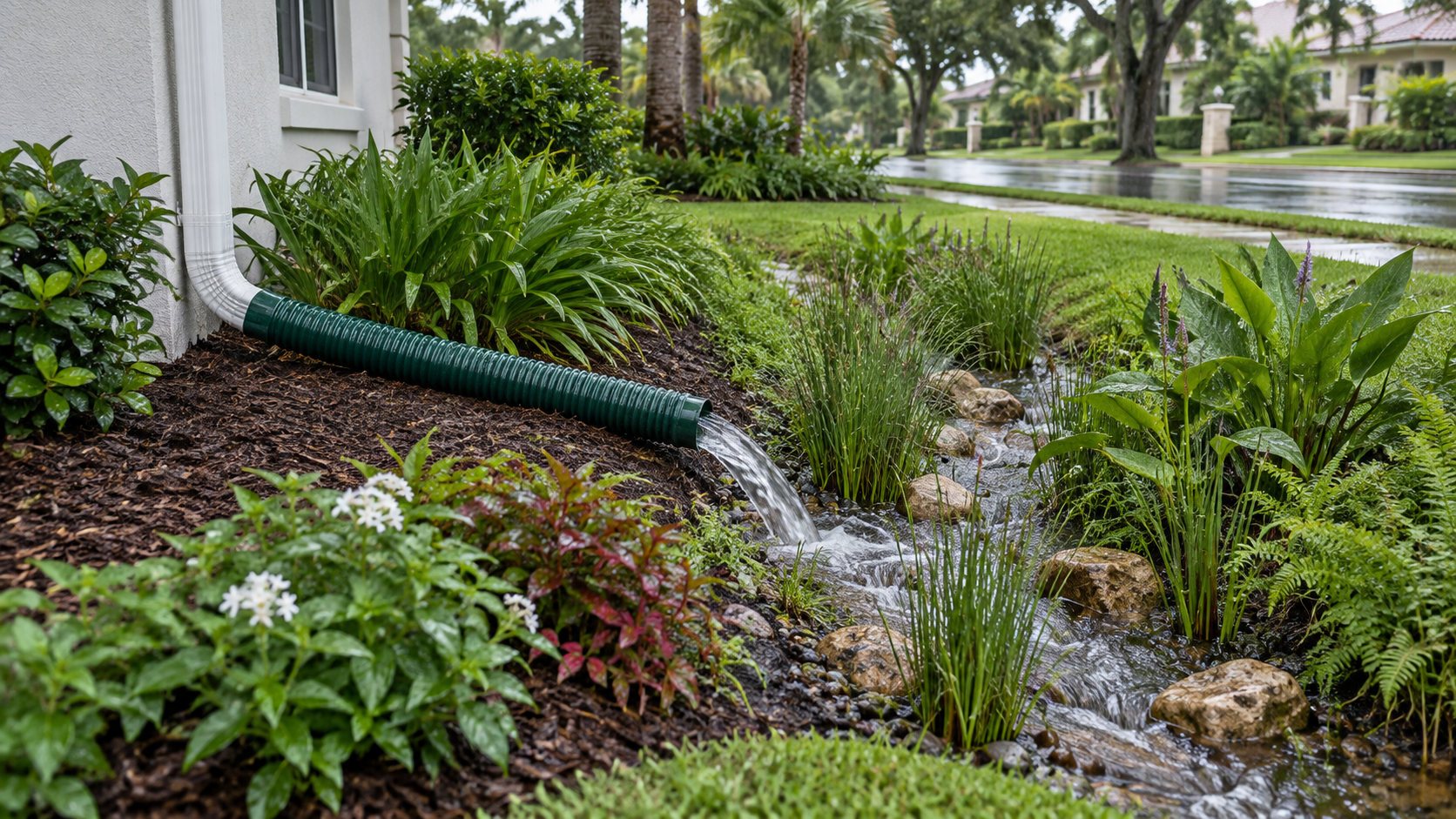
Roof Water Needs a Destination
A short Florida storm sends hundreds of gallons from a roof toward the ground. When downspouts discharge beside the foundation, water erodes beds, stains walls, floods walkways, washes mulch into turf, and keeps roots saturated. Extending the outlet only helps when the water reaches a safe destination. Plan the complete route from gutter to final release point before installing pipe or stone.
Observe During Heavy Rain
Walk the property from a safe location while rain is falling. Note overflowing gutters, disconnected elbows, foundation pooling, surface flow, blocked drains, and water crossing walks. Photograph each path. Check the discharge area again after the storm to see how long water remains. South Tampa’s flat lots and compacted fill often require more planning than a short splash block provides.
Choose the Right Outlet
Direct water toward a legal, stable area where it will spread, soak in, or enter an approved drainage system without harming neighbors. Options include solid buried pipe, a pop-up emitter, a planted swale, or a properly sized rain garden. Maintain positive slope and access for cleaning. Keep discharge away from foundations, pool decks, septic components, electrical equipment, and low windows.
Protect the Landscape
Use solid pipe near structures so roof water does not leak into the bed. Stabilize the outlet with stone or vegetation to prevent scour. Preserve the root flare of nearby trees and avoid cutting major roots. Coordinate the route around irrigation lines, lighting cable, utilities, edging, and existing drains. Call for utility location before excavation and restore grade after settling.
Maintain the System
Clean gutters and strainers before summer storms and hurricane season. Flush accessible lines, inspect connections, and confirm pop-up emitters move freely. Remove roots or sediment at the first sign of slow discharge. Recheck the outlet after landscape renovation because new edging, soil, mulch, or rock changes surface flow. Keep a visible cleanout point for future service.
Avoid Common Drainage Errors
Do not connect perforated pipe directly beside the foundation. Avoid flat pipe runs that hold sediment and mosquito water. Never discharge onto a sidewalk, neighboring property, seawall structure, or public area without confirming requirements. Do not bury outlet points under mulch. A larger pipe does not correct negative slope, crushed fittings, blocked gutters, or an unsuitable destination.
How Ecoscape Outdoor Services Helps
Ecoscape Outdoor Services traces drainage problems from the source before recommending changes. We evaluate roof discharge, grade, planting beds, turf, drains, irrigation, hardscape, and downstream flow across South Tampa properties. Our crews install practical landscape drainage routes, protect nearby systems, stabilize outlets, restore disturbed areas, and explain maintenance points so water moves away from vulnerable structures.
