Separate Chinch Bug Damage From Drought and Disease
Similar Color Does Not Mean the Same Cause
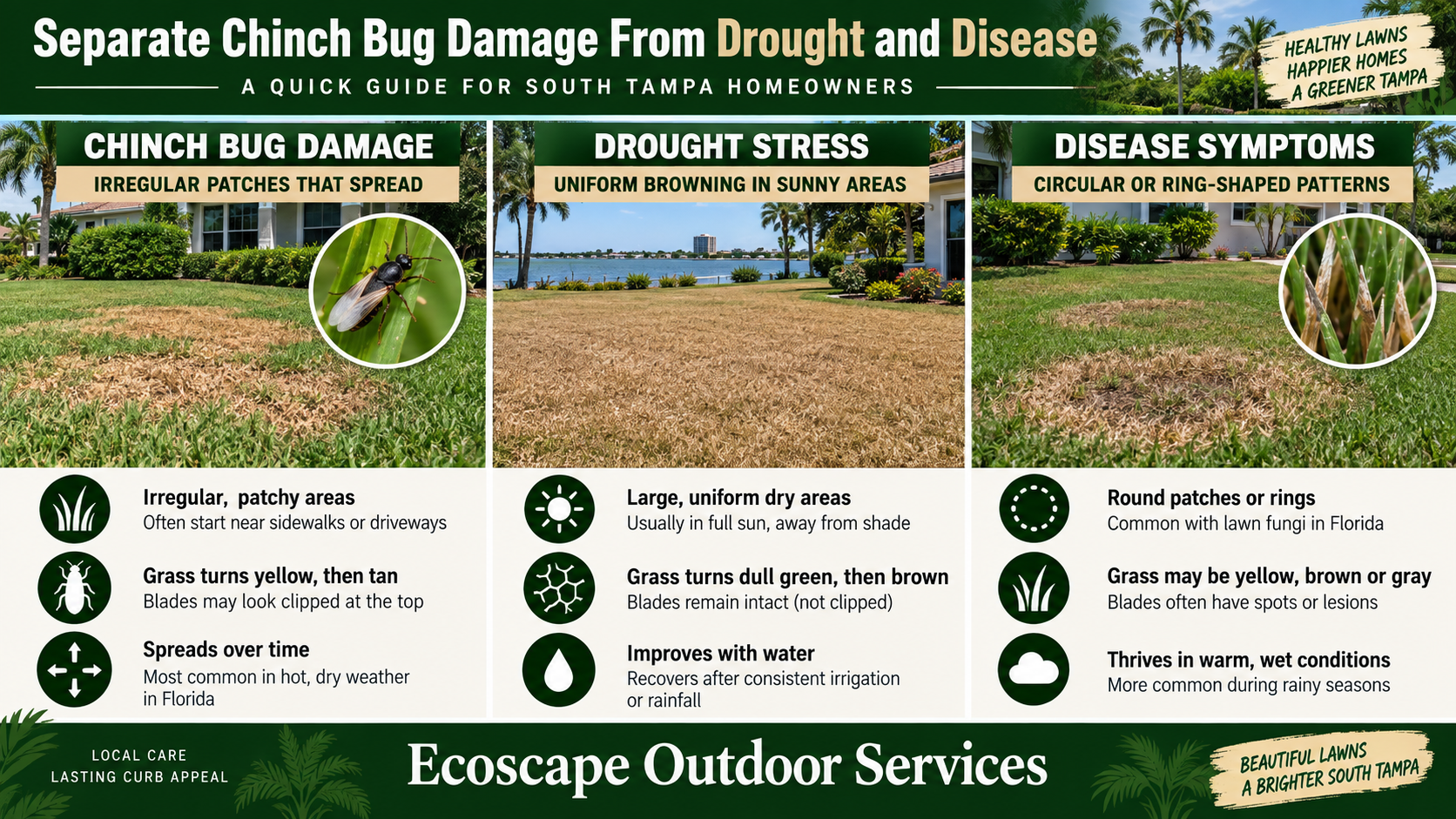
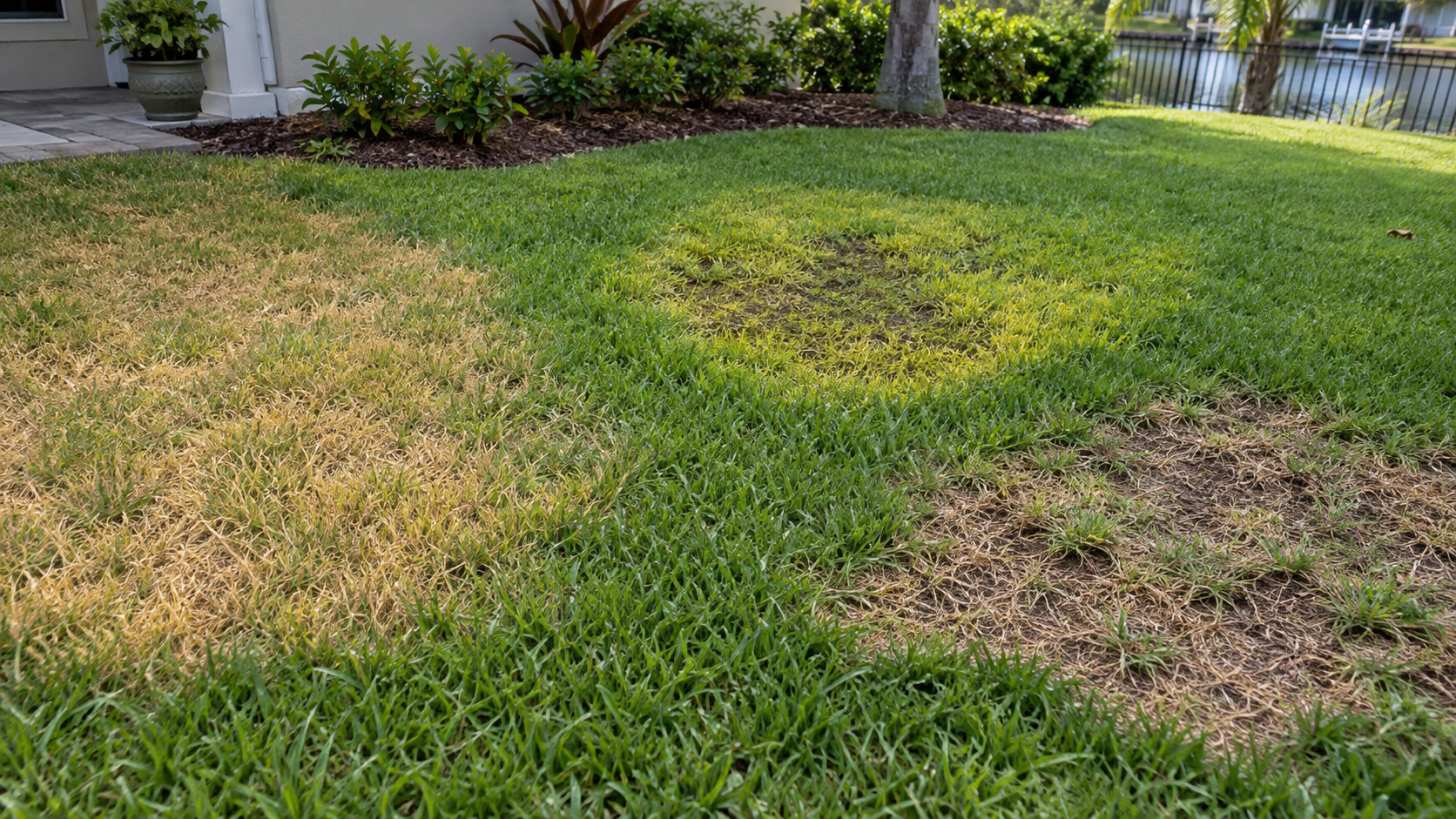
Chinch bugs, drought stress, fungal disease, root decline, and irrigation failure can all turn St. Augustinegrass yellow or brown. Color alone cannot identify the problem. The useful clues are location, soil moisture, leaf symptoms, weather, speed of spread, and the presence of insects. Build a short diagnosis before choosing a treatment.
Read the Pattern
Drought stress often follows sprinkler gaps, high spots, compacted soil, or full-sun edges. Chinch bug injury often expands through hot sunny turf from irregular patches. Disease frequently follows prolonged leaf wetness, saturated soil, warm humid weather, or repeated nighttime irrigation. Chemical spills and equipment damage tend to produce sharper lines or shapes connected to a specific event.
Touch the Soil and Turf
Probe the soil beneath damaged and healthy areas. Dry, hard soil supports a water problem. Wet, soft soil with declining roots suggests excess moisture, drainage, or disease. Tug gently on the turf. Grass with damaged roots may lift easily, while surface-feeding injury may leave roots more firmly attached. Compare several points because one patch may contain more than one problem.
Inspect Leaves and Thatch
Look closely at leaf blades for chewing, lesions, discoloration, or a wilted folded appearance. Search the thatch and lower stems along the active edge for chinch bugs or caterpillars. Check during different times of day when needed. A professional laboratory or Extension office may be appropriate when disease symptoms remain unclear and the lawn is declining quickly.
Review Recent Changes
Ask what changed during the two weeks before symptoms appeared. Review irrigation settings, heavy rain, fertilizer, herbicide, pest products, construction traffic, mowing height, dull blades, and soil disturbance. The timing often narrows the cause. A new brown area after a broken sprinkler or product application deserves a different investigation from a patch that expanded during sustained hot weather.
Do Not Stack Treatments
Adding water, fertilizer, fungicide, and insecticide at the same time hides the response and increases stress. Correct confirmed irrigation defects first. Use a licensed provider for verified pest or disease treatment. Follow label directions and local requirements. Photograph the boundary and change one major variable at a time so you can judge whether the lawn stabilizes.
Use a Written Diagnosis
Ecoscape Outdoor Services documents South Tampa turf problems with photos, zone checks, soil observations, and maintenance history. We address irrigation and cultural conditions within our services and coordinate with qualified lawn-treatment specialists when evidence points toward insects or disease. A disciplined diagnosis protects the lawn, the property owner’s budget, and the surrounding landscape.