Set Drip Irrigation Run Time From Emitter Flow, Not Guesswork
Read the emitter rating first
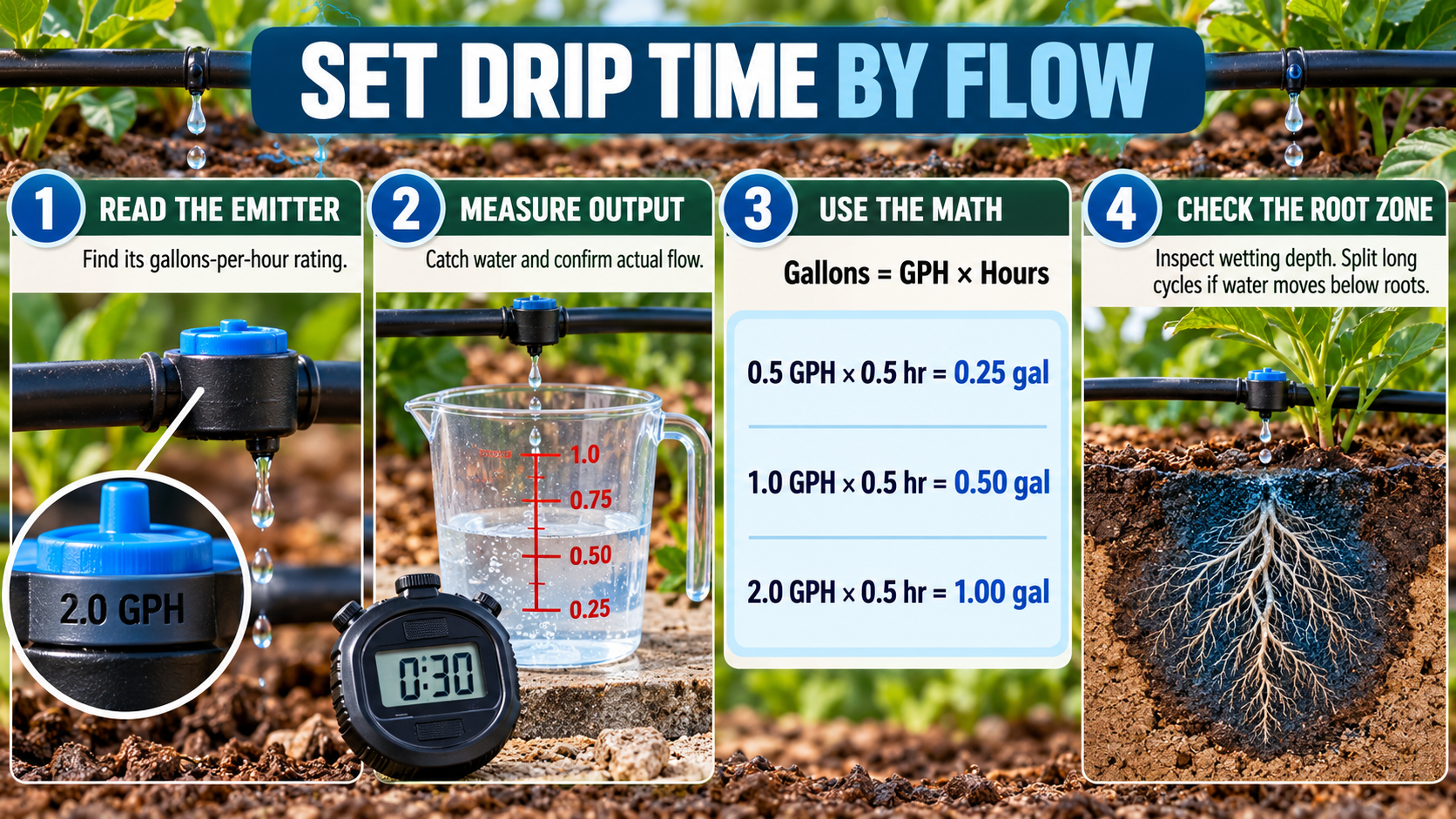
Set Drip Irrigation Run Time From Emitter Flow, Not Guesswork by identifying how much water each device delivers. Drip emitters are commonly marked in gallons per hour, while spray heads are discussed in gallons per minute and precipitation rate. A thirty-minute setting copied from a spray zone means little until you know the number of emitters serving each plant and the flow rate of each one.
Measure actual output
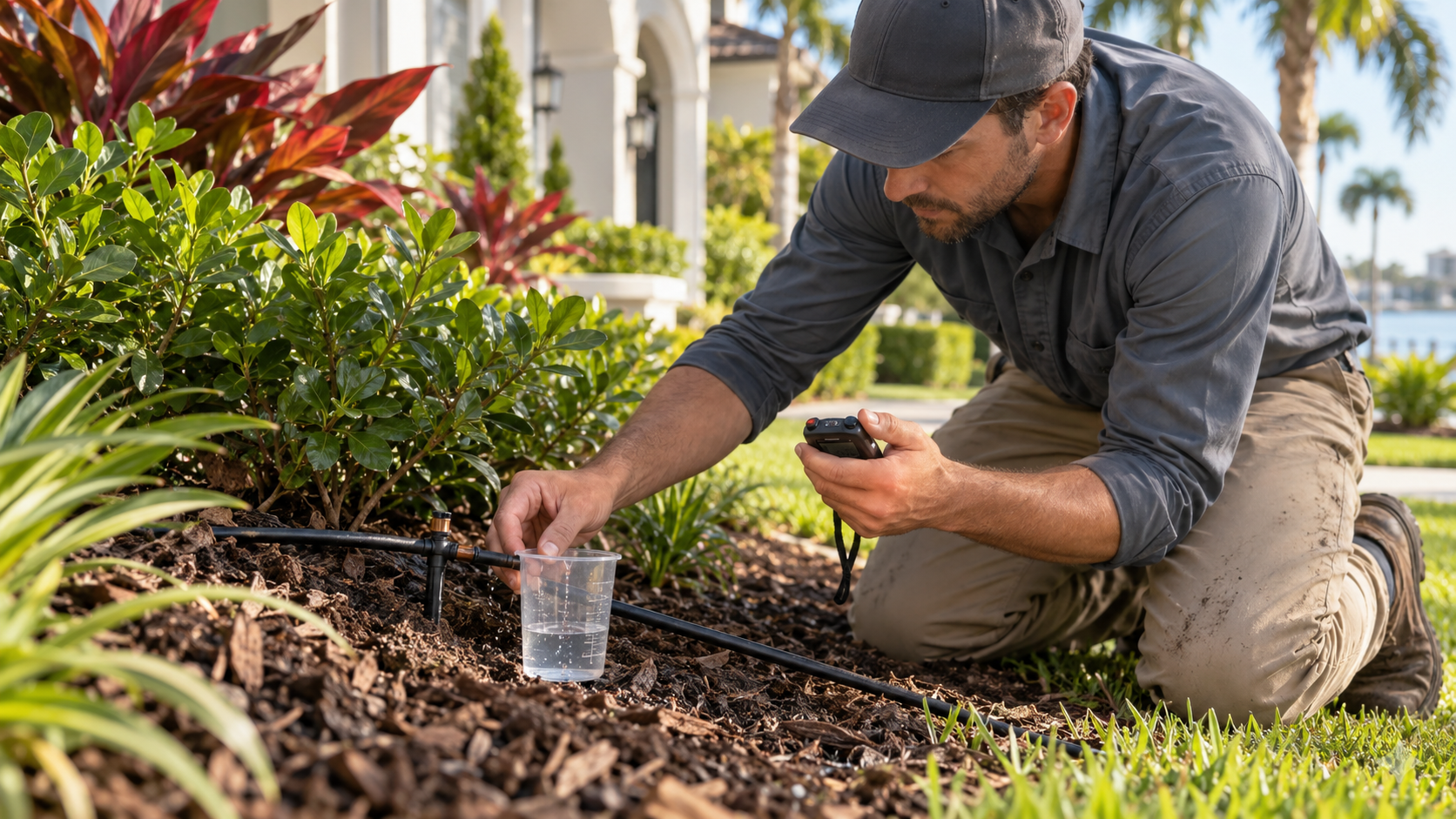
Labels provide a starting point, but pressure, clogging, elevation, filters, tubing length, and mixed components change field performance. Place a graduated container beneath a representative emitter and time the collection period. Test near the beginning and end of a long lateral line. Compare results with the stated rating. A weak endpoint often signals a restriction, pressure problem, leak, or zone design issue rather than a need for extra controller minutes.
Convert flow into delivered volume
Multiply emitter gallons per hour by operating hours. A 0.5-GPH emitter running for thirty minutes delivers about 0.25 gallon. A 1.0-GPH emitter delivers about 0.5 gallon in the same period. A 2.0-GPH emitter delivers about one gallon. Add the output of every emitter serving the plant. This calculation describes volume, not how far water spreads through the soil.
Match water to the root zone
Emitter placement matters as much as run time. Water must reach active roots rather than fall against the trunk or crown. Pull mulch aside and inspect moisture at several depths and distances after a test cycle. Sandy Florida soil often moves water downward faster and laterally less than finer soil. Larger root systems usually need water applied at more than one point around the plant instead of one emitter beside the stem.
Split long cycles when needed
UF/IFAS explains that microirrigation scheduling depends on application rate, wetted width, root-zone size, and soil water-holding capacity. When one long cycle sends water below the useful root zone, divide the required volume into shorter cycles with time between them. Stop irrigation when rainfall and soil moisture already meet plant needs. More minutes do not correct poor emitter placement or uneven flow.
Recheck after landscape changes
New plants, larger root zones, added emitters, clogged filters, disturbed mulch, and controller changes alter performance. Inspect visible tubing for kinks and damage. Confirm emitters remain open and positioned over roots. Compare plant response across the zone. Wilting at one location while nearby plants remain healthy points toward a local delivery problem rather than a reason to increase watering for the entire bed.
Schedule a drip-zone evaluation
Ecoscape Outdoor Services will measure emitter output, inspect filters and pressure, trace tubing, check root-zone coverage, and set practical run times for the installed components and site conditions. Request an irrigation review when plants receive uneven water, a drip zone runs for hours without clear results, or landscape changes have outgrown the original layout. Helpful reference: UF/IFAS microirrigation application and scheduling guidance.