
Shield Landscape Lights to Control Glare
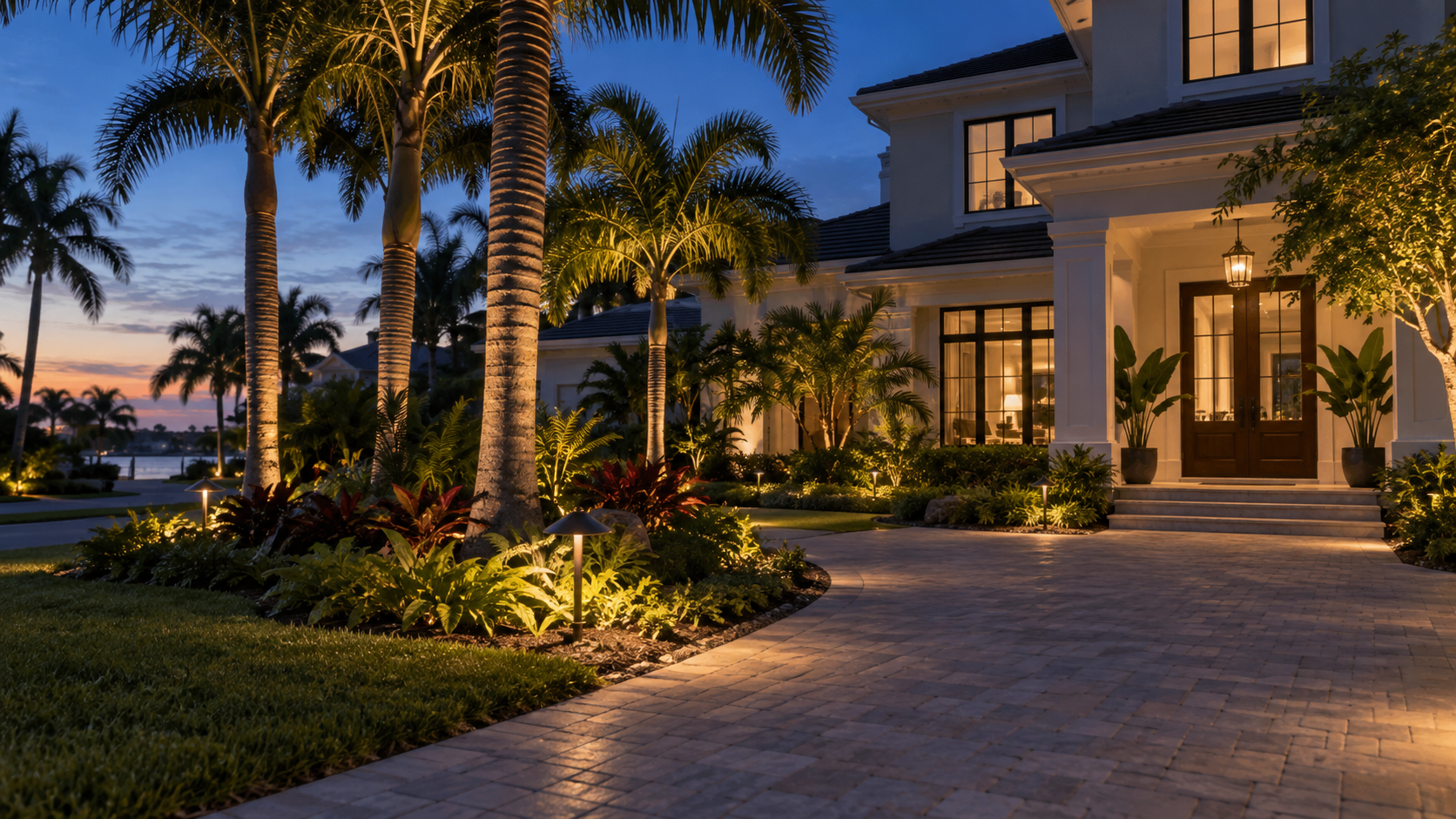
Good Lighting Should Guide the Eye
Landscape lighting works best when you notice the home, trees, steps, and texture before you notice the bulb. Glare occurs when a bright source sits directly in the normal line of sight. It reduces visibility, creates harsh contrast, and sends unwanted light toward windows or neighboring properties. South Tampa homes often have close property lines, reflective stucco, glass doors, and mature palms. Careful shielding and aiming matter as much as fixture quality.
Evaluate the Property After Dark
Walk every normal route after sunset. Approach from the driveway, sidewalk, gate, patio, and main windows. Crouch to a child’s eye level near steps and seating areas. Note any visible lamp, bright reflection, dark gap, or beam crossing a property line. Take photos from fixed locations. Daytime adjustments often look correct beside a fixture but fail from the places where residents and guests experience the lighting.
Choose Fixtures With Control
Use fixtures with glare shields, adjustable shrouds, louvers, or deep-set lamps when the location exposes the light source. Downlights mounted in trees or structures should direct light toward a defined surface, not outward across the yard. Path lights need opaque tops and controlled spread. Select durable, weather-rated low-voltage equipment for Florida rain and humidity. A bright lamp in a poorly controlled fixture rarely improves the design.
Aim at a Surface, Not Open Space
Direct each beam toward a trunk, canopy, wall feature, planting layer, or walking surface. Keep the hotspot within the target. When uplighting a palm, place the fixture far enough away to spread light through the crown without pointing into upper windows. Cross-lighting from two modest fixtures often looks softer than one intense beam. Tighten adjustment points after aiming so irrigation spray, pets, and routine maintenance do not move the fixture.
Control Brightness and Contrast
Use the lowest practical output for the task. Warm light often complements Florida homes and tropical planting without looking severe. Avoid placing a very bright focal light beside an unlit step or path. The eye needs time to adapt between light and dark areas. Build gentle layers for circulation, architectural detail, and selected plants. Timers, photocells, and smart controls should turn decorative lighting off when it no longer serves a purpose.
Correct the Common Problems
Do not aim every fixture straight up or use identical brightness across the entire property. Avoid exposed bulbs near seating and lights buried by mulch or growing plants. Keep lenses clean and connections dry. Recheck the design after pruning because a removed branch changes the beam. Also review new window treatments, paint colors, and reflective surfaces. A small aiming change often solves glare without replacing the entire system.
Schedule a Nighttime Tune-Up
Review outdoor lighting at least twice a year and after major landscape work. Ecoscape Outdoor Lighting helps South Tampa homeowners adjust fixtures, rebalance beams, replace damaged components, protect cable, and improve timers. We evaluate the system from the places people use, not only from beside each light. The goal is clear movement, attractive focal points, comfortable views, and controlled light that respects the home and neighboring properties.
