Slow Downspout Discharge Before It Erodes Plant Beds
Roof Water Arrives With Force
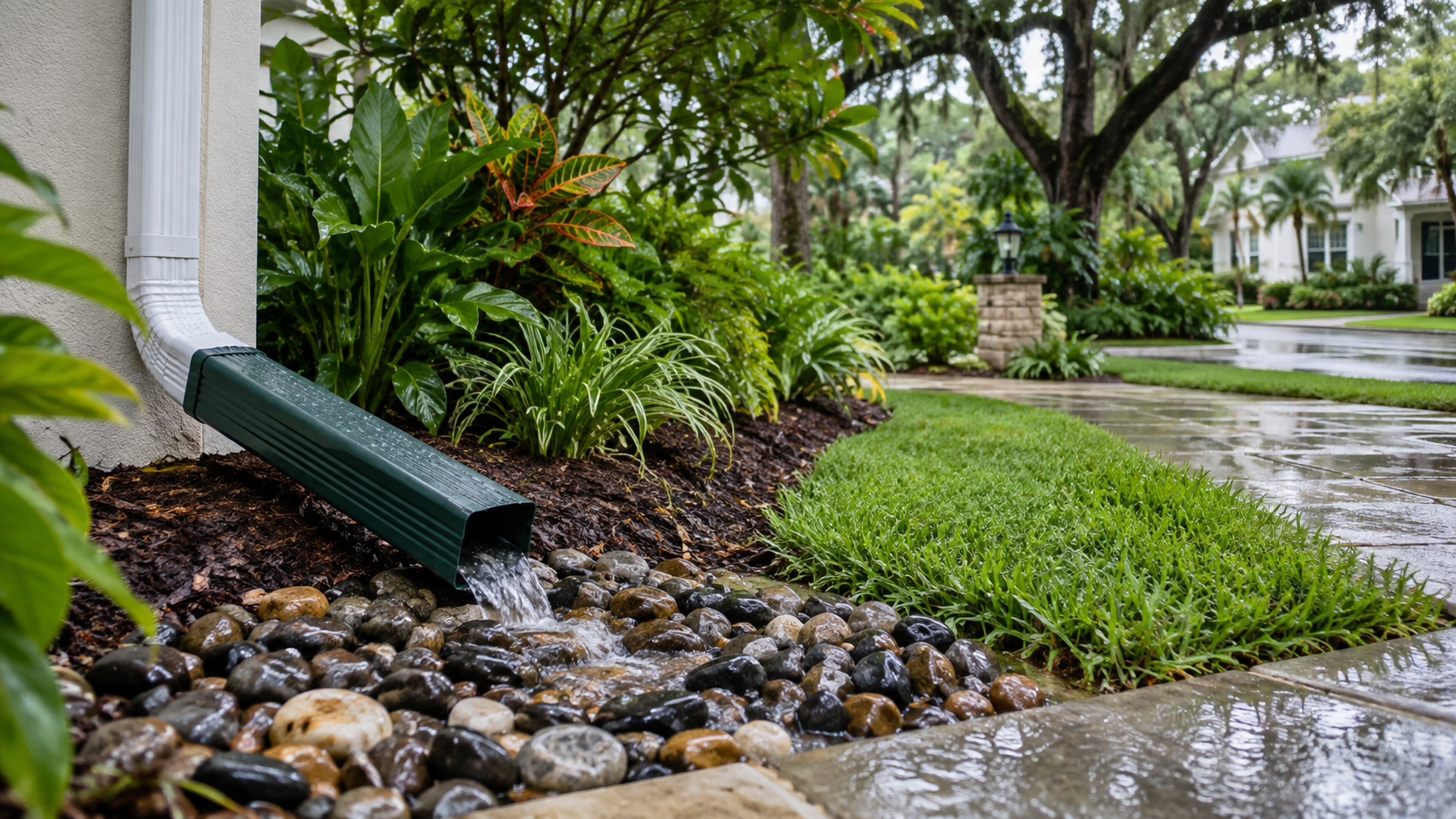
A roof collects rainfall from a large surface and delivers it through a few downspouts. During an intense Florida storm, one outlet may release a strong stream into a small area. The flow cuts channels, exposes roots, carries mulch onto sidewalks, and leaves soil against the foundation saturated. Treat the discharge point as part of the landscape drainage system.
Start With Gutters and Connections
Confirm gutters are clean, properly pitched, and securely attached. Inspect elbows and seams for leaks. A clogged gutter may overflow above the bed while the downspout appears normal. Tighten loose extensions and replace crushed sections. Observe the complete system during rain. Water staining, displaced mulch, and soil splashed onto walls show where concentrated flow reaches the landscape.
Extend Water Beyond Vulnerable Soil
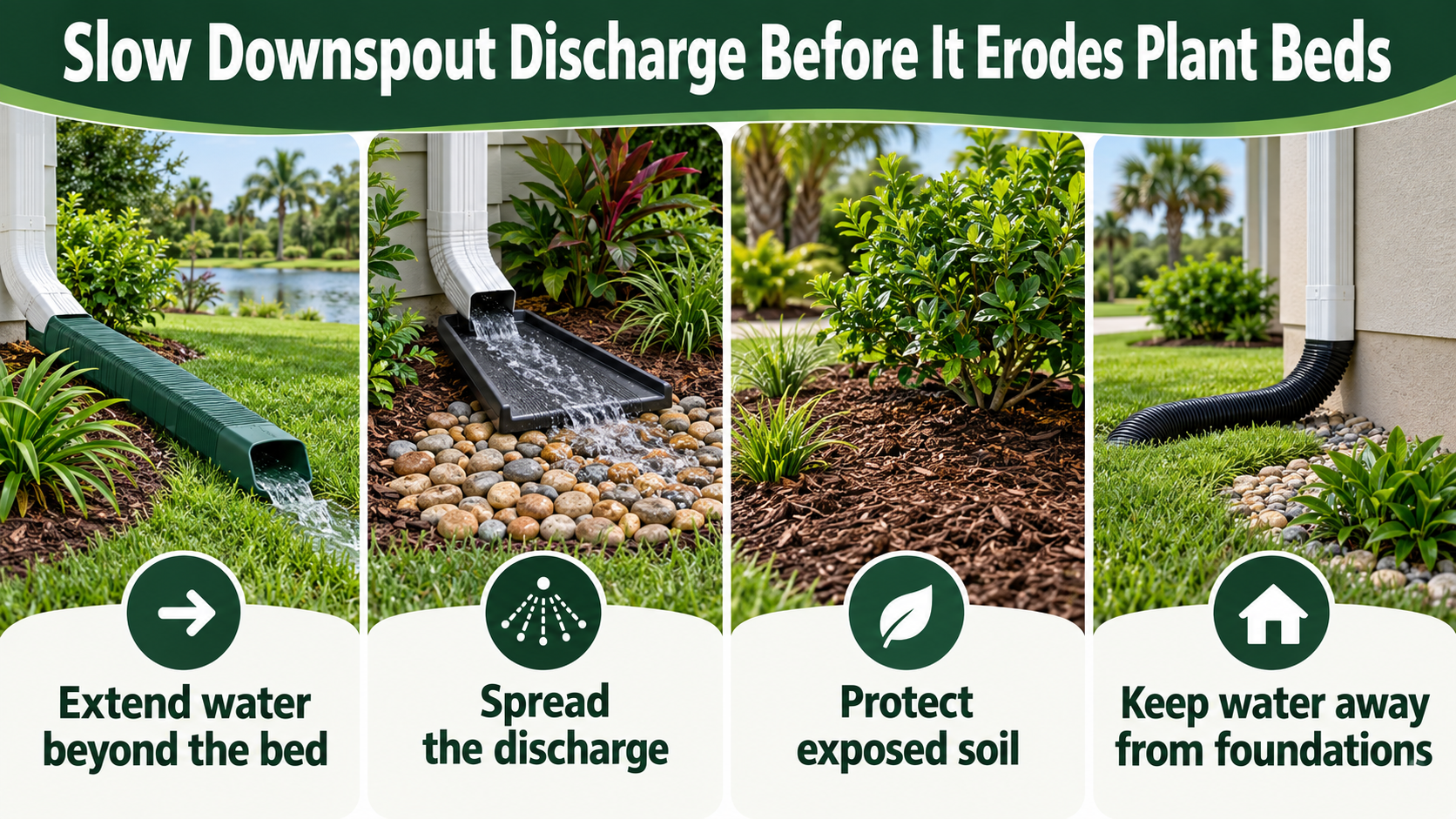
Use a properly sized extension to carry discharge past delicate plants, fresh mulch, and the immediate foundation zone. Keep the route sloped so water does not remain trapped inside. Secure the extension against mower and foot traffic. The outlet still needs a safe destination. Moving the problem ten feet downhill toward a neighbor, sidewalk, or enclosed low spot is not a solution.
Spread the Flow at the Outlet
A splash block, level spreader, broad stone apron, or suitable pop-up outlet reduces velocity by distributing water across a wider area. Set the device on stable grade and prevent undermining beneath it. Large stone should remain contained and accessible for cleaning. Avoid tiny loose gravel where fast water will scatter it through turf or into drains.
Protect Plants and Soil
Keep discharge away from plant crowns and freshly installed root balls. Rebuild eroded soil to the correct level without covering root flares or stucco openings. Add mulch only after the flow path is stable. Select moisture-tolerant planting for areas receiving unavoidable runoff. Plants alone will not correct severe erosion, but established roots support a properly graded and protected outlet.
Check the Entire Route After Rain
Walk from the gutter to the final discharge area. Look for standing water, new channels, soft soil, and water returning toward the house. Clear leaves from stone and outlet openings. Confirm the extension remains connected. Seasonal storms move materials and reveal weak points. Small corrections after each major event prevent the outlet from becoming a larger drainage failure.
Make Roof Runoff Part of Landscape Planning
Ecoscape Outdoor Services evaluates downspouts while reviewing beds, grading, irrigation, and drains. South Tampa landscapes receive intense bursts of rain, so attractive planting must work with roof drainage. A controlled outlet protects foundations, plants, mulch, and turf while keeping water on a safe path through the property.
Source: UF/IFAS Gardening Solutions