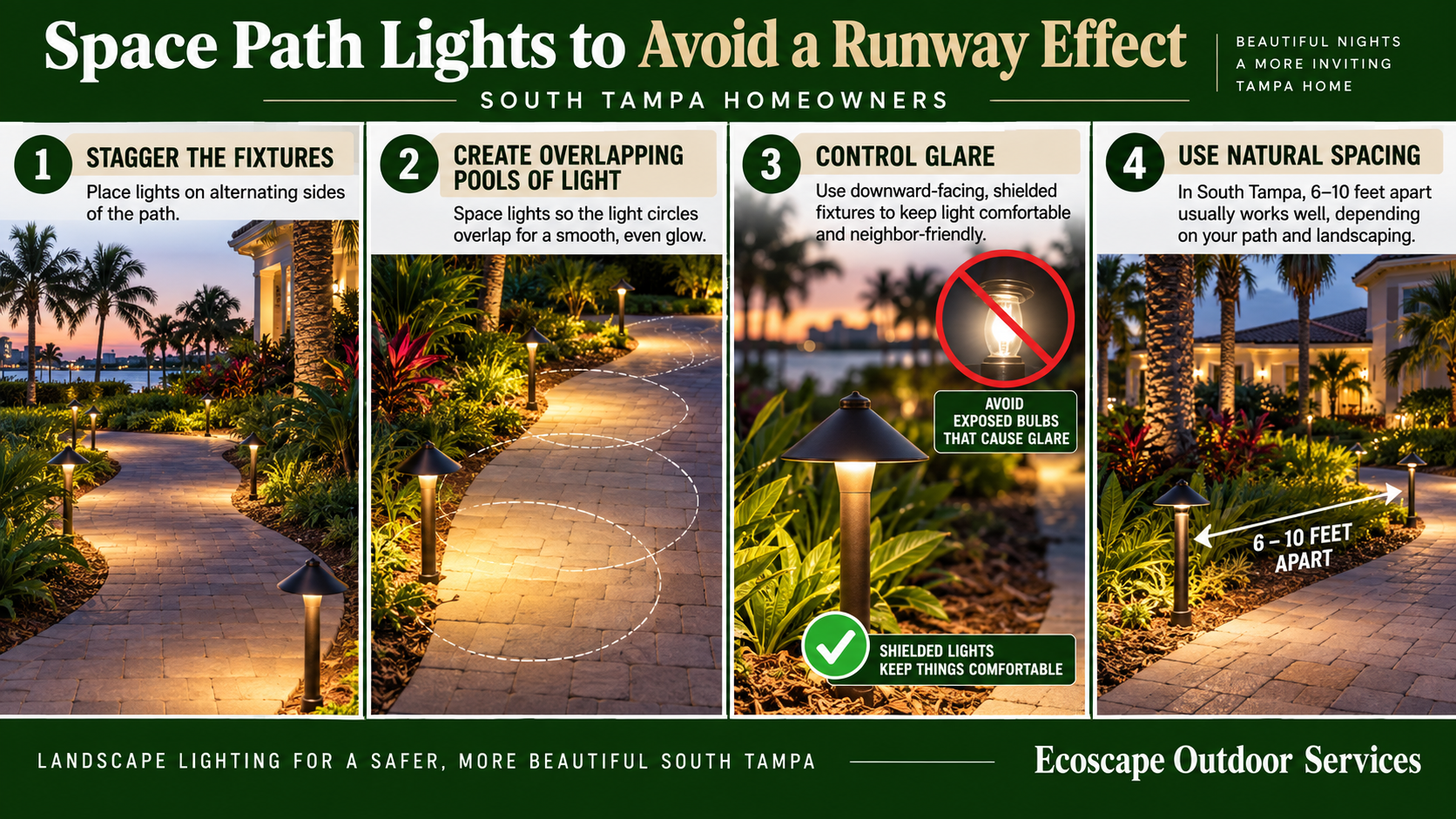
Space Path Lights to Avoid a Runway Effect
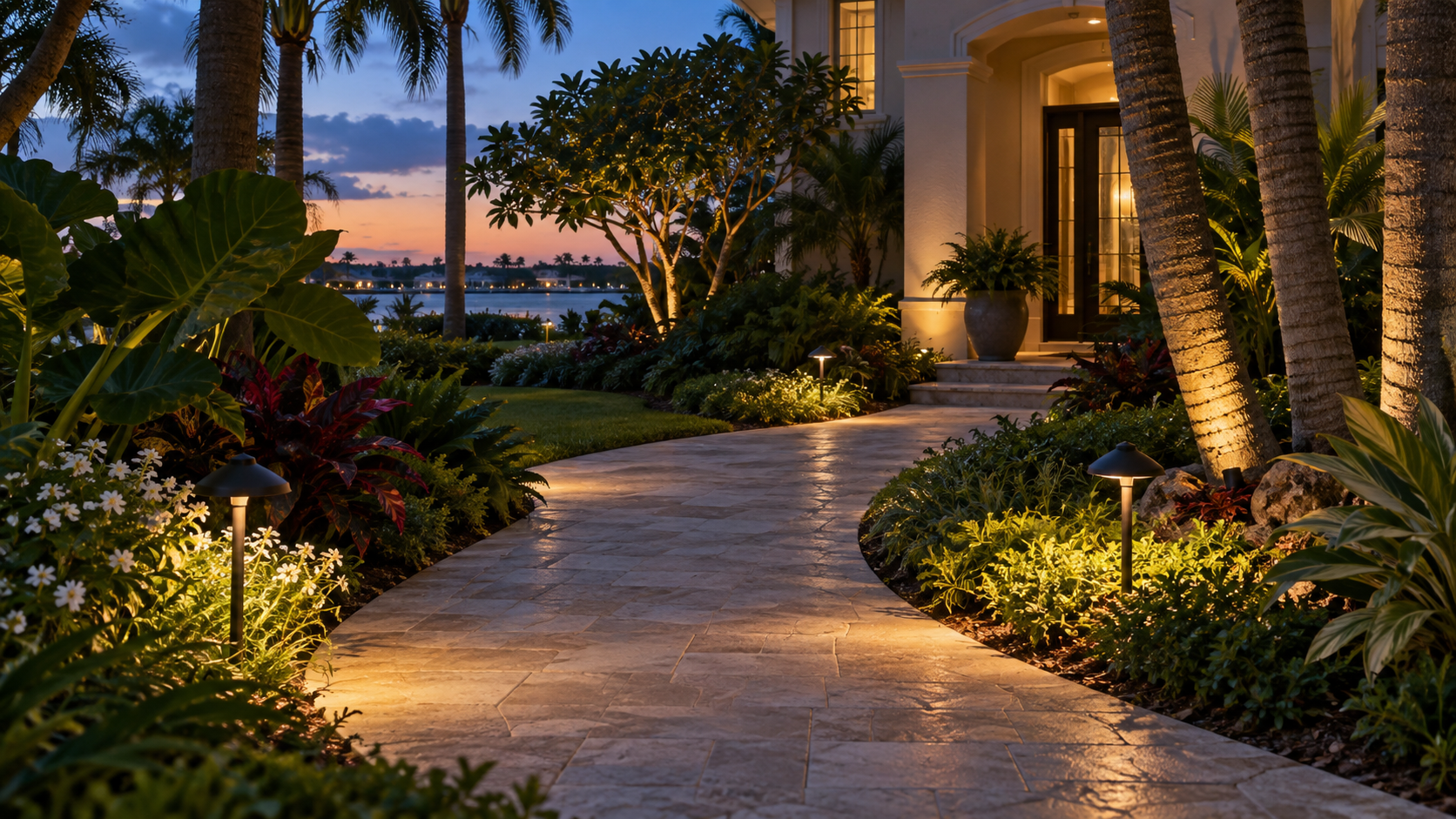
More Fixtures Do Not Guarantee Better Light
Path lights placed in identical pairs at short intervals make a walkway resemble a runway. The pattern draws attention to the hardware instead of the home, plants, and walking surface. Effective landscape lighting uses controlled pools of light to guide movement and reveal changes in direction or elevation. On South Tampa properties, mature tropical plants, curved walks, and strong architectural features benefit from varied, deliberate spacing.
Begin With the Walking Experience
Walk the route after dark and identify the points where light is truly needed. Mark steps, curves, gates, intersections, surface changes, and arrival areas. A straight section may need fewer fixtures than a turn or stair. Consider how guests approach from the street and driveway. The goal is comfortable navigation with clear edges, not an uninterrupted strip of brightness from one end to the other.
Stagger Fixtures Instead of Pairing Them
Place lights on alternating sides where the bed layout allows, using natural changes in planting and path shape to determine locations. Avoid perfect mirror pairs unless an entrance or formal feature intentionally calls for symmetry. Keep fixtures far enough from the walking surface to prevent kicks and mower damage. Confirm foliage will not immediately cover the lens or cast a dense shadow across the path.
Control the Beam and Brightness
Select shields, hats, lamp output, and mounting heights that direct light down onto the path. Bright fixtures spaced farther apart may create harsh hot spots, while weak fixtures packed closely create clutter. Balance output with surface color because pale stone reflects more light than dark pavers. Keep glare out of windows, seating areas, neighboring properties, and drivers’ sightlines. The source should feel secondary to the illuminated surface.
Coordinate Path Lights With Other Layers
Nearby tree uplights, wall lighting, step lights, and porch fixtures already contribute to visibility. Evaluate the complete scene before adding more path lights. A walkway beside an illuminated façade needs fewer fixtures than a dark side yard. Use separate zones or controls when practical so arrival lighting and decorative lighting can operate appropriately. Avoid placing several beams on the same plant or section of pavement.
Aim and Adjust After Installation
Finish aiming after full darkness, not during daylight. Walk both directions and check for dark gaps, glare, shadows, and repetitive patterns. Move or dim fixtures before adding another one. Photograph the result from the street, driveway, entrance, and main windows. Recheck after plants grow or beds are renovated. Even a good original layout needs seasonal adjustment as foliage changes the way light reaches the path.
Use Professional Nighttime Design
Ecoscape Outdoor Lighting designs South Tampa path lighting around safety, architecture, planting, fixture visibility, and long-term maintenance. We space and aim each fixture as part of the full nighttime scene, then evaluate the property after dark. Property owners should clean lenses and review alignment every few months. Balanced spacing creates clear movement and visual depth without turning a refined walkway into a row of identical bright markers.