
Space Shrubs for Their Mature Width
Design Beyond the Nursery Pot
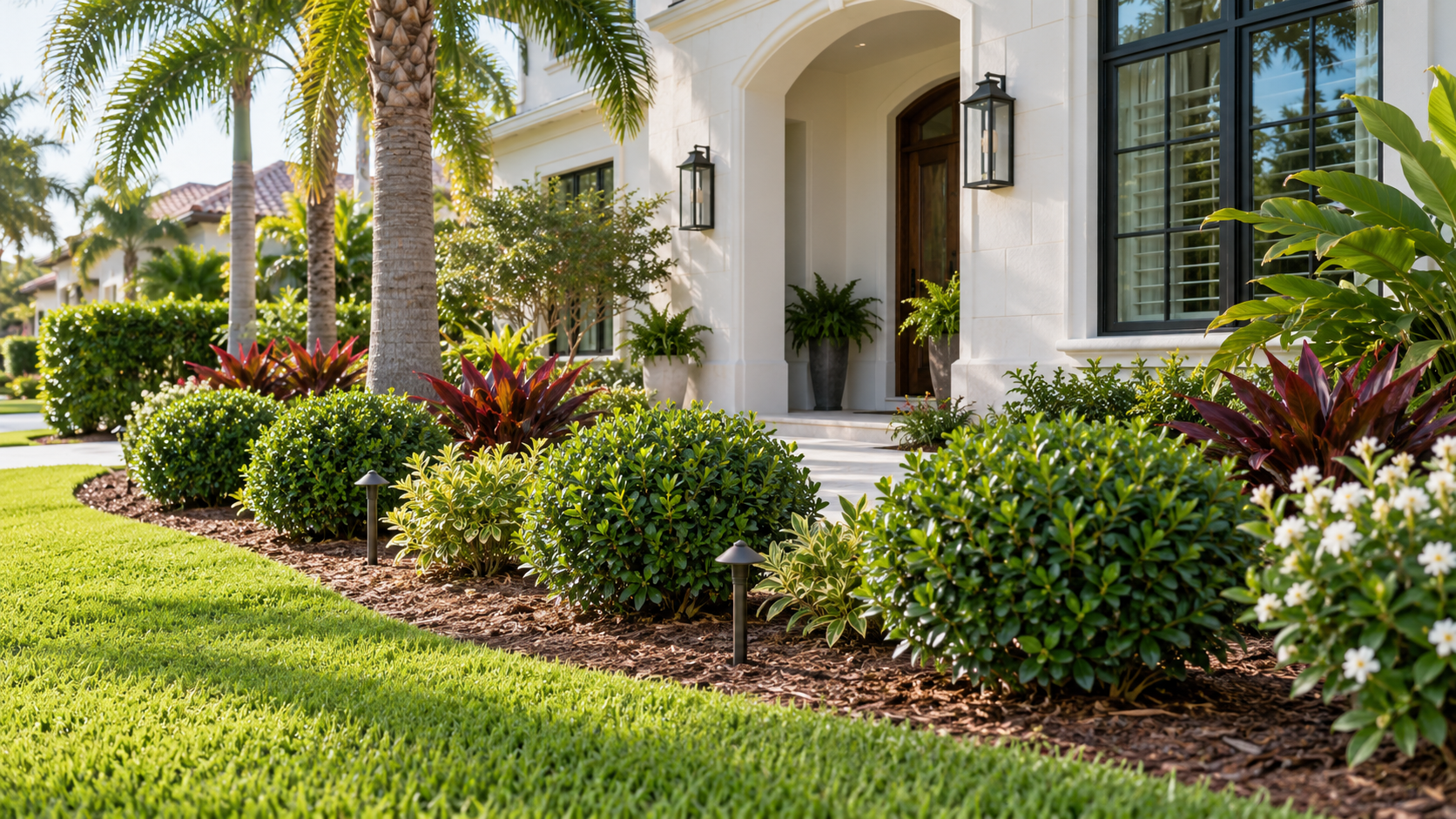
Young shrubs look small at installation, which tempts people to place them close together for instant fullness. Each plant still grows toward its mature height and width. Crowding creates competition, blocked airflow, hidden irrigation, and constant pruning. A professional plan accepts temporary open space so the landscape develops into the intended proportions instead of outgrowing them immediately.
Read the Mature Size
Use reliable plant references and local experience rather than the current container size. Cultivar, sunlight, irrigation, soil, and pruning influence growth, yet the mature spread remains the best starting point. Measure from the center of one plant to the center of the next. Also account for walls, windows, walks, air-conditioning units, meters, and service access.
Plan Layers With Purpose
Place taller screening plants behind medium shrubs and lower groundcovers. Stagger rows where a natural appearance is desired, but preserve access for pruning and irrigation repair. Repeat selected plants to create order. Avoid filling every gap with a different species. A limited palette with correct spacing gives color, texture, and seasonal interest without making the bed feel crowded.
Protect Airflow and Light
Crowded foliage stays wet longer after rain and irrigation. Interior leaves decline as light disappears, and pests become harder to notice. Proper gaps let air move and sunlight reach more of the canopy. They also reduce rubbing branches and allow selective pruning. Plants grown in suitable space develop stronger natural form and need less severe shearing.
Keep Clearances Around the Property
Branches should not block windows, rub walls, narrow walkways, cover addresses, hide lighting, or restrict sightlines near driveways. Leave working space around irrigation controls, electrical equipment, drains, and HVAC units. Consider root spread near foundations and hardscape. The right shrub in the wrong location becomes a maintenance problem even when it looks attractive at installation.
Manage the Establishment Period
Use mulch to cover open soil while shrubs grow, keeping proper clearance around each crown. Control weeds before they compete with young roots. Check irrigation at every root ball and reduce frequency as plants establish. Do not compensate for visible gaps by piling mulch too deeply or adding temporary plants that will crowd the permanent design.
Build for Long-Term Appearance
Ecoscape Outdoor Services designs South Tampa landscapes around mature plant size, architecture, drainage, irrigation, lighting, and realistic maintenance. We select spacing that supports healthy growth and preserves access across the property. The finished installation might have breathing room at first, yet it develops into a balanced landscape with fewer replacements and less corrective pruning.
