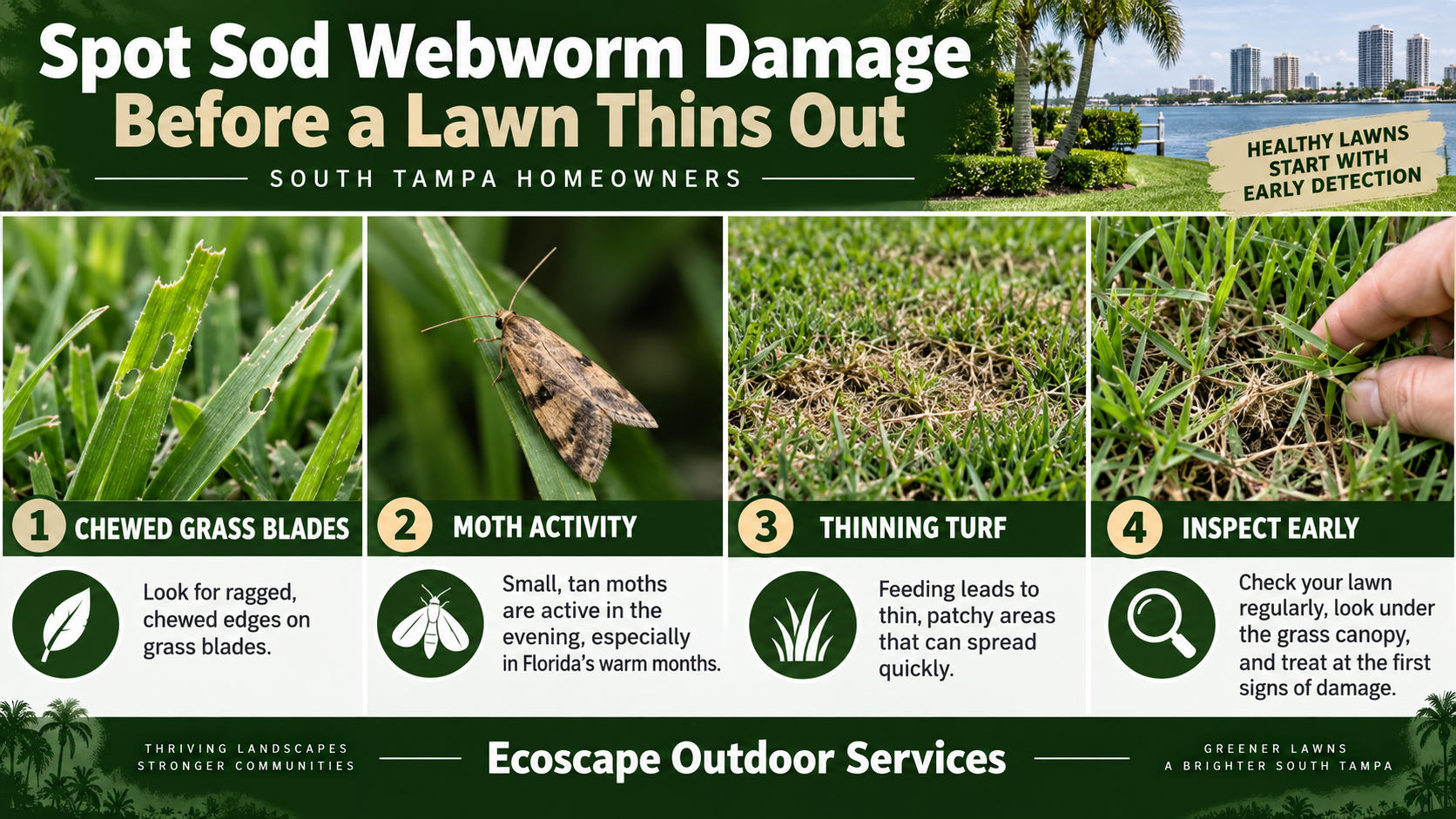
Spot Sod Webworm Damage Before a Lawn Thins Out
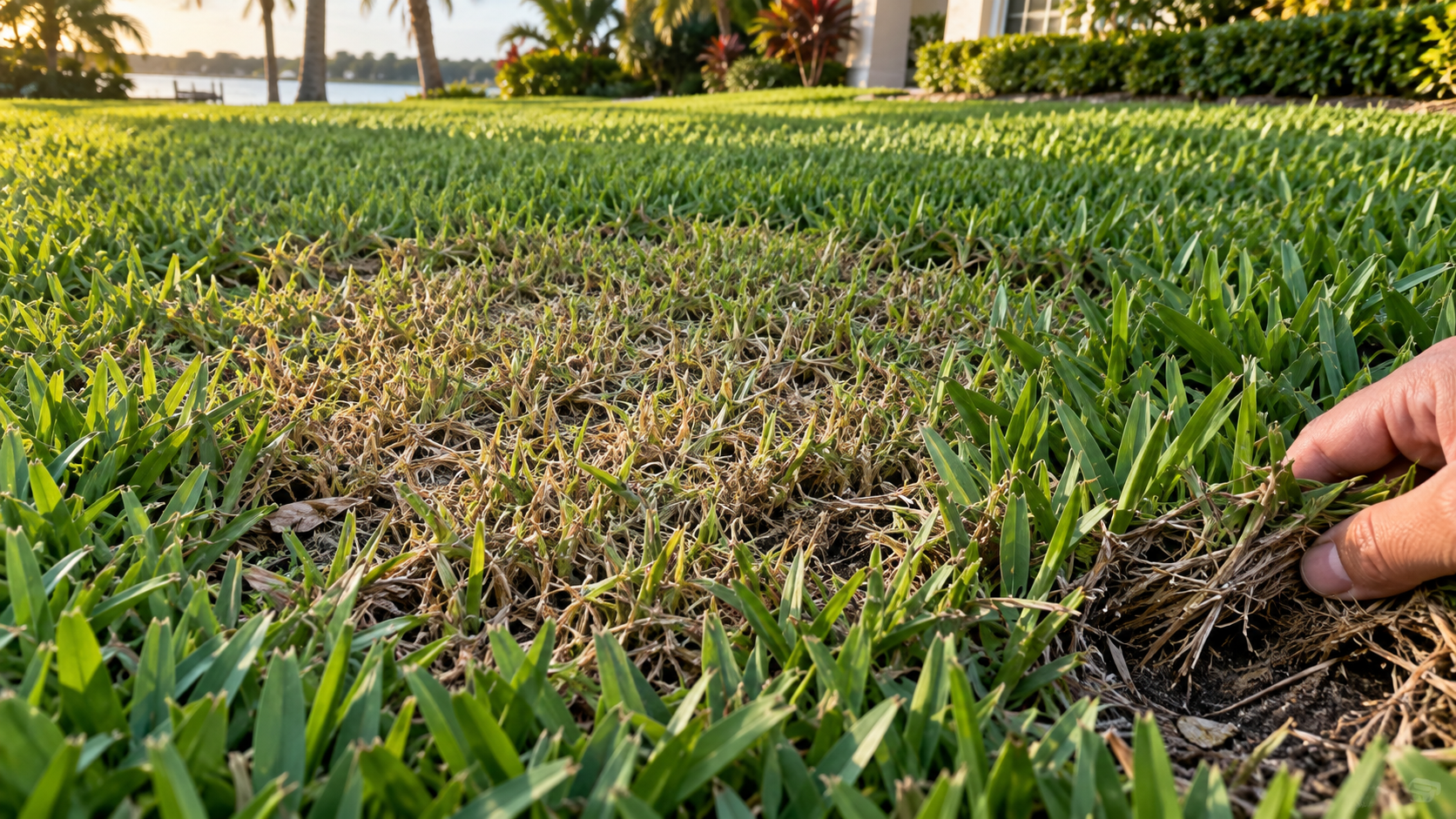
Small Caterpillars Create Broad Damage
Tropical sod webworms feed on grass blades and can thin warm-season Florida lawns quickly when populations are high. Damage often begins as small patches of ragged, shortened, or skeletonized leaves, then expands into larger brown areas. The injury can resemble drought or mowing stress from a distance. Close inspection of the leaves and thatch provides better clues.
Look for Chewed Blades
Examine the boundary between healthy and thinning turf. Sod webworms chew leaf tissue, leaving irregular notches and short blades. Fresh green pellets of caterpillar waste may appear in the thatch. Birds or wasps repeatedly searching one part of the lawn can also signal insect activity, though their presence alone does not confirm a damaging population.
Scout When Caterpillars Are Active
The caterpillars hide in thatch during bright daylight and feed more actively later in the day or at night. Part the turf and inspect near the soil surface. A soap-flush test may bring caterpillars upward for counting, but it should be used carefully and rinsed afterward to reduce turf injury. Check several locations because activity may be concentrated.
Rule Out Mowing Damage
A dull mower blade shreds leaf tips across the entire cut area, while webworm feeding produces more irregular chewing and patchy thinning. Scalping exposes stems and soil in a pattern tied to grade changes or mower travel. Check the blade, cut height, and recent service conditions before concluding insects caused the damage. More than one stress may be present.
Protect Remaining Leaf Area
Keep the mower at the appropriate height and avoid removing more than one-third of the blade. Do not force rapid growth with unnecessary nitrogen while the lawn is under attack. Maintain adequate, even moisture without keeping the turf saturated. Healthy grass recovers more effectively after the feeding stops, while stressed turf continues to thin.
Treat Only After Confirmation
A licensed lawn and ornamental pest-control provider should confirm the pest and choose a labeled control based on life stage, turf condition, and current recommendations. Large caterpillars are harder to control than small ones, which makes early scouting valuable. Reinspect after treatment instead of assuming one application solved the issue.
Monitor Through Warm Weather
Ecoscape Outdoor Services watches South Tampa lawns for sudden chewing, thinning, and changes between visits. We document suspicious areas, check mowing and irrigation conditions, and refer confirmed pest concerns to qualified spray partners. Regular observation catches sod webworm activity while living turf remains available for recovery and before a small patch spreads across the lawn.