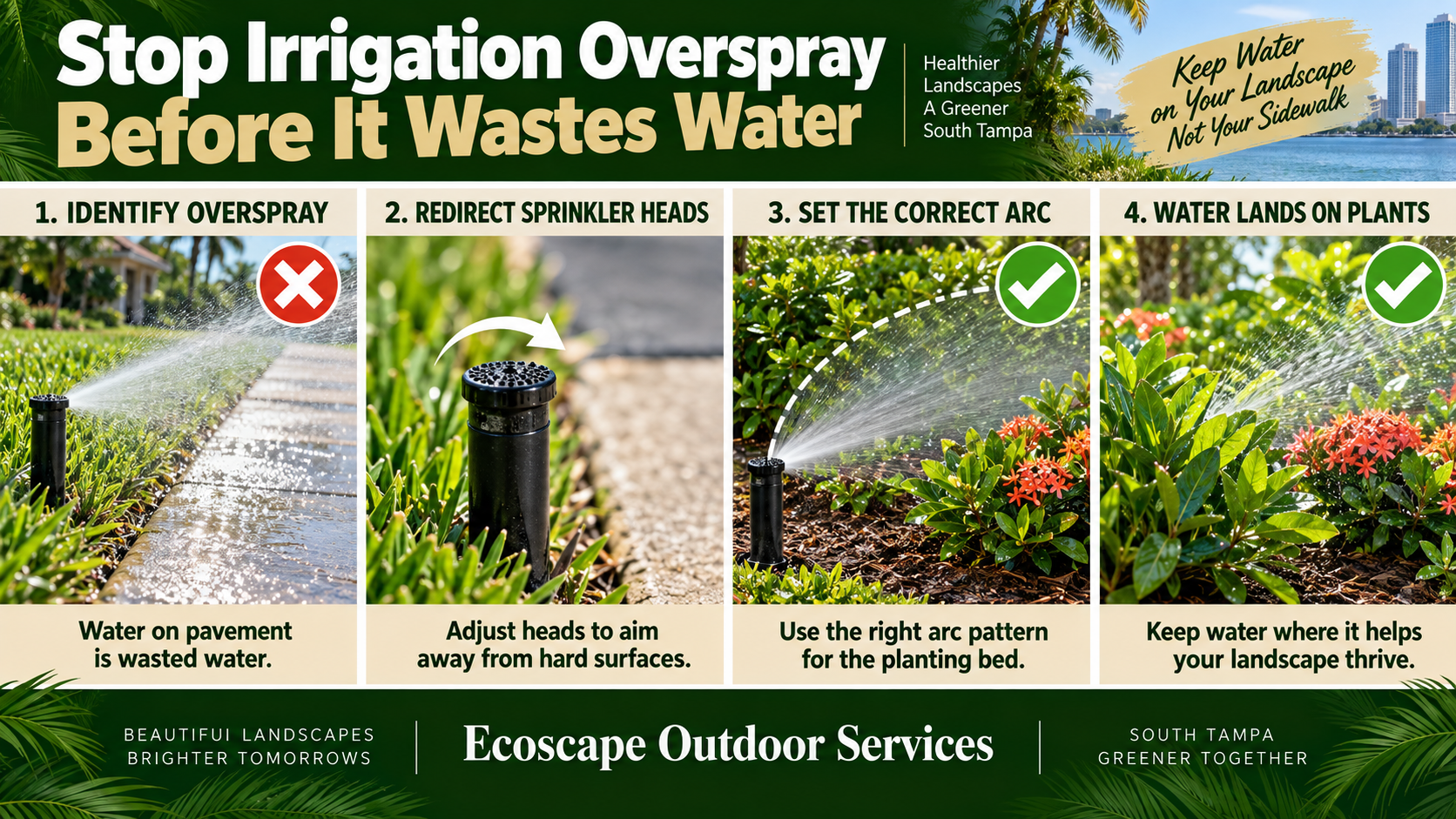
Stop Irrigation Overspray Before It Wastes Water
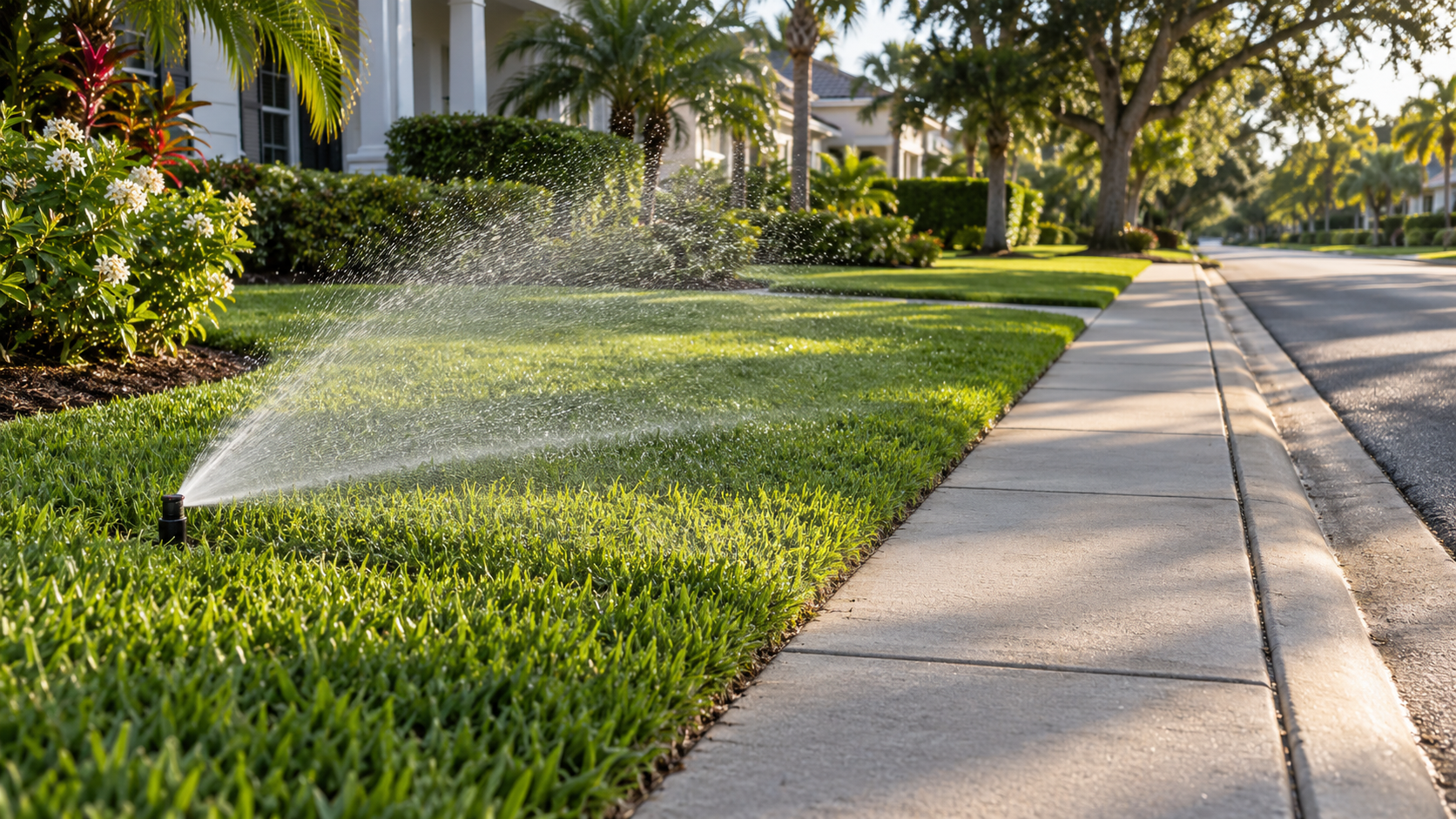
Water Belongs on the Landscape
Sprinklers that soak sidewalks, driveways, fences, and streets waste water without improving the lawn. Overspray also leaves slippery pavement, stains walls, accelerates algae growth, and sends fertilizer or soil toward storm drains. In South Tampa, wind and narrow turf strips make poor coverage easy to miss. A zone may appear active from the window while much of its water lands beyond the intended root area.
Watch Every Zone Operate
Run one irrigation zone at a time during daylight and walk the entire spray pattern. Look for water crossing pavement, striking the house, hitting parked vehicles, or disappearing into dense shrubs. Mark heads with weak flow, tilted bodies, blocked nozzles, or excessive reach. Observe the system again under normal operating pressure. A quick visual check while all zones are off will not reveal direction, radius, pressure, or wind problems.
Adjust Direction and Radius
Many spray nozzles and rotors allow arc and distance adjustments. Aim each head so its pattern ends at the landscape boundary. Use the proper nozzle for corners, narrow strips, and irregular beds instead of forcing a wide pattern into a small area. Do not reduce radius so far that the spray becomes uneven. If an adjustment cannot match the space, replace the nozzle or relocate the head for more dependable coverage.
Correct Height and Pressure Problems
A buried head cannot clear surrounding turf, while a head set too high becomes vulnerable to mowers and foot traffic. Raise or reset tilted bodies so they sit level with the finished grade. Misting often signals excessive pressure, and weak reach may point to a leak, clogged nozzle, valve issue, or too many heads on one zone. Solve the cause before increasing run time. More minutes do not repair poor distribution.
Use Timing to Reduce Waste
Operate irrigation when wind and evaporation are low, then follow current local watering rules. Separate turf, shrubs, and sun-exposed areas when the system layout permits because their needs differ. Short repeat cycles help water enter compacted or sloped soil without running into the street. Seasonal controller changes matter in Florida. A schedule suited to hot spring weather often applies too much water during rainy weeks or cool periods.
Measure the Improvement
Place several straight-sided catch containers across a zone and compare the collected depth after a timed run. Large differences reveal poor uniformity even when pavement stays dry. Recheck the sidewalk and curb after adjustments, then inspect again one week later. Grass near the edge should remain healthy without routine puddles on concrete. Continue monthly visual checks because mowing, soil settlement, roots, and service work can change head alignment.
Schedule a Systemwide Review
Ecoscape Outdoor Services evaluates South Tampa irrigation one zone at a time. We inspect heads, nozzles, coverage, leaks, pressure symptoms, controller timing, and the relationship between turf and planting beds. Our goal is useful water at the root zone with less runoff and pavement spray. Record the corrected settings and review them after landscape renovations. New plants, edging, sod, and hardscape often require another coverage adjustment.