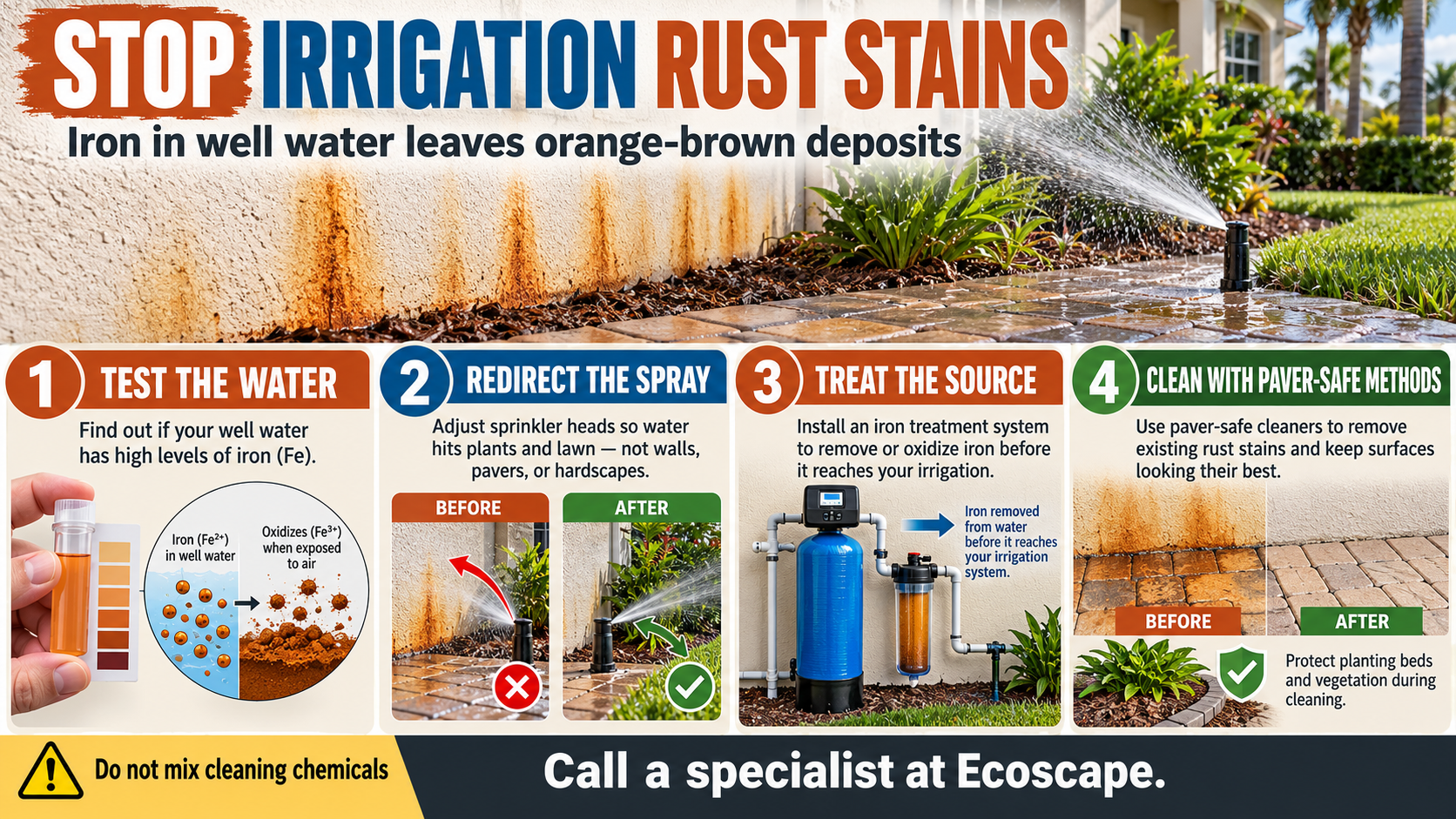
Stop Irrigation Rust Stains Before They Mark Walls and Pavers
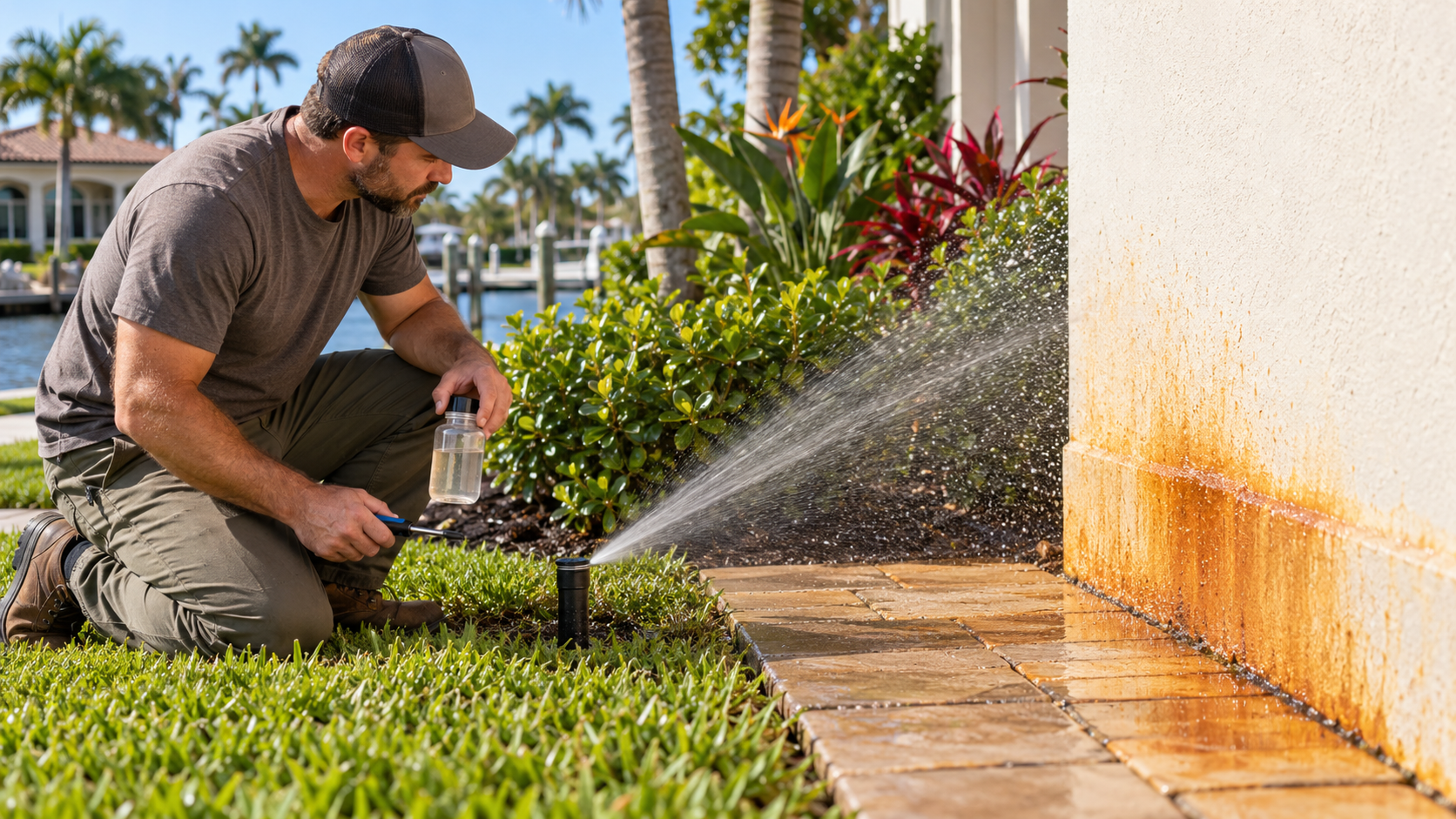
Identify the source of orange staining
Stop Irrigation Rust Stains Before They Mark Walls and Pavers by checking where sprinkler water lands. Iron dissolved in Florida well water often looks clear when it leaves the sprinkler. Exposure to air oxidizes the iron and creates orange-brown deposits on stucco, concrete, pavers, fences, curbs, and plant foliage. Repeated wetting deepens the stain and expands the affected area.
Test water before selecting treatment
Collect a water sample from the irrigation source after the pump has operated long enough to clear standing water. A qualified water test identifies iron concentration and other conditions affecting treatment. Do not diagnose from color alone. Fertilizer, soil runoff, metal hardware, algae, and construction residue create different stains. Accurate source testing prevents wasted cleaning and unsuitable equipment choices.
Redirect every overspraying head
Run one irrigation zone at a time during daylight. Watch startup, full operation, and shutdown. Adjust spray direction, arc, distance, and head alignment so water reaches the intended turf or planting area instead of walls and pavement. Replace damaged or mismatched nozzles with components suited to the zone design. Trim vegetation blocking the pattern. Repair tilted heads and leaks before adding runtime.
Treat iron at the water source
Frequent staining across several zones points toward the irrigation supply rather than one head. Water-treatment equipment uses methods matched to water chemistry, flow, pressure, and iron level. An undersized or poorly maintained system loses effectiveness and affects irrigation performance. Have a qualified professional design, install, and service source treatment. Never add unapproved chemicals directly to irrigation pipes, wells, pumps, or storage tanks.
Clean each surface with care
Correct the water source and overspray before cleaning, or stains will return. Choose a cleaner approved for the specific stucco, concrete, natural stone, coating, or paver surface. Test a hidden area first. Protect plants, metal fixtures, glass, painted finishes, and storm drains. Follow dilution, contact-time, rinsing, and protective-equipment directions. Never mix acids, bleach, ammonia, or unrelated cleaning products.
Protect landscaping during restoration
Pre-wet nearby plants when the cleaner instructions support it, cover sensitive foliage where appropriate, and control rinse water. Avoid pushing residue into beds, pools, streets, or drains. Aggressive pressure washing damages stucco finishes and removes paver joint sand. Use the lowest effective cleaning pressure. Refill disturbed joints after the pavement dries and inspect surrounding irrigation before returning the system to its schedule.
Schedule irrigation and surface correction
Ecoscape Outdoor Services will trace the staining pattern, inspect sprinkler coverage, identify recurring overspray, and coordinate water testing or treatment needs. Request an assessment when orange deposits return after cleaning, several zones mark the same surfaces, or well water affects plants and irrigation components. Helpful references: Florida-Friendly Landscaping iron in water guidance and UF/IFAS iron and irrigation plugging guidance.