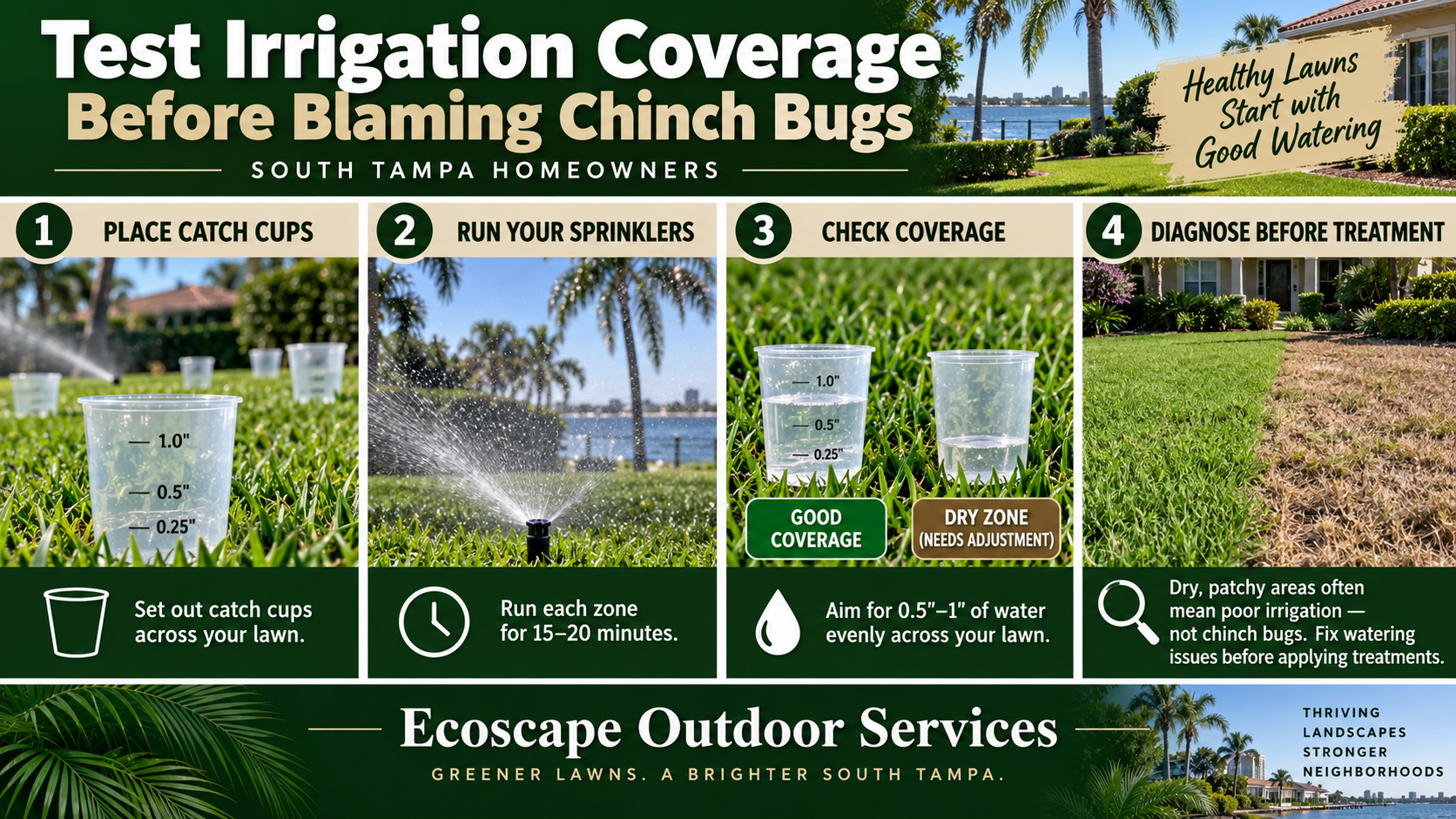
Test Irrigation Coverage Before Blaming Chinch Bugs
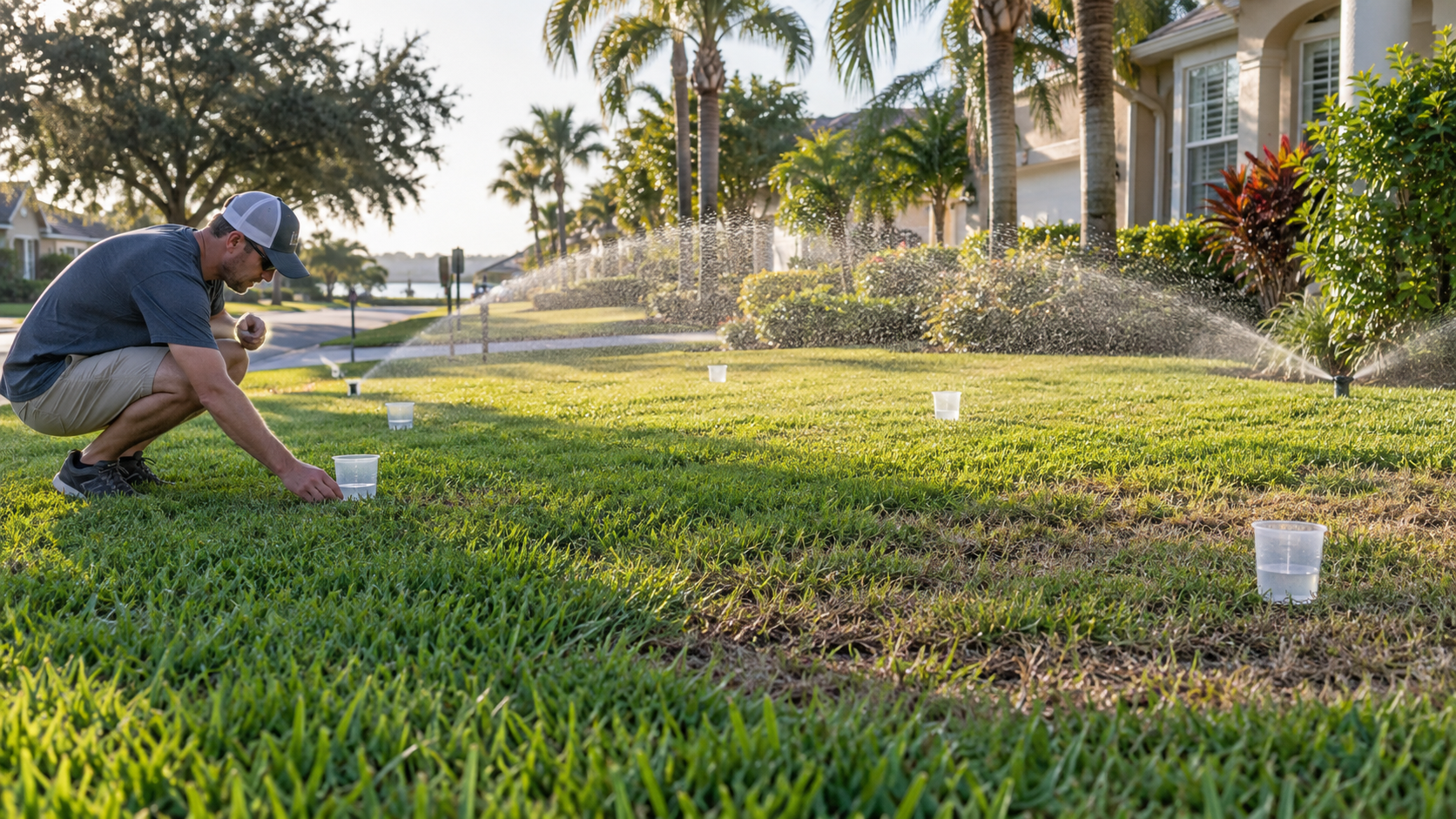
Dry Coverage Gaps Mimic Pest Damage
A weak sprinkler pattern can create yellow and brown turf that looks similar to chinch bug injury. Wind, clogged nozzles, sunken heads, mixed sprinkler types, low pressure, and plant growth all change coverage. South Tampa lawns face intense heat and fast moisture loss, so a small distribution problem can become visible quickly. Test irrigation performance before authorizing insect treatment.
Run the Exact Zone
Operate the zone serving the damaged area and watch it from start to finish. Confirm each head rises fully, rotates correctly, and seals after shutdown. Look for misting, blocked spray, tilted heads, broken fittings, and water landing on pavement. Note whether the stressed patch sits at the end of a spray pattern or between heads where overlap is weak.
Use Straight-Sided Catch Cans
Place identical, straight-sided containers across the damaged area and surrounding healthy turf. Run the zone for a measured period, then compare the depth in every container. Large differences reveal poor distribution even when the whole lawn looks wet from a distance. Repeat the test after repairs. The goal is even coverage, not longer runtime on an uneven system.
Check the Root Zone
After irrigation, probe below the surface in several locations. Moist leaf blades do not prove the root zone received enough water. Compare soil beneath the center, edge, and healthy control area. If the damaged section remains dry while nearby soil is moist, correct delivery before changing pest or fertilizer programs. If moisture is uniform, continue the insect and disease inspection.
Account for Rain and Drainage
Heavy rain can hide an irrigation gap for several days, while compacted or poorly drained soil may stay wet and decline for a different reason. Review recent weather and check whether water runs off before soaking in. Do not increase runtime automatically. Longer cycles on compacted ground often send more water into streets and low areas instead of the roots.
Retest Before Declaring Success
Replace or adjust damaged components, then repeat the catch-can test under similar conditions. Photograph the container layout and record results. Watch the turf over the next one to two weeks. Recovery depends on living stolons, root condition, season, and the length of the stress. Dead turf will not turn green simply because irrigation has been corrected.
Coordinate Maintenance and Irrigation
Ecoscape Outdoor Services evaluates visible turf stress together with sprinkler operation, mowing height, drainage, and recent weather. We repair irrigation issues within our scope and refer confirmed pest concerns to licensed treatment providers. This sequence protects South Tampa lawns from unnecessary chemical applications and ensures the true water problem does not continue beneath a temporary treatment.