
Test Your Rain Sensor Before the Wet Season
Understand the Sensor’s Job
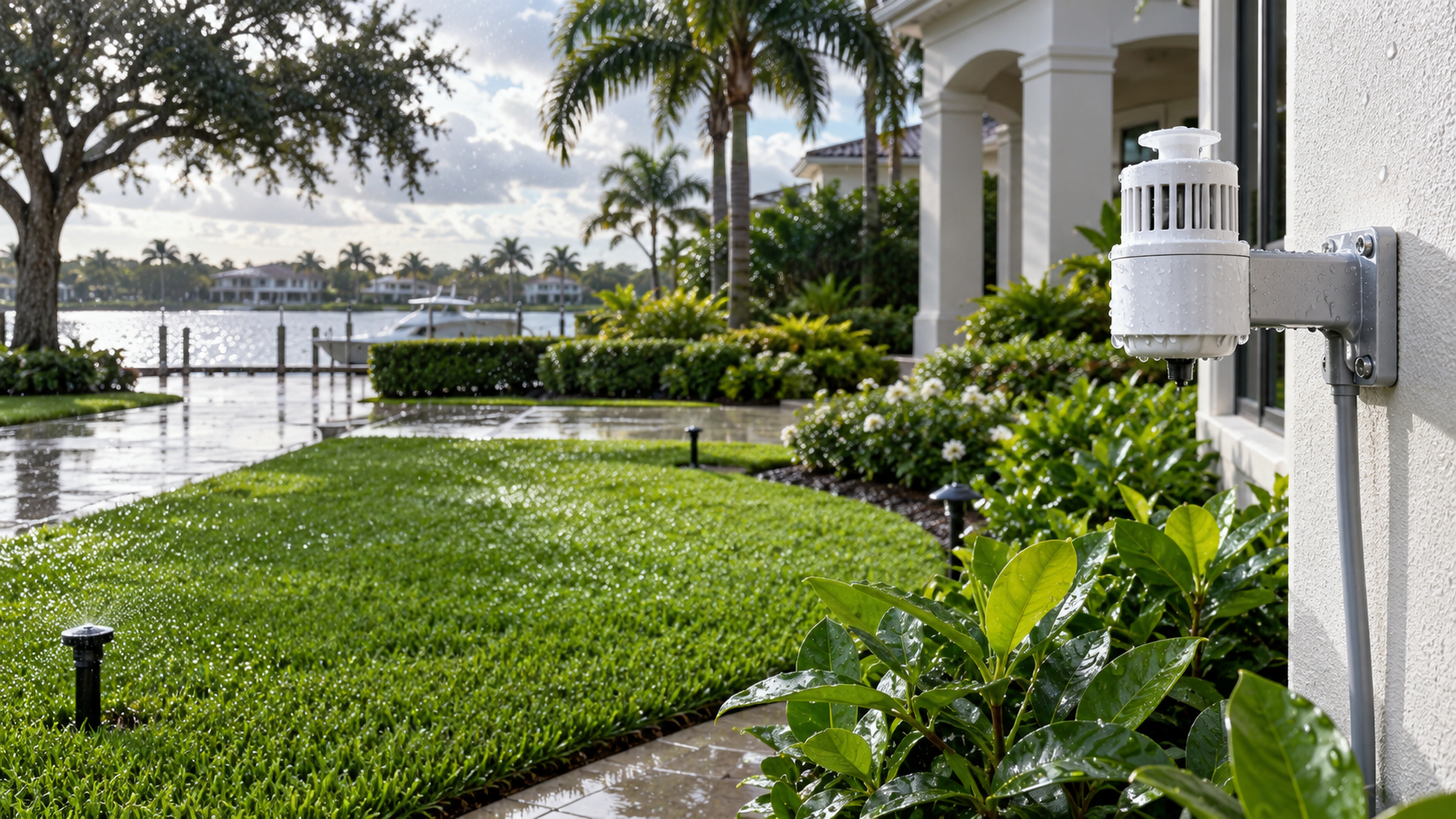
A rain sensor interrupts scheduled irrigation after enough rainfall. It prevents sprinklers from running during or soon after a storm, reducing wasted water, runoff, and saturated soil. The device does not measure every plant’s needs or repair a poor schedule. It works as one safeguard within a properly designed and seasonally adjusted irrigation system.
Check the Mounting Location
The sensor needs open exposure to rainfall similar to the landscape it protects. Roof overhangs, gutters, trees, dense shrubs, screens, and walls might block rain or slow drying. Mounting should follow the manufacturer’s instructions and avoid damage from ladders, branches, or maintenance equipment. Wireless models also need reliable communication with the controller.
Run a Controlled Test
Use the controller’s manual function and follow the sensor manufacturer’s test procedure. Many designs include a test spindle or cap that temporarily simulates rainfall. Confirm the active zone shuts down and the controller displays the expected sensor status. Restore every setting afterward. Do not depend on appearance alone because a connected sensor might still fail electrically or mechanically.
Inspect Wires and Batteries
For wired units, look for cut, pinched, corroded, or disconnected cable. For wireless units, replace batteries at the recommended interval and check the receiver signal. Landscaping work, painting, roofing, storms, and pest activity can damage small components. Turn off appropriate power before opening equipment, and use a professional when wiring or controller terminals are unfamiliar.
Adjust the Dry-Out Setting
Many sensors allow adjustment for rainfall threshold or drying time. A setting that returns irrigation too quickly might run while the soil remains wet. One that stays off too long might stress containers or shallow-rooted plants during hot weather. Follow manufacturer guidance and evaluate real soil moisture rather than selecting the most sensitive setting without observation.
Pair the Sensor With Seasonal Scheduling
Florida’s wet and dry periods need different controller programs. Short daily cycles often create shallow roots and unnecessary runoff. Review start times, watering days, zone duration, leaks, and mixed plant needs. After heavy rain, walk low areas and check soil before overriding the sensor. Local watering restrictions still apply even when a sensor is installed.
Protect Water and Plant Health
Ecoscape Outdoor Services inspects rain sensors, controllers, valves, heads, coverage, and drainage for South Tampa properties. We help homeowners stop irrigation after natural rainfall and correct zones that stay wet or miss important root areas. A working sensor supports water conservation while reducing fungus pressure, erosion, and the cost of watering a landscape that already has enough moisture.
