The Dangers of Mowing Wet Soil in Florida
Wet Grass and Wet Soil Are Two Different Problems
A lawn may have moisture on the leaf blades while the soil underneath remains firm. Morning dew, light mist, or a brief shower does not always create the same risk as saturated ground. The serious damage begins when the soil loses enough strength to support workers and mowing equipment. Mowing wet soil in Florida is especially risky during the summer rainy season because repeated storms may keep the root zone soft for several days. A lawn may look green and ready from the driveway while water remains trapped beneath the turf. Before mowing, the ground must support normal foot and equipment traffic without sinking, shifting, or releasing water under pressure. Standing water is an obvious warning, but saturated soil does not always show a visible puddle. Deep footprints, a spongy feel, mud sticking to shoes, or water rising around a step all show the lawn needs more drying time.
Heavy Equipment Creates Ruts and Tears Living Turf
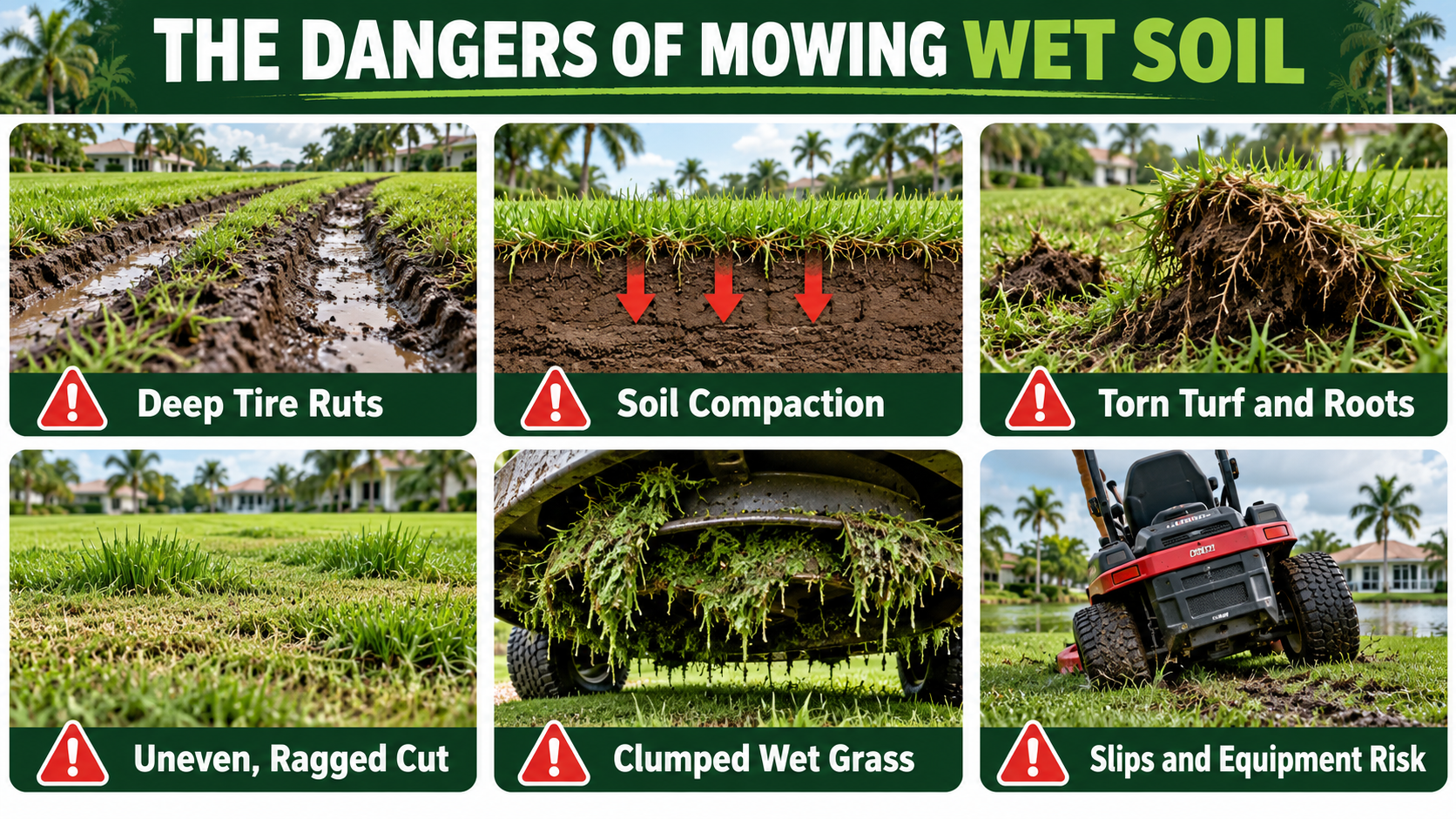
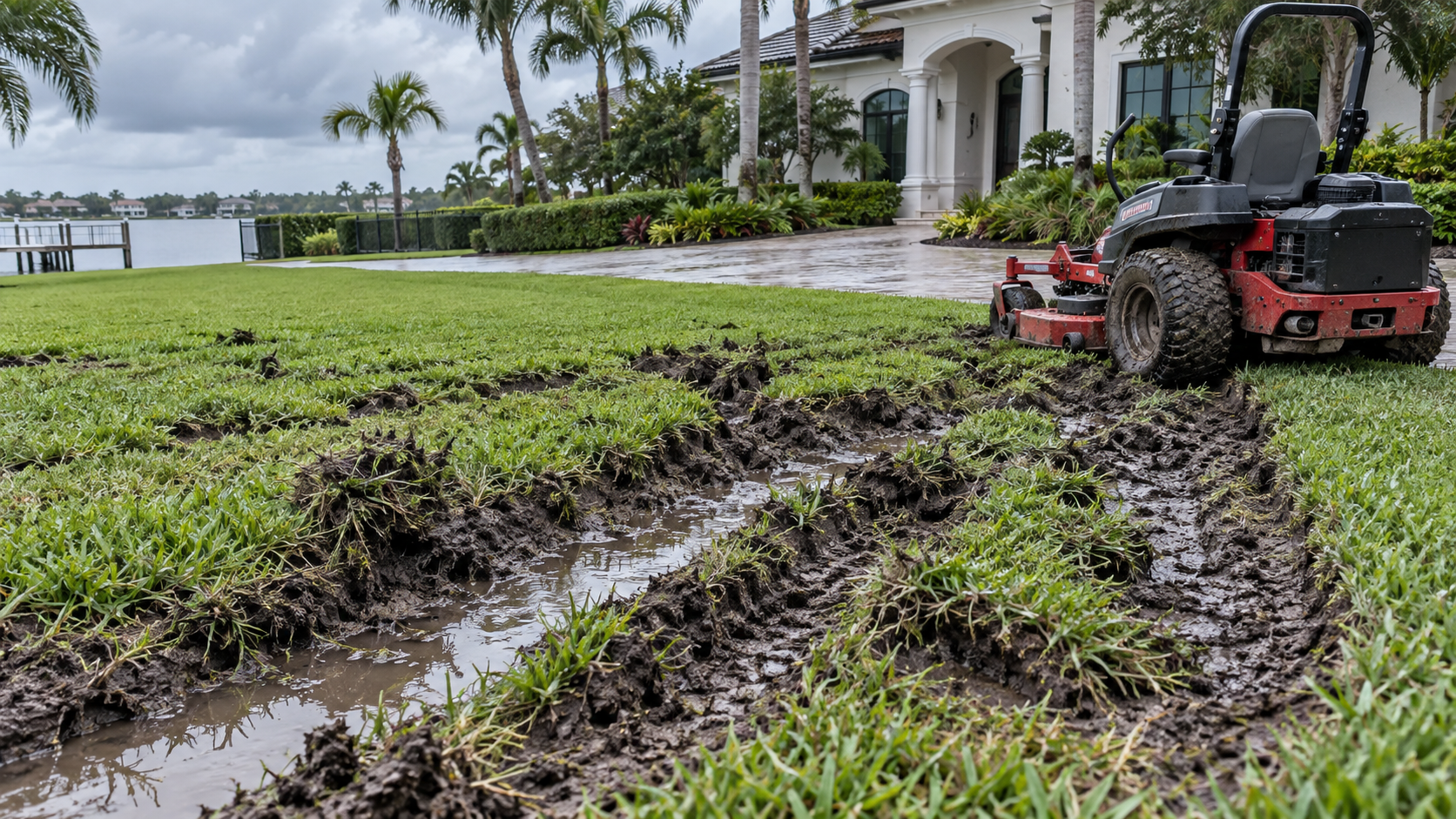
A commercial mower places substantial weight on a small tire-contact area. On firm soil, the lawn supports the equipment. On saturated soil, the tires sink and press the turf into the mud. Straight passes leave depressed tracks. Turns cause greater damage because the drive wheels rotate at different speeds and place sideways force on the grass. St. Augustinegrass spreads through above-ground stolons. Those runners form the living framework of the lawn. A mower turning on soft ground may twist, stretch, or tear them away from the soil. Tires also pull up pieces of sod, expose roots, and smear mud across surrounding grass. Once the surface breaks apart, another pass often deepens the rut. What began as a routine mowing visit may turn into soil leveling, sod replacement, irrigation adjustments, and weeks of restricted traffic while the damaged area establishes again.
Saturated Soil Compacts More Easily
Healthy soil contains pore spaces holding both water and air. Grass roots need oxygen for normal growth. When saturated soil carries mower weight, soil particles press together and larger pore spaces collapse. This compaction restricts oxygen movement, slows water infiltration, and makes future drainage problems worse. Roots respond by remaining shallow or declining in the compressed area. The lawn may later show thinning, weak color, slow recovery, heat stress, or poor drought tolerance even after the visible wheel marks fade. Compaction damage often follows the same route used by mower tires week after week. Low areas, narrow side yards, shaded sections, and spaces near downspouts face higher risk. Sandy Florida soil drains faster than heavy soil in many locations, but compaction and buried construction material still create saturated pockets. Waiting until the surface firms protects soil structure and reduces a problem that is far harder to correct than an overgrown lawn.
Wet Turf Produces a Poor and Damaging Cut
Wet grass blades bend, stick together, and lie beneath mower tires. A rotary blade cannot lift and cut the turf evenly under those conditions. The result includes missed strips, ragged leaf tips, scalped high spots, and an uneven appearance after the lawn dries. UF/IFAS advises mowing turf when it is dry and states that wet clippings may clog rotary mowing equipment. Ragged cuts leave a larger damaged edge on each leaf blade. The turf loses moisture through those wounds and shows a brown or shredded appearance. Rainy weather also encourages rapid growth, so waiting may leave the lawn taller than normal. The correct response is not to lower the deck and remove all excess growth in one visit. Ecoscape follows the one-third rule and avoids removing more than about one-third of the grass blade at once. An overgrown lawn may require a higher first cut followed by another properly timed mowing.
Clumped Clippings Create Additional Lawn Stress
Wet clippings are heavy and sticky. Instead of dispersing evenly behind the mower, they collect beneath the deck and fall in dense piles. Those piles block sunlight and airflow from the living grass below. Large clumps also hold moisture against the turf during a period when the lawn is already struggling to dry. The result may include yellow patches, matted blades, and a messy finish. Wet material inside the mower reduces cutting efficiency and forces the engine and blade system to work harder. Clearing a clogged deck creates another safety concern if anyone approaches the blade area before the machine is fully shut down and secured. Leaving wet clumps across pavement also creates slippery surfaces and poor curb appeal. Waiting for dry turf supports a cleaner cut, better clipping distribution, safer equipment operation, and a finished property that reflects professional standards.
Operator Safety and Equipment Control Matter
Saturated lawns reduce traction for both workers and machines. A mower may slide on a slope, drift during a turn, or lose control near a seawall, pond, ditch, street, driveway, or swimming pool. Walk-behind equipment becomes harder to control when footwear slips in mud or wet grass. Hidden holes and uneven grades are harder to see beneath flattened wet foliage. Moist clippings stick to steps, decks, tires, and controls. Wet material also holds against metal surfaces and requires thorough cleaning after service. Electrical storms create a separate danger. No mowing schedule is important enough to place a crew outside near lightning. Ecoscape evaluates the entire property, not one dry-looking section. A shaded side yard or low drainage area may remain unsafe long after the sunny front lawn begins drying. Safe professional judgment includes stopping or postponing work before property damage or injury occurs.
Why Ecoscape Postpones Service on Saturated Lawns
Ecoscape Outdoor Services protects the long-term health and appearance of your property. Light rain does not automatically stop service. Saturated ground does. Before placing equipment on a South Tampa lawn, the crew looks for standing water, deep footprints, soft turns, mud transfer, tire sinking, flooded low areas, and runoff from roofs or irrigation. When conditions threaten damage, the responsible decision is to postpone mowing until the soil firms. The crew may complete safe trimming or cleanup work where conditions permit, then return during a suitable dry window based on weather and route availability. Waiting may leave the grass slightly taller for a short period. Ruts, torn St. Augustinegrass, compacted soil, damaged roots, and muddy tracks last much longer. Your service delay is not lost attention. It is a deliberate property-protection decision. Please keep irrigation off after heavy rain and report standing water or drainage issues before the scheduled visit. One careful delay protects the lawn, the equipment, the crew, and the quality of service you expect from Ecoscape.
Source: UF/IFAS Gardening Solutions: Mowing Your Florida Lawn