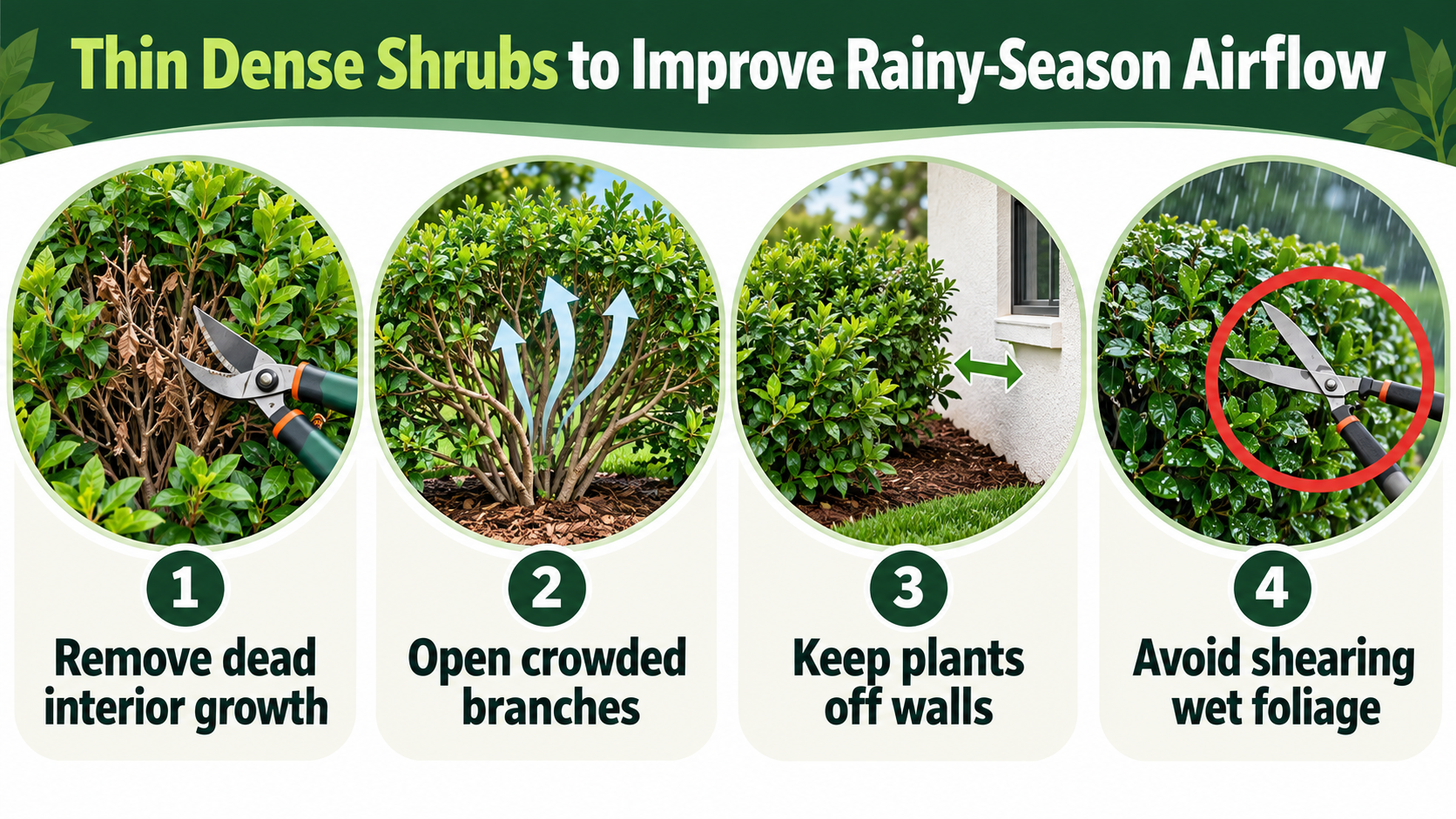
Thin Dense Shrubs to Improve Rainy-Season Airflow
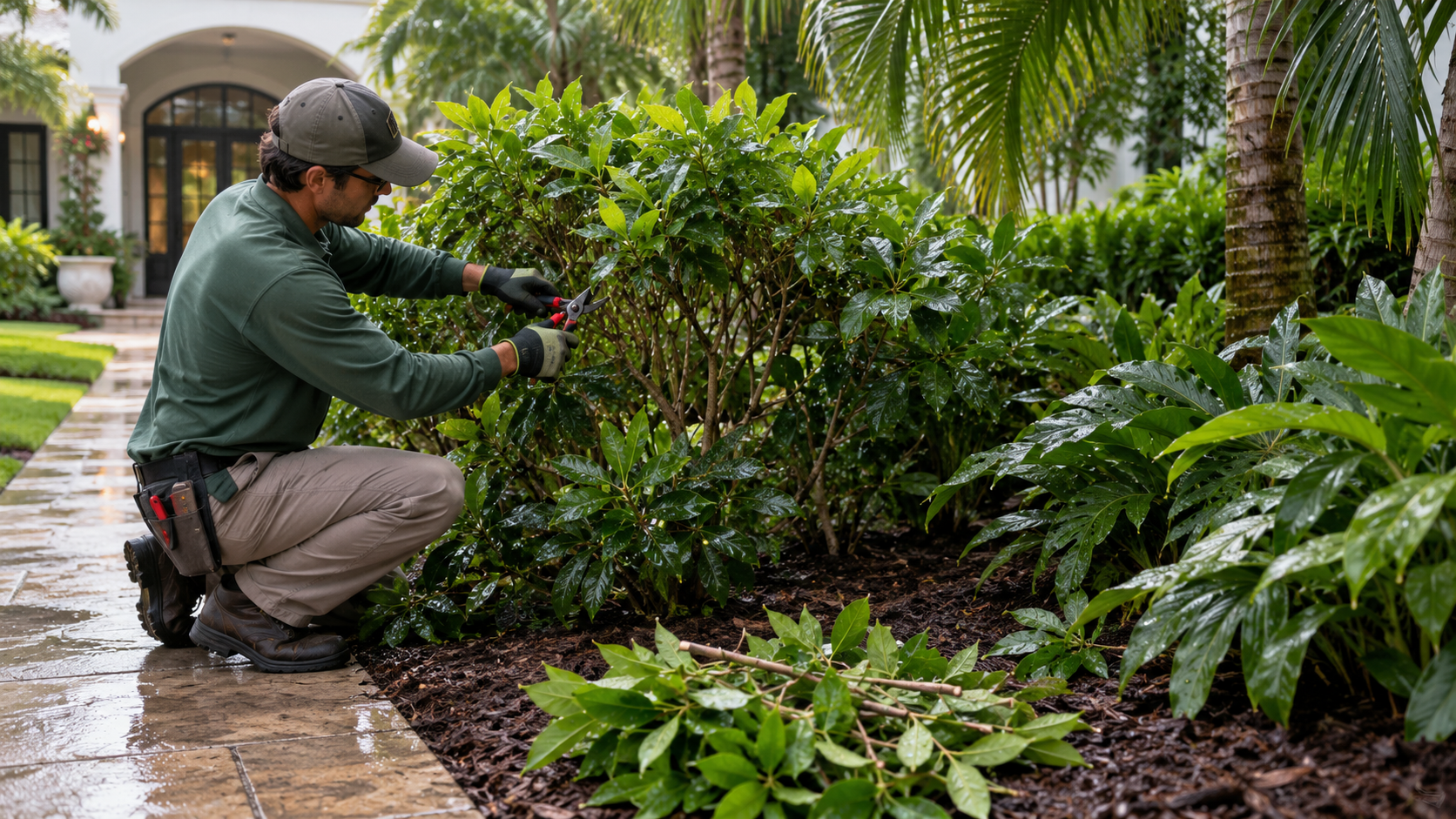
Dense Growth Holds Moisture
Florida's humid rainy season keeps crowded foliage wet for long periods. Leaves touching each other, walls, fences, and nearby plants dry slowly. Prolonged moisture supports leaf-spot diseases and hides scale, mealybugs, dead wood, and weak branching. Selective thinning improves air movement and inspection access while preserving the shrub's natural form and screening value.
Inspect Before Cutting
Look inside the plant when foliage is dry. Identify dead stems, rubbing branches, weak shoots, and growth directed into the center. Check where the plant touches the building or blocks equipment access. Confirm the species and flowering cycle before removing live growth. Azaleas, gardenias, hibiscus, and other ornamentals respond differently to timing and pruning intensity.
Remove Dead and Damaged Wood First
Start with branches that are dead, broken, diseased, or rubbing. Cut back to healthy lateral growth or the branch origin without leaving long stubs. Clean tools between suspect plants. Dead interior material traps leaves and limits airflow. Removing it often creates enough improvement without reducing the healthy outer canopy more than necessary.
Thin Instead of Shearing
Hand-select crowded stems from throughout the shrub. Make each cut inside the canopy so the remaining foliage softens the appearance. Shearing only the outer surface creates dense new growth along the shell while the interior remains shaded and wet. Repeated shearing also increases maintenance because every cut stimulates multiple shoots near the surface.
Preserve Enough Foliage
Avoid removing a large percentage of live foliage during hot, wet weather. Sudden exposure may scorch shaded leaves and stress the root system. Spread major corrections across more than one visit. Keep the base wide enough to receive light. For hedges, a slightly narrower top helps sunlight reach lower branches and reduces bare growth near the ground.
Prune Under Dry Conditions
Wait until foliage and tools are dry whenever scheduling permits. Wet pruning spreads moisture and plant residue across fresh cuts. Remove clippings from the bed instead of leaving dense piles beneath the shrub. Keep irrigation spray off foliage and direct water toward the root zone. Inspect the plant over the following weeks for new spots, insects, or dieback.
Build Airflow Into the Original Design
Ecoscape Outdoor Services considers mature width, wall clearance, equipment access, and seasonal growth when placing and maintaining shrubs. South Tampa landscapes stay healthier when plants have room to breathe. Selective pruning supports appearance, reduces moisture retention, and makes developing plant problems easier to see before decline spreads.
Source: UF/IFAS Gardening Solutions