Trace Standing Water to Its Source
Why This Tip Matters
Trace Standing Water to Its Source protects the health, appearance, safety, and long-term value of your outdoor property. Small maintenance errors build over time. A measured approach helps correct the cause early, reduces unnecessary work, and limits damage to nearby turf, plants, hardscape, irrigation, lighting, or structures.
Essential Guidance
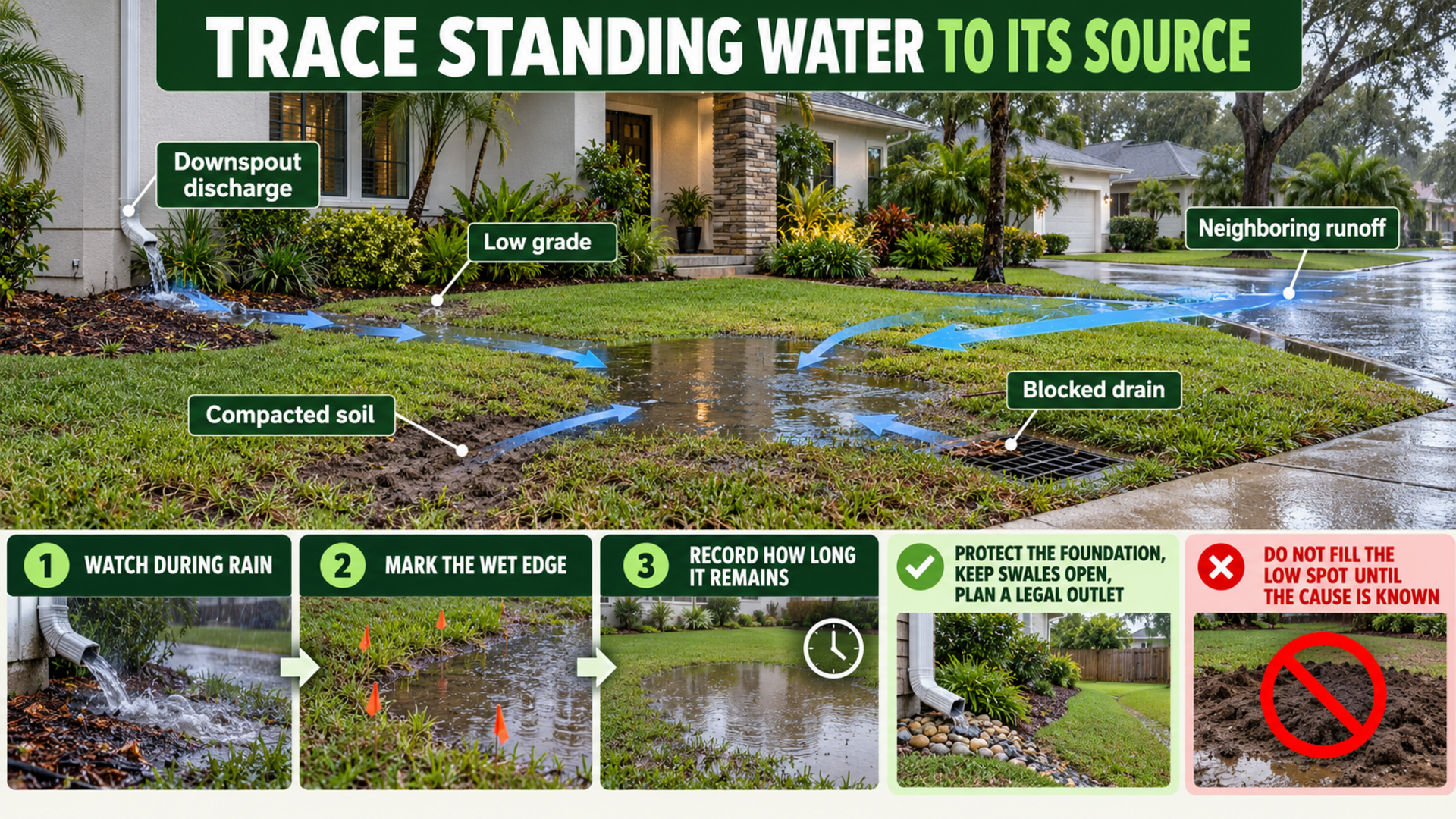
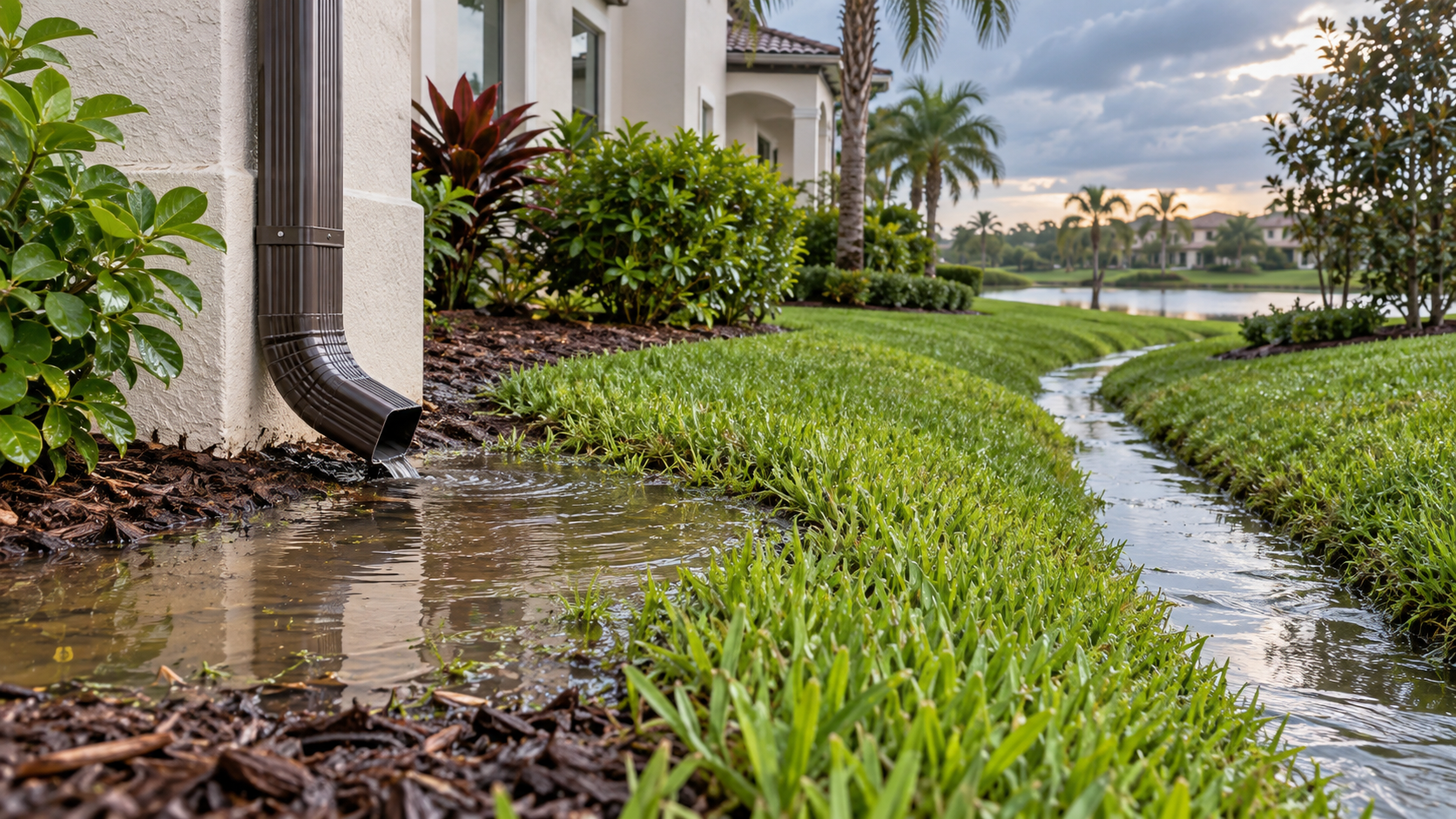
Inspect the yard during or immediately after a hard rain. Note where water enters, where it slows, and how long it remains. Check downspouts, low areas, compacted soil, blocked drains, raised bed edges, and runoff from neighboring surfaces. Water beside a foundation needs prompt attention. Keep swales open and direct downspouts toward a safe discharge area without sending water onto adjacent property. Do not fill a low spot until you understand why it exists. Added soil sometimes pushes water closer to the house or traps it elsewhere. Mark the wet boundaries, photograph the flow, and develop a grading or drainage repair based on elevations and a legal outlet.
South Tampa Conditions
Drainage work starts by tracing the water source. Observe roof discharge, neighboring runoff, irrigation, low areas, compacted soil, blocked inlets, and the direction water travels. Record how long water remains after rainfall. A lasting correction depends on elevation, soil, water volume, outlet location, and erosion protection.
How to Complete the Check
Begin with a slow inspection of the affected area and compare it with nearby healthy areas. Check sunlight, shade, soil moisture, recent rainfall, maintenance history, and changes made during the past several weeks. Use clean, sharp, properly sized tools. Make the smallest effective correction first. Photograph the area before and after the work so you have a reliable point of comparison.
Common Mistakes to Avoid
Avoid guessing, rushing, overcorrecting, using damaged tools, or working during unsafe weather. More water, heavier pruning, brighter lighting, or a shorter mowing height does not automatically improve the result. Do not hide leaks, damaged wiring, decay, or drainage failures behind cosmetic repairs. Stop when the work exceeds your safe reach, equipment, training, or professional scope.
Monitor the Results
Recheck the area after the next normal irrigation cycle or rainfall. Plant and turf recovery often takes several weeks, while lighting and irrigation adjustments show results sooner. Record the date, conditions, correction, and response. A simple maintenance history helps identify recurring patterns and gives a professional useful information if the problem returns.
How Ecoscape Outdoor Services Helps
Ecoscape Outdoor Services provides detailed property maintenance, landscaping, irrigation, drainage, and outdoor lighting services for South Tampa properties. Our team evaluates surrounding conditions, explains practical options, completes approved work carefully, and leaves the property clean. When regulated treatment or specialized tree work is required, we identify the proper next step and keep our recommendation within the correct professional scope. Contact Ecoscape Outdoor Services when you want clear communication, detailed inspections, craftsmanship, and consistent care for your outdoor property.
Review the finished work from normal viewing areas and continue monitoring it through changing Florida weather. Consistent observation helps protect plant health, efficient water use, safe operation, and a clean finished appearance.