Trim Areca Palms Without Creating a Thin Brown Screen
Understand the areca palm screen
Areca palm, or Dypsis lutescens, grows as a cluster of slender canes topped by arching feather-like fronds. Multiple stems create privacy and soften fences, pools, and property lines. The cluster depends on many individual growing points. Aggressive thinning removes density quickly and leaves a screen with exposed brown bases, wide gaps, and fewer healthy leaves producing energy.
Decide what needs removal
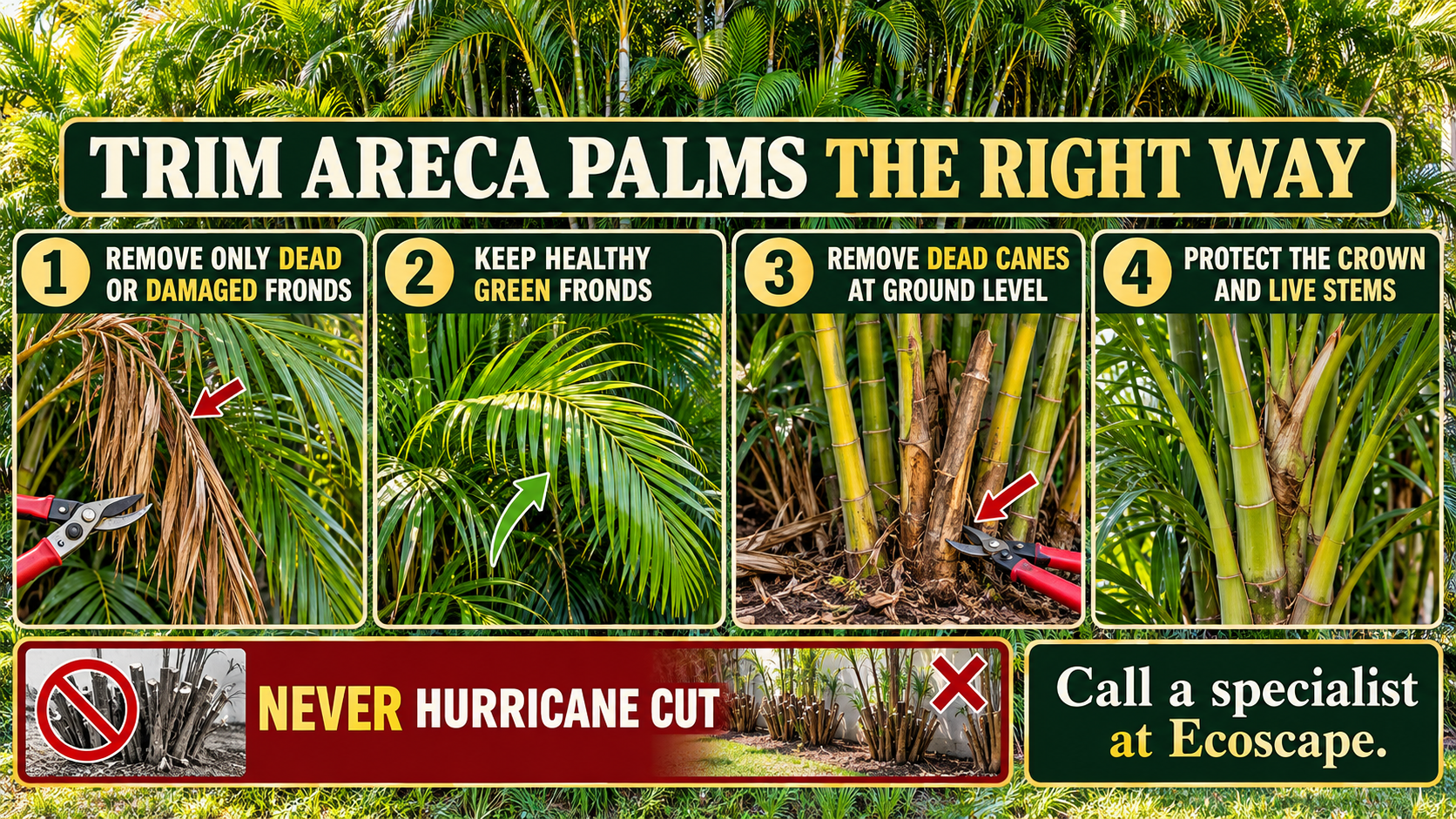
Begin with fully brown fronds, broken leaves, and dead canes. Keep healthy green fronds, including lower leaves serving the screen. Natural golden or yellow-green cane color does not automatically signal a dead stem. Scratch tests and random cutting risk live tissue. Follow each questionable cane upward and inspect its crown, leaves, and firmness before choosing removal.
Cut dead fronds without stripping the palm
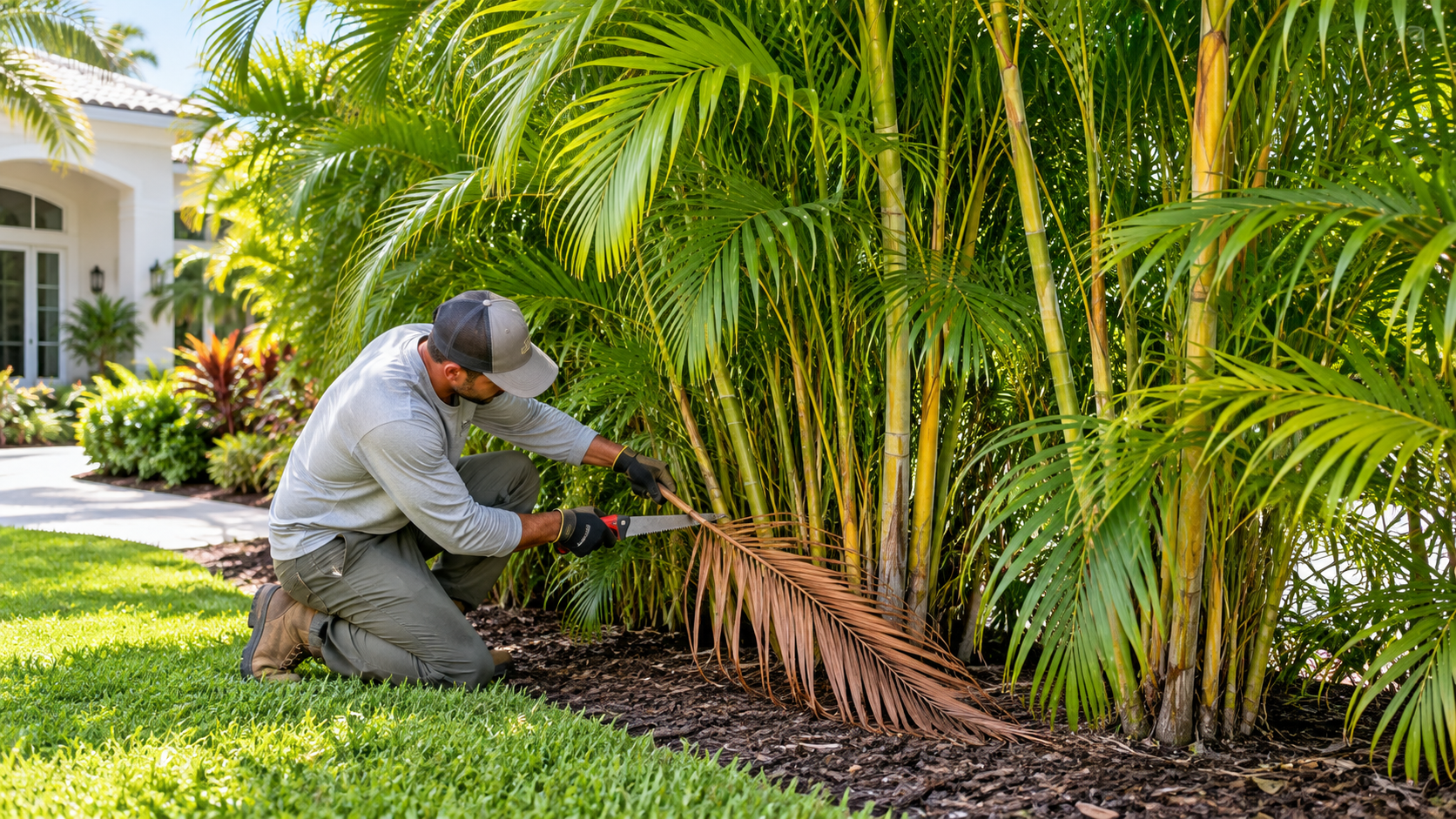
Use clean hand pruners, loppers, or a pruning saw sized for the material. Cut a dead frond near its base without slicing the live cane or crownshaft. Work from the outside inward so visibility improves with each cut. Do not pull attached leaf bases or shave canes smooth. Palm wounds remain visible and raise the risk of decay around tightly packed stems.
Remove dead canes at ground level
A fully dead cane has no living crown and no healthy fronds. Cut it close to ground level while protecting neighboring stems and emerging shoots. Remove one cane at a time. Step back after each cut and review the screen from both sides. Dead-cane removal opens limited space inside the cluster. Removing live canes for speed reduces privacy and shifts stress onto the remaining crowns.
Preserve green and partly green fronds
Green palm leaves produce energy. Older fronds also hold mobile nutrients needed by newer growth. Cutting them early weakens the cluster and often makes nutrient problems look worse. Never create a hurricane cut or remove every lower leaf to expose tall bare canes. A healthy areca screen should retain layered foliage from several heights instead of one thin row at the top.
Manage density through regular care
Inspect the cluster several times each year. Remove dead material before it accumulates, keep mulch away from cane bases, and maintain irrigation without leaving roots saturated. Watch new center leaves for normal expansion. Rapid browning, widespread spotting, or collapsed crowns needs diagnosis before more pruning. Extra fertilizer does not repair damage from excessive leaf removal.
Protect the screen with professional trimming
Dense clusters near pool screens, windows, roofs, utilities, and narrow side yards require careful access. Ecoscape Outdoor Services will identify dead canes, preserve useful foliage, and trim around nearby structures. Book an on-site assessment when the screen needs thinning or shows unexplained decline. Helpful references: UF/IFAS areca palm profile and UF/IFAS palm pruning guidance.