Trim Clusia the Right Way Without Shredding Its Leaves
Why clusia needs a different trimming method
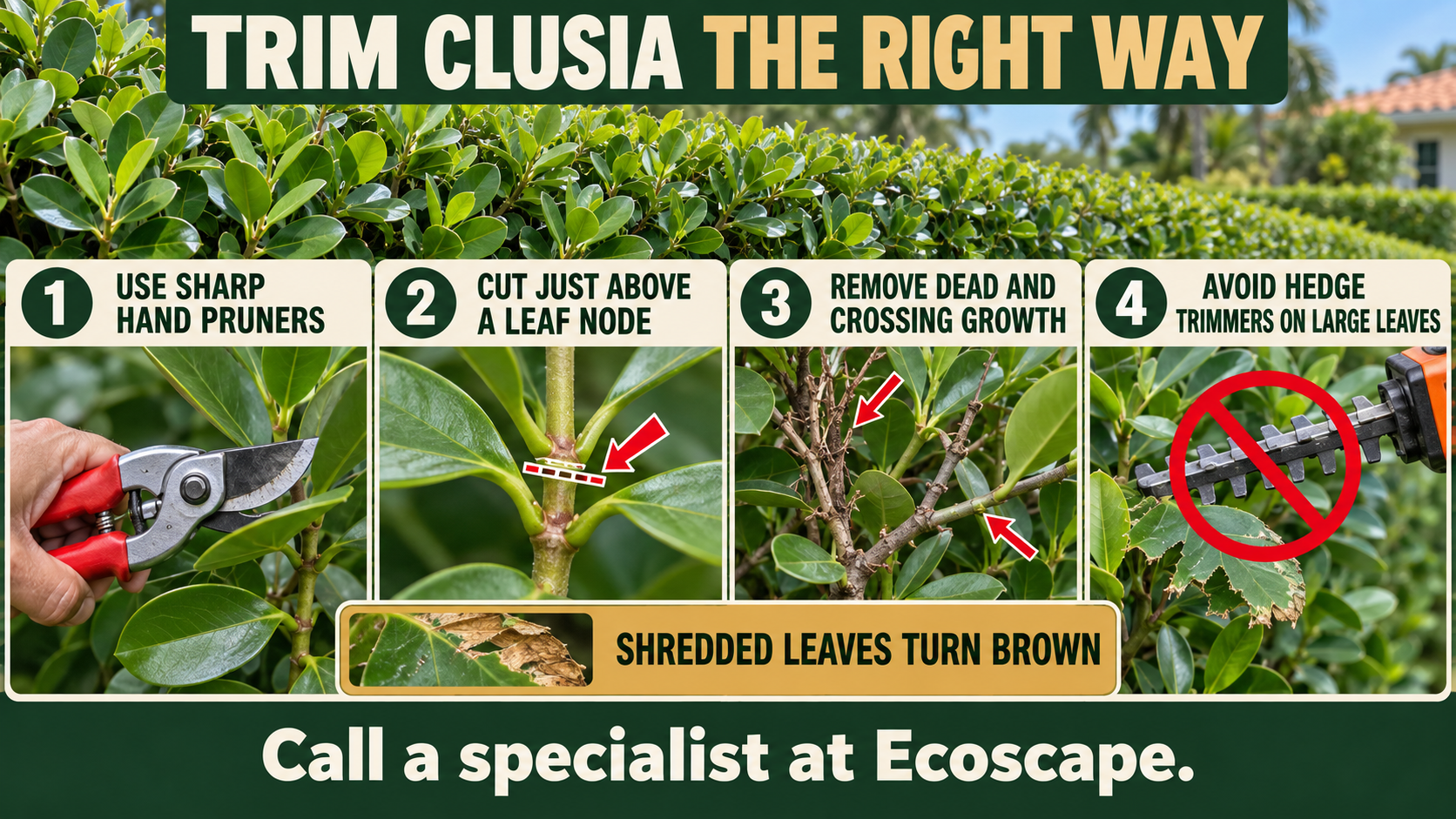
Clusia has thick, broad leaves that show every rough cut. A powered hedge trimmer moves quickly across the surface, but its teeth often slice through leaf blades instead of following stems. Those injured leaf edges dry brown and leave the hedge looking scorched or ragged. The better approach is selective pruning with clean cuts placed on branches. It takes more care, yet the finished hedge keeps its glossy foliage and natural density.
Start with sharp hand tools
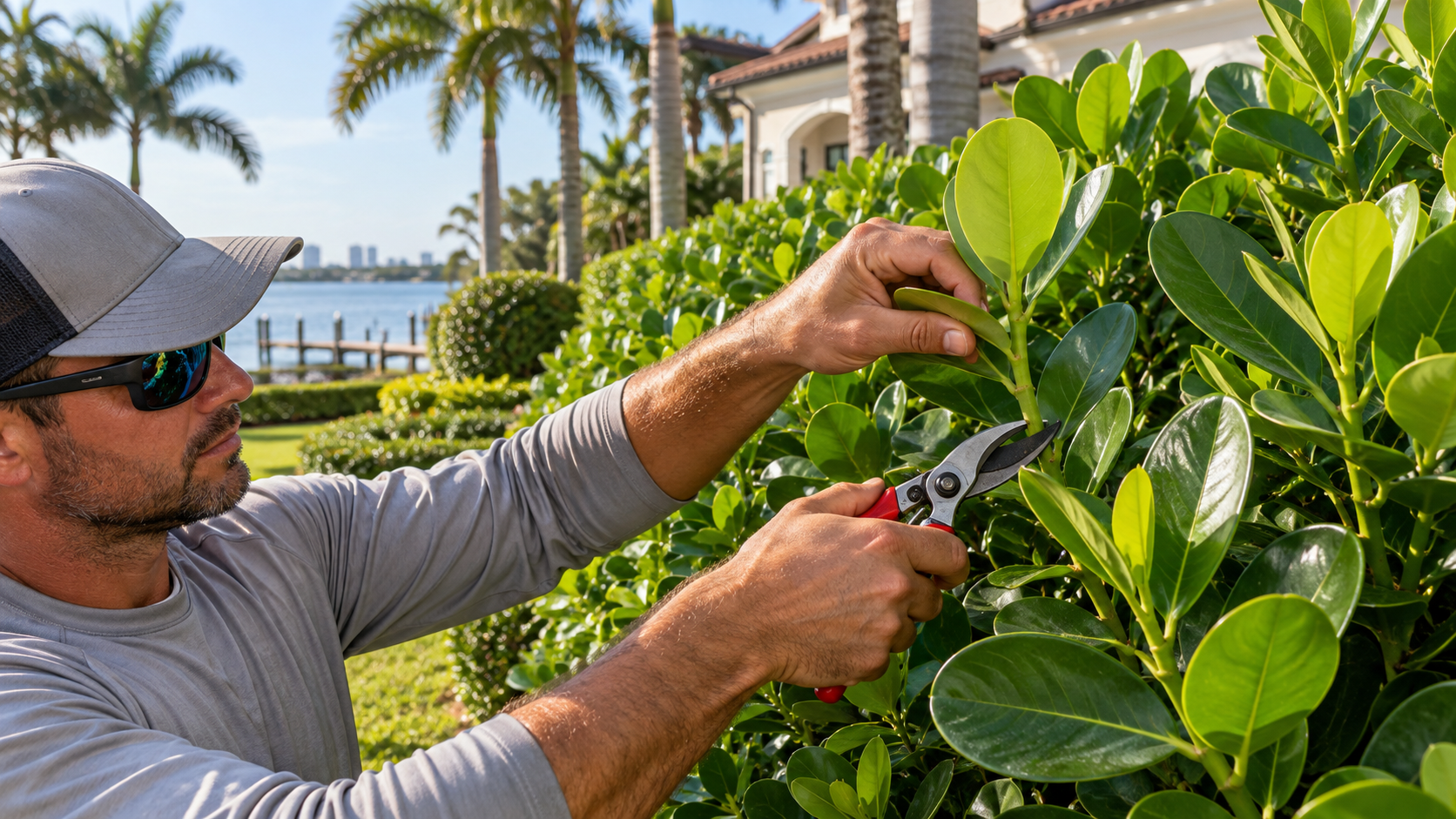
Use clean bypass hand pruners for young stems and bypass loppers for branches too large for one comfortable hand cut. Sharp blades meet cleanly and reduce crushing. Wear gloves and eye protection, then inspect the hedge before cutting. Remove dead, broken, diseased-looking, or rubbing stems first. Clean tools before moving between plants, especially when a hedge shows spotting, dieback, or other signs of stress.
Place each cut above healthy growth
Follow a long shoot back into the hedge until it reaches a leaf node or a smaller side branch pointing in a useful direction. Make the cut slightly above that point without leaving a long stub. This shortens the hedge while hiding the cut inside healthy foliage. When reducing width, work on individual stems at different depths instead of cutting every branch on the same flat plane. The layered cuts create a fuller, more natural face.
Shape the hedge a little at a time
Step back often and compare both sides. Keep the base slightly wider than the top so sunlight reaches lower leaves. Open small pockets through crowded growth rather than hollowing out one large area. If the hedge has become much taller or wider than intended, spread the reduction across more than one visit. Heavy removal exposes bare interior wood and often produces uneven bursts of new shoots instead of an immediate polished shape.
Work with Florida growing conditions
Clusia grows actively through much of the warm season around Tampa. Light maintenance during active growth is easier on the plant than one severe correction after years of neglect. Avoid major pruning immediately before a cold event, during drought stress, or while roots sit in saturated soil. After trimming, keep irrigation consistent with the site's actual needs. Extra water and fertilizer are not substitutes for properly placed cuts.
Avoid the mistakes that create brown hedges
Do not sweep hedge-trimmer blades across large leaves for speed, cut deeply into leafless wood, or remove so much foliage that direct sun suddenly reaches shaded stems. Never force dull pruners through a thick branch. Recheck the hedge after several weeks and remove isolated damaged tips only after new growth shows the plant's response. Regular selective touchups keep the size manageable and prevent another drastic reduction.
Get help with an overgrown clusia screen
A tall privacy hedge near windows, utilities, a pool enclosure, or an irrigation line needs a clear reduction plan before work begins. Ecoscape Outdoor Services will evaluate the hedge's structure, access, and intended height, then shape it with cuts that protect the leaves and preserve screening. Schedule a free quote when a clusia hedge needs careful restoration instead of another rough shearing.