Trim Robellini Palms Safely Without Overpruning
Know the palm behind the common name
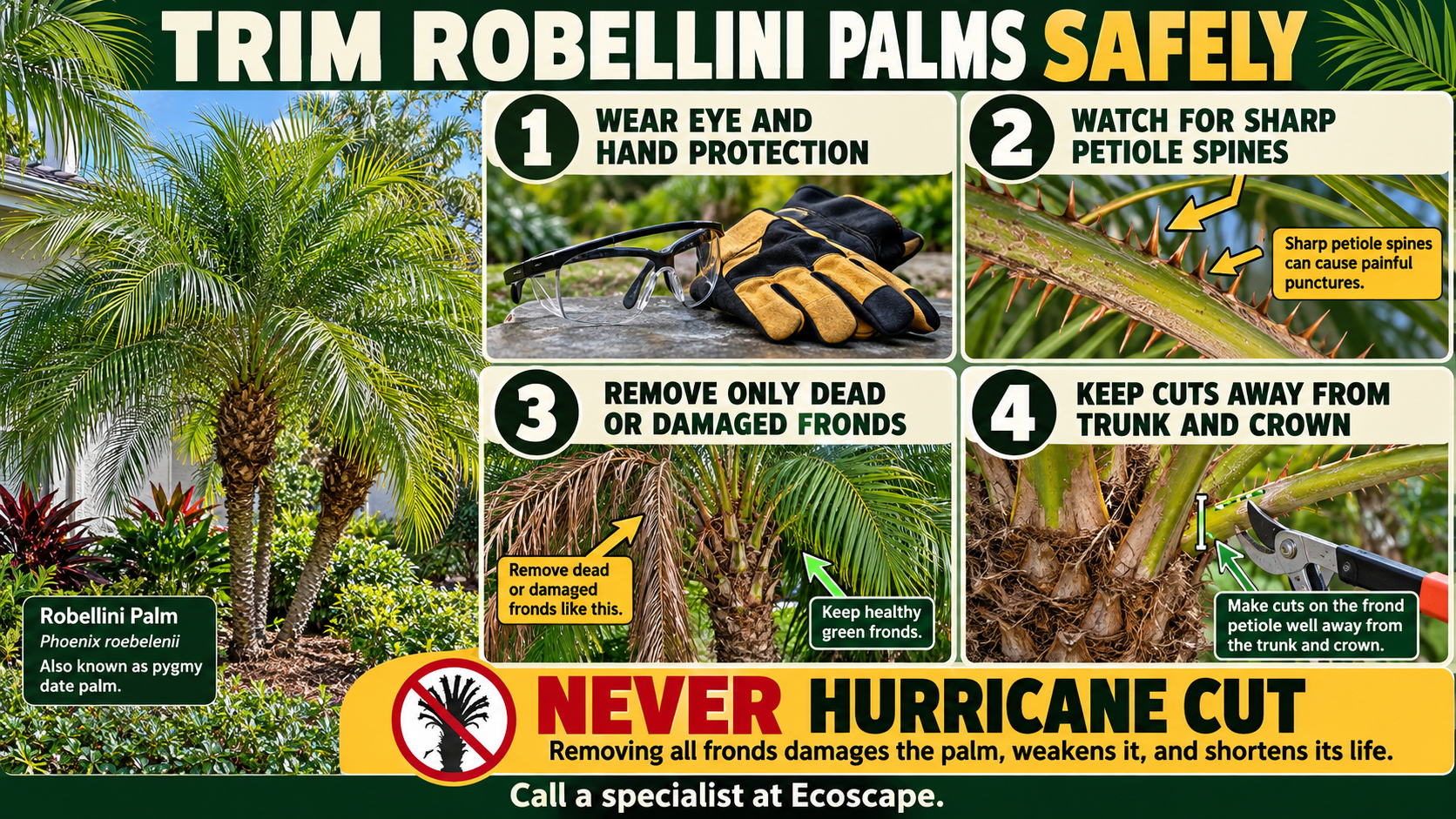
Robellini palm is a common landscape name for the pygmy date palm, Phoenix roebelenii. Its compact size and arching fronds make it popular near entries, pools, and patios. The graceful appearance hides stiff, sharp spines near the base of each frond. Those spines turn an ordinary cleanup into a puncture and eye-injury risk, especially on clustered palms with crowded stems.
Prepare the work area before cutting
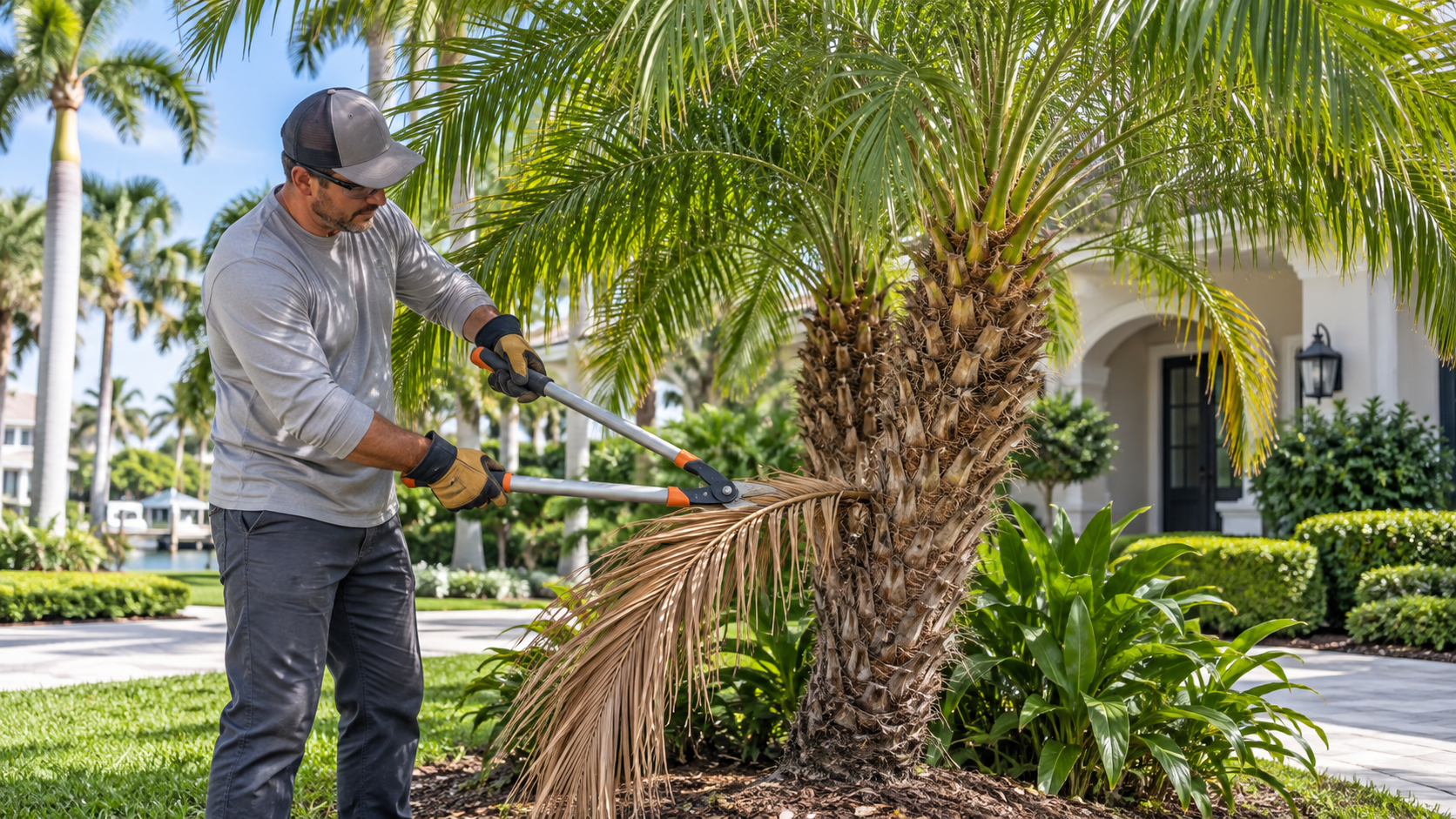
Wear safety glasses, sturdy gloves, long sleeves, long pants, and closed shoes. Keep children, pets, and bystanders outside the drop zone. Move furniture, vehicles, and fragile planters. Look through the canopy from several angles to locate spines before reaching inward. Use clean bypass loppers or a sharp pruning saw that reaches the target without forcing your hands into the leaf bases.
Remove only the right fronds
Start with fronds that are completely brown, broken, or hanging. Keep green and partly green fronds because the palm still relies on them for photosynthesis and nutrient movement. A yellow lower frond often reflects a nutrient pattern rather than a need for immediate removal. If several leaves show spotting, distortion, or rapid decline, pause and identify the cause before hiding symptoms with pruning.
Control every cut around the spines
Work from the outside of the canopy toward the trunk so each removed frond improves visibility. Secure the frond, then cut through its petiole while leaving space between the blade and living trunk tissue. Lower the piece in a controlled direction rather than pulling it through other leaves. Never grab blindly near a frond base. Bag or stack cut material with the spines facing away from workers and walking areas.
Avoid hurricane cuts and trunk carving
A narrow upright tuft is not a healthier or safer palm. Removing green lower fronds weakens the canopy and does not improve wind resistance. Do not shave old bases into decorative patterns, cut above the horizontal line of the canopy, or slice into the central growing point. Each trunk has one primary bud. Damage there is far more serious than the loss of an ordinary branch on a woody tree.
Manage flowers, fruit, and follow-up
Flower and fruit stalks are optional removal targets when seedlings, falling fruit, or walkway mess is a concern. Cut each stalk cleanly without disturbing nearby fronds or the crown. After cleanup, inspect for torn fibers and embedded debris. Monitor the newest center growth over the next several weeks. Do not respond to slow recovery with more pruning or excess fertilizer. Palm nutrition products should follow Florida guidance and the site conditions.
Choose professional help when access is tight
Multiple trunks, dense spines, narrow pool decks, and palms near doors or windows leave little room for error. Ecoscape Outdoor Services will evaluate access, canopy health, and the exact fronds that need removal. Book an assessment when the palm is difficult to reach or shows unusual decline. Helpful references: UF/IFAS pygmy date palm profile and UF/IFAS pruning guidance.