
Use Beautyberry for Native Color and Wildlife Value
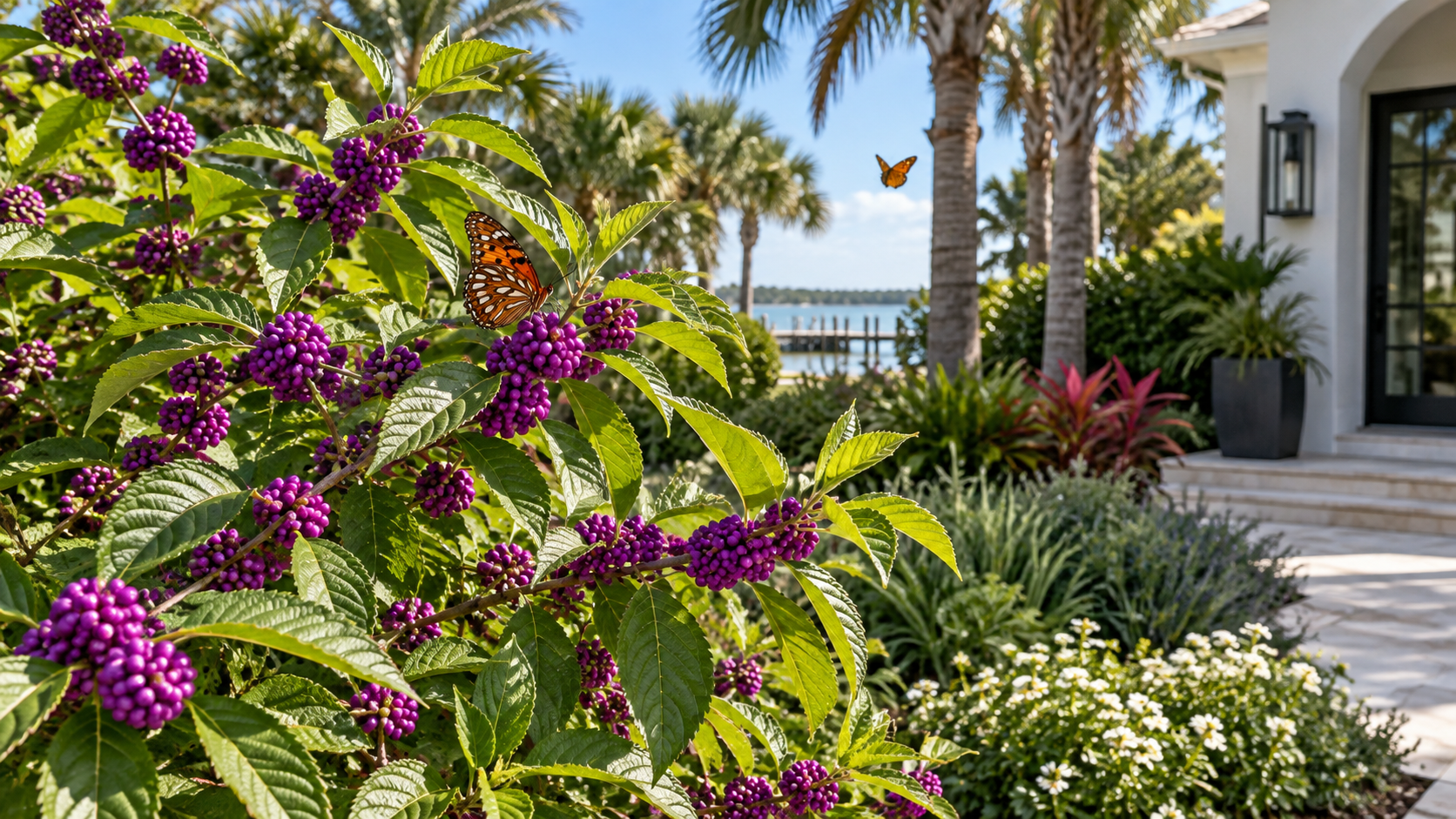
Meet Florida Beautyberry
Florida beautyberry is a native shrub known for vivid purple berries arranged in clusters around its stems. The plant brings seasonal color without relying on flowers alone. It also supports birds and other wildlife. In a South Tampa landscape, beautyberry works best where its loose, natural form complements more structured evergreen plants.
Choose the Right Location
Give beautyberry room to reach its mature width. It performs in sun or partial shade, though light levels influence density, flowering, and berry production. Choose well-drained soil and avoid narrow spaces where constant shearing would be required. Place it where berries and arching stems remain visible from a patio, path, or window.
Plant at the Correct Depth
Set the top of the root ball at or slightly above the surrounding grade. Dig a broad planting hole and loosen circling roots before backfilling with native soil. Do not bury the stem base under soil or mulch. Water thoroughly after planting, then monitor the root ball because surrounding sandy soil might dry faster than the original nursery mix.
Manage Water During Establishment
New plants need consistent moisture until roots extend into the bed. Check the soil instead of following a rigid daily schedule. Reduce irrigation as establishment progresses. Mature beautyberry handles short dry periods better than saturated conditions. Correct low spots, leaking heads, and roof runoff before they create chronic wetness around the crown.
Prune for Form and Renewal
Beautyberry flowers and fruits on new growth. Late-winter pruning helps control size and encourages fresh stems before spring growth begins. Use selective cuts or a planned renewal prune rather than repeatedly shearing the outer surface. Remove damaged wood at any time. Keep the shrub’s natural arching character instead of forcing it into a tight box.
Support Wildlife Responsibly
Birds use the berries, and the shrub provides cover within a layered landscape. Pair it with other Florida native plants offering different bloom times, heights, and food sources. Avoid broad pesticide use around a wildlife garden. A native plant still needs correct placement, weed control, mulch depth, and irrigation during establishment to deliver its full value.
Design With Native Plants
Ecoscape Outdoor Services helps South Tampa homeowners integrate Florida natives into refined residential landscapes. We select locations based on mature size, light, drainage, irrigation, and the desired maintenance level. Beautyberry adds authentic Florida color and habitat when it receives enough room to grow and sits within a balanced plan built for the property.
