
Use Coontie in Dry, Shaded Florida Beds
Know the Plant
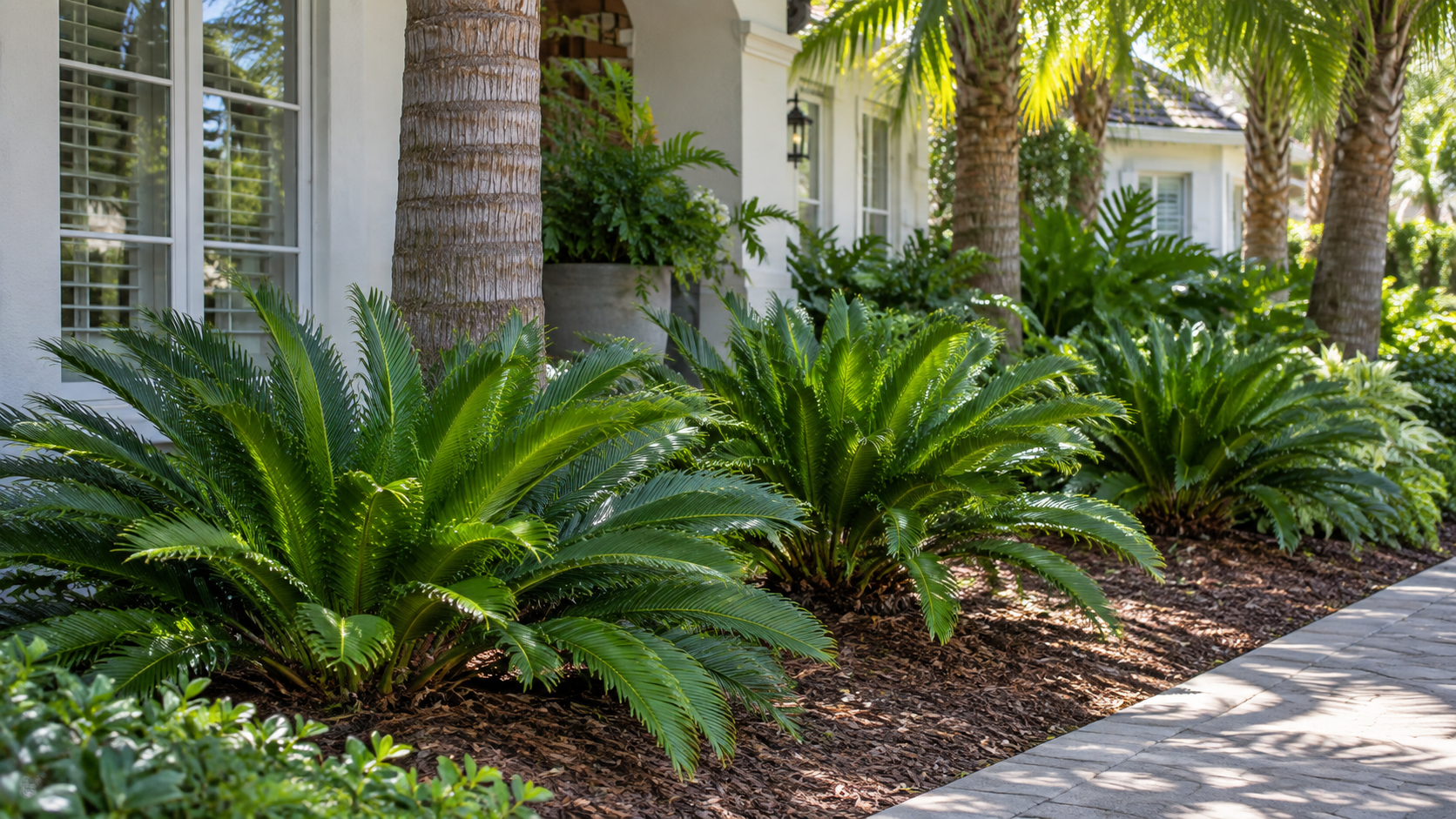
Coontie is a Florida native cycad with arching, fernlike foliage and a compact form. It works well as a low foundation plant, massed ground layer, pathway accent, or transition beneath palms and trees. Its clean texture suits both tropical and structured landscapes. Mature size varies with conditions, so allow room instead of crowding plants for an immediate solid look.
Choose the Right Location
Coontie performs in sun through substantial shade, though foliage often looks fuller and deeper green with filtered light. Select a well-drained bed away from areas where roof runoff or irrigation creates constant saturation. It tolerates dry periods after establishment and fits sites where thirsty flowering shrubs struggle. Give each plant enough space from walks, walls, air-conditioning equipment, and neighboring shrubs.
Plant at the Correct Depth
Set the crown level with the surrounding soil. Do not bury the center with soil or mulch. Dig a hole wider than the root mass, loosen circling container roots, and backfill with the existing soil. Water slowly to settle air pockets, then shape the bed so stormwater moves away from the crown. A shallow mulch layer helps moderate moisture without holding the plant too wet.
Use Water Carefully
Newly planted coontie needs consistent moisture while roots move into surrounding soil. Check by hand rather than watering on appearance alone. Reduce frequency after establishment and allow the upper soil to begin drying between cycles. Overspray from turf zones often supplies more water than needed. A separate shrub zone or carefully placed drip line supports better control and reduces wasted water.
Support Florida Wildlife Safely
Coontie serves as a host plant for the atala butterfly, an important landscape benefit in parts of Florida. Caterpillars might remove noticeable foliage during active feeding, but established plants often recover. Avoid unnecessary insecticide use when caterpillars appear. All parts of coontie are toxic if eaten, especially seeds, so placement requires thought around young children, pets, and public gathering areas.
Watch for Common Problems
Yellowing often points to excess water, poor drainage, planting too deep, nutrient stress, or natural aging of older fronds. Inspect the crown and soil before pruning or applying products. Scale insects also occur on cycads. Look along leaflet undersides and stems. Remove damaged material selectively, preserve healthy green foliage, and seek proper identification before starting any pesticide treatment.
Use Coontie With a Complete Design
Ecoscape Outdoor Services matches coontie with the light, drainage, scale, and maintenance needs of each South Tampa property. We combine it with compatible native and Florida-friendly plants, proper spacing, controlled irrigation, clean edging, and balanced mulch depth. Thoughtful placement creates a durable bed with strong structure while reducing repeated replacement, excessive pruning, and unnecessary water use.
